
Now that the federal government has committed to a Fall budget, the CPA provide its views via a Brief to the House of Commons Standing Committee on Finance. As part of its strategic alliances, the CPA has also contributed and shaped the Briefs of the Canadian Alliance on Mental Illness and Mental Health (CAMIMH), the Canadian Consortium for Research (CCR), and the Extended Healthcare Professionals Coalition (EHPC) that were also submitted. The CPA has also requested to appear as a witness to the Committee hearings.
Month: August 2025
Thinking beyond academic achievement with Dr. Linda Iwenofu

A lot of the time, awards given out in school reflect academic achievement – marks and grades are quantifiable, and it’s easy to determine which students are the top academic performers. But does this create too much pressure on those students who compete for those accolades? And where does it leave the students who excel in other, less quantifiable areas? Today’s guest, Dr. Linda Iwenofu, suggests a restructuring of our reward systems, from primary school to post-secondary institutions.
CPA Congratulates the Federal Government Post-Election (May 2025)
Now that the federal election has come and gone, the CPA congratulated Prime Minister Carney and select number of Ministers, reminding them of the importance of investing in the mental and behavioral of Canadians, which can pay many health, social and economic dividends to this great country. See letters to Prime Minister Carney, Minister Michel, Minister Joly, and Minister Valdez.
CPA Announces recipients of the Bursary for Equity Deserving Graduate Psychology Students
The Canadian Psychological Association (CPA) is committed to fostering equity, diversity, inclusion, and accessibility in psychology education and strives to support the CPA’s Student Affiliates in different ways, including but not limited to specific benefits, discounted convention rates, research grants, and bursaries for Indigenous psychology student affiliates. This year, the CPA is provided an additional form of support:
- four grants valued at $2500.00 for equity deserving psychology student affiliates, and
- two grants valued at $2500.00 each for black psychology student affiliates.
To qualify for this bursary, students must be enrolled in, or have been accepted into, a psychology graduate program at a provincially or territorially chartered Canadian University as a full-time student and be student affiliates of the CPA in good standing, at the time of application and if successful, for the duration of the bursary. The purpose of this bursary is to off-set personal living expenses and/or tuition fees.
Vanessa Currado
Marisa Nelson
Noor Hadad
Harshita Pancholi
Kevin Prada
Adnan Zoubi
Contingent work in Canada with Dr. Catherine Connelly
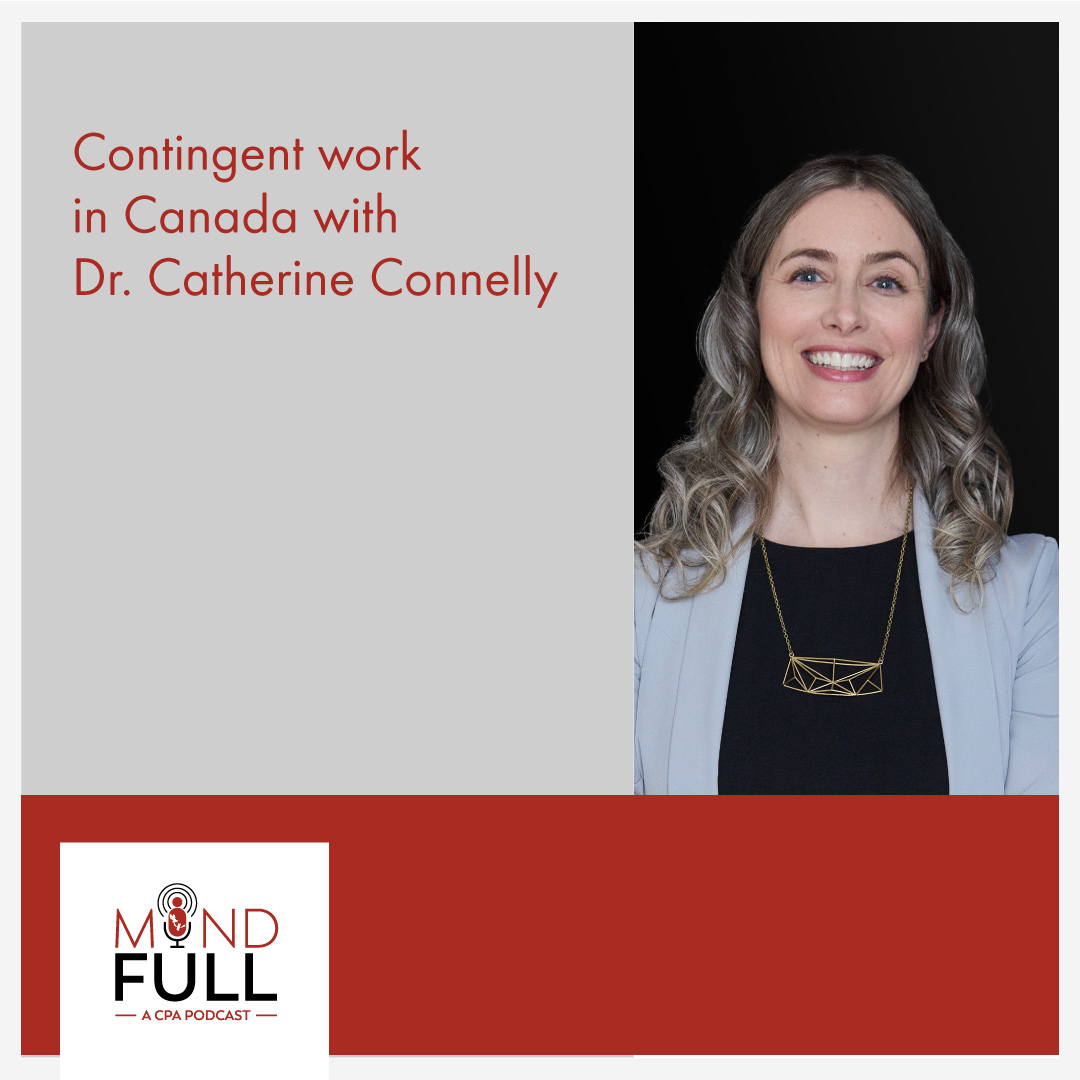
Contingent workers, a group which includes gig workers, contract workers, and temporary foreign workers, are a growing segment of Canada’s workforce. This trend shows no signs of slowing, and as a result there is an increasing need to protect those workers, who are vulnerable to abuse and exploitation. Today’s guest, Dr. Catherine Connelly, tells us about the current state of contingent work in Canada, and suggests some ways we can ensure the safety and security of Canadian contingent workers going forward.
“Psychology Works” Fact Sheet: Parenting Challenges
What Role Do Parents Play in Children’s Development?
Psychological research and practice show us that parents are the most important influence on their children’s development. The parent role brings intense rewards and challenges. Parenting takes practice, flexibility, and openness to keep learning. Just as our children grow and learn, so must our parenting. Whether parenting with a partner, in one or two homes, or as a single parent, parents need support from family, friends, and their community. It really does take a village!
How Can Parents Help Children Grow and Thrive?
Children need both love and structure to grow and thrive. Although this formula sounds simple, putting this into practice can be tough. A loving relationship provides the foundation for children to regulate their emotion and develop both confidence and self-esteem. Parents show love in different ways according to their personal style and cultural background. It always involves being available to spend time with children and show interest in what they’re doing. Physical affection includes smiles, touch, hugs, and cuddles.
Regular frequent moments focusing on the child (without distraction from phones, TV, or the computer) is the foundation of a good relationship. It helps them build confidence and learn that they can turn to their parents when they face difficulty. As children reach adolescence, time with parents may look different from when they were younger. Without a warm and loving relationship with their parents throughout their development, children and youth are at risk for low self-esteem and low confidence. They may seek more negative ways to get attention and to feel good about themselves such as acting-out, risky behaviour to impress their peers, or self-medicating using drugs and alcohol.
A loving relationship is necessary, but is not enough to ensure healthy development. Children also need structure, consistency, and appropriate monitoring. From an early age, children benefit from routines that help them know what to expect each day. Parents show children the limits of acceptable behaviour by having some simple rules and expectations. Parents help children to learn that their actions have consequences. By noticing and commenting on behaviour they want to encourage, parents strengthen good habits.
Physical punishment, yelling, and humiliation hurt children. Fortunately, there are far more effective methods to address a child’s challenging behaviour. These include paying attention to the behaviours you wish to encourage and calmly addressing mild misbehaviour. Parents can guide their children to set limits and make good choices by using appropriate rewards and consequences. Without structure, children may have difficulty learning self-control and the ability to follow rules independently.
We cannot underestimate how much children learn from watching adult behaviour. In everyday life, there are lots of opportunities to show problem-solving, impulse control, the healthy expression of feelings (both positive and negative), patience, and tolerance. We must also be mindful to avoid inappropriate coping mechanisms, excessive use of digital devices, substance abuse, violent or bullying behaviour, or unproductive methods of handling conflicts. Life is full of teachable moments.
How Does Parenting Change as Children Age?
Children of all ages need love and structure. As children get older, there are subtle changes in how we show love and provide guidance. A baby thrives on rocking, broad smiles, and singing. Teens may appreciate a response to a text or good listening while driving to an activity. In helping a toddler to learn that it is not acceptable to pull the cat’s tail, the parent may provide guidance on how to stroke the cat gently. Parents help teenagers develop responsibility and make healthy decisions by negotiating curfews and appropriate behaviour. Parents promote growing independence in their children and help them to make good decisions and learn from their mistakes.
What Can Parents Do When They Need Support?
Parenting presents additional challenges when financial difficulties, work-related stress, separation or divorce, or mental or physical illness affect a family member. Parents adapt to the child’s temperament, developmental level, learning style, and cognitive abilities.
All parents need support from time to time. There is no one-size fits all approach to getting help. Some ways parents might find support include:
- Consulting reliable, evidence-based websites or online programs
- Attending presentations or discussion sessions with a trained practitioner on a topic they are struggling with
- Consulting a trained professional to address specific situations or difficulties that their child might be experiencing
- Completing a comprehensive parenting course
Parents of children with mood, anxiety, behavioural, or learning disorders are likely to benefit from evidence-based psychological services.
Social media has changed the landscape for parents. It is easy to access vivid videos and testimonials proposing parenting strategies. It can be overwhelming to sift through conflicting messages and know which ones have a solid foundation. Parent confidence may be undermined by contradictory claims of the usefulness of different approaches.
How Can Psychology Help?
Research has helped psychologists to learn about parenting that works and to develop a range of services for families. Evidence-based parent support provides information about the myriad issues that emerge in child and adolescent development. Parents learn to use positive approaches to parenting that help the child to learn and develop. Parent support can be offered face-to-face, via workbooks, and on-line to groups, couples, and individuals, to help parents learn and practice strategies that research has shown to be effective in promoting positive relationships and in reducing misbehaviour.
In evidence-based parent support programs, parents learn how to notice and pay attention to behaviour they want to encourage; how to set clear routines and expectations; how to help children recognize, label, and express their emotions; and how to respond to challenging behaviour. Parent support is most effective when parents have opportunities to observe and practice the techniques they are learning.
Parents who have their own personal struggles, such as feeling depressed, anxious, or in an unhappy relationship, may require help with their personal struggles as well as getting parenting support. Cognitive-behavioural therapy is effective in helping parents deal with their own mental health issues such as depression, anxiety, chronic pain, or marital distress.
Where Can I Go for More Information?
For more information, visit:
- The Incredible Years – Parents & Teachers. A series of interlocking evidence-based programs for parents, children, and teachers, supported by over 30 years of research: incredibleyears.com
- Triple P Parenting. Positive Parenting Program works for babies, toddlers, and teens. Get parenting tips and classes in Canada; face-to-face or online: triplep-parenting.ca
You can consult with a registered psychologist to find out if psychological interventions might be of help to you. Provincial, territorial, and some municipal associations of psychology may make available a referral list of practicing psychologists that can be searched for appropriate services. For the names and coordinates of provincial and territorial associations of psychology, go to https://cpa.ca/public/whatisapsychologist/PTassociations/.
This fact sheet has been prepared for the Canadian Psychological Association by Dr. Catherine M. Lee, Professor Emerita, School of Psychology, University of Ottawa and consultant, Triple P Canada.
Revised: August 2025
Your opinion matters! Please contact us with any questions or comments about any of the PSYCHOLOGY WORKS Fact Sheets: factsheets@cpa.ca