
February is Black History Month
 We know there are strong associations between experiences of racism and poor physical and mental health outcomes among racialized populations. Whether due to a reluctance to seek service, a lack of culturally appropriate services, a lack of training in anti-racist approaches to care, and/or an insufficient number of Black health professionals, frequently, racialized individuals have difficulty receiving timely and/or effective mental health supports. Whether within our schools or our health settings, we need to do better. This year, to mark Black History Month, we will highlight organizations and groups that seek to address stigma, provide culturally appropriate mental health services, and are conducting research that includes and welcomes Black communities in mental health spaces.
Profiles
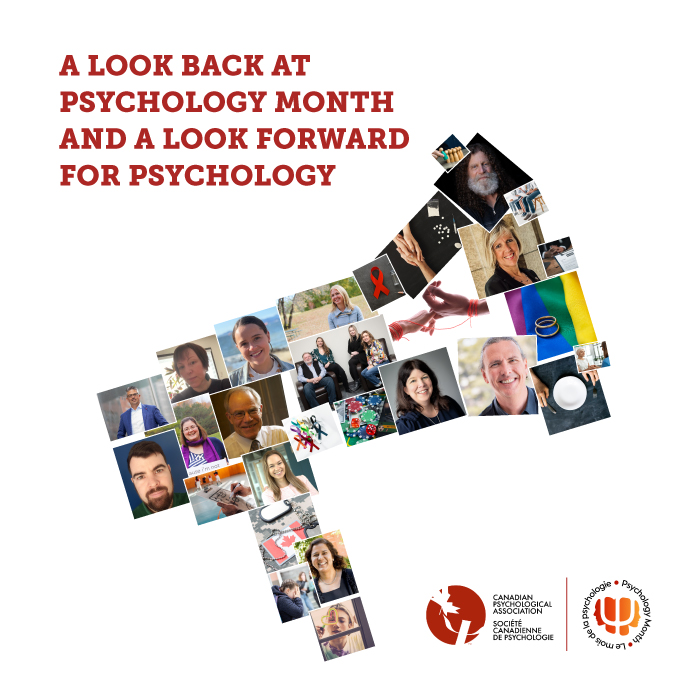 The theme of Psychology Month 2026 was “This Is Psychology”. It highlighted the ways psychology has something to contribute and something to say about most every issue that affects Canadians, big and small. That wide swath of knowledge and expertise is remarkable, and in today’s uncertain world it is invaluable. Psychology, and psychologists, have an opportunity to be instrumental in moving the world, and our country, toward positive, lasting, and evidence-based change. Now is the time to do it.
Visit our 2026 Psychology Month page.
This month, in their Monitor on Psychology magazine, the American Psychological Association published an article called ‘Storytelling strengthens the impact of psychological science’ by Tori DeAngelis. It opens with the words “psychology is perhaps the science discipline best positioned to help people navigate 2026’s complexities”. It makes a point about how vital it is that psychologists share their findings, and why they matter, in a way that connects with large numbers of people.
I had this article in the back of my mind throughout Psychology Month this year, because it has a similar thesis to our theme of “This Is Psychology”. That being that psychological science, more than most any other scientific discipline, has something to contribute in nearly every facet of our everyday lives. And communicating that to the public, to decision-makers in organizations, and to policy-makers in government, is imperative.
Just knowing something shouldn’t be an end unto itself. There is little point in accruing knowledge if that knowledge doesn’t encourage positive change. Psychologists know, for example, that the Meyers-Briggs personality test is about as reliable and scientifically sound as astrology. And yet, it is used by all kinds of major companies in their hiring processes and in their internal organizational structures. In fact, it’s used by the majority of Fortune 500 companies, even though we (psychologists and those who research personality) know that the Big Five test is far more accurate.
Why do they keep doing it? Have we just not told them? Are they just ignoring the data that demonstrates the ineffectiveness of their method?
Here’s the thing – psychological science can inform a Fortune 500 company as to why using the Meyers-Briggs is a futile exercise. It can explain why that company is resistant to altering their practices. It can also show why that company might see benefits from what they’re currently doing even if the data doesn’t support those conclusions. It can even suggest ways that a person who wants to change that company’s practices can effectively make the case and be convincing about it.
The central problem, as I see it, is that of those various ways that psychology can contribute to that company’s work culture, efficiency, and even their bottom line, the weakest of them all is the most essential. We (although I am not a psychologist myself, I am going to use the word ‘we’ from here on out for the sake of convenience) are great at figuring out why people do things. We’re not so great at convincing them to do other things.
We nibble around the edges. We figure out ways to nudge people toward recycling more at their office, but we don’t have a great way to convince politicians to take significant action to fight climate change. We can tell the world that referring to youth by their chosen pronouns, and providing gender-affirming care to all people, has great health and wellness outcomes. We don’t have a great ability to convince school boards, governments, and the public to follow that science.
The thing is, we actually know how to do it! We study public response to rhetoric. We understand the way a message can be framed to have the greatest impact. Some of it is right there in the title of Ms. DeAngelis’ article. Storytelling strengthens the impact of psychological science. How do we have so much data on how to do it, but few of us want to be the ones who do?
Every year (and by that I mean last year and coming up again this year) I do a presentation at the CPA Convention with our incoming President, Dr. Janine Hubbard. It’s about speaking with the media, and I look at it as a call to members in the profession to get out there. My central message is usually to academics, and it is this – if not you, then who? People are going to be speaking about your area of expertise, but you are the expert.
Janine’s message is more one to practitioners (the psychologists who work in clinical practice and see patients). She points out that all psychologists do a lot of schooling, and know a heck of a lot about a lot of things. You may not be THE expert on post-traumatic stress, but you know enough to talk to the nice folks on the evening news about it for two minutes. You are equipped to provide the community with a little more understanding, and maybe a sense of comfort, in the aftermath of a tragedy. Most psychologists have some experience teaching students, and Janine thinks of a media appearance as an opportunity to teach the public about a subject. She draws on her experience as a child psychologist, explaining complex issues to kids and their parents on a regular basis. She says,
“All clinicians have to use appropriate language to meet their target audience. The same is true when reaching a larger audience.”
Janine herself kind of fell backward into this kind of work, and now not only has she become something of an expert at media appearances, she also sees the tremendous value they bring. A regular segment on the evening news in Newfoundland made her a familiar face in the community. That familiarity led to trust. That trust meant that Janine would be believed when she was speaking about something that really mattered.
People watch, and they listen. They listened to Janine when she talked about gender-affirming care. They listened when she talked about holiday stress, or the effects of the wildfires that terrified Newfoundland. And when she encouraged them to get vaccinated by talking them through needle fear, and encouraged them to follow public health guidelines by providing reassurances and sharing strategies to increase comfort with nasal swabs, viewers of the local news were indeed reassured. They trusted her credibility as a scientist, and as a familiar face.
I understand that this does not come naturally to many psychologists. It did not come naturally to Janine either, but recognizing the impact of doing it allowed her to grow into the role. I believe there are two effects from the scientific rigour that becomes second-nature to psychologists as they pursue their degrees.
One is a feeling that language must be extremely precise. They don’t feel comfortable saying, for example, that peeing when you’re not supposed to is far more common among five-year-olds than it is among 15-year-olds. Instead, they might have a tendency to say that enuresis affects between 5-10% of five-year-olds, and there is a difference between enuresis and nocturnal enuresis, and it happens in around 1% of 15-year-olds, but in their case it’s much more likely to be nocturnal…we know this kind of language loses listeners. But we would sometimes rather be precise than be heard. Thankfully, when she spoke to me for Psychology Month on the subject, Dr. Jen Theule drew on her experience explaining enuresis and encopresis (peeing and pooping where you shouldn’t) to children and explained it to me in a simple and straightforward way.
The second effect is the idea that when there is someone who knows something better than you know that thing, then it is not your place to speak about it. And if you do, the impostor syndrome metre starts peaking.
Janine told me a story once about trying to find other psychologists to do a segment on the news. She reached out to a number of her colleagues looking for someone to speak with a host, and all of them said no. It wasn’t their specific area of expertise, and they felt as though it was outside their scope, and so they declined. The subject they were being asked to speak about was impostor syndrome.
I say this to every psychologist I can. You know more about human behaviour, in most every aspect, than the people you will be able to reach by speaking up. I write about this discipline and psychological science, and have every day for the past six years. You still know more about every aspect of human behaviour than I do.
Almost two years ago, Dr. Steve Joordens wrote me to propose a podcast episode about the scourge of sports gambling. It was the first time I’d considered how dangerous online sports gambling really was for young people, and I was happy an immediately intrigued once Steve brought it to my attention. A short time later, Steve wrote a letter on behalf of the CPA, and soon would be speaking in front of the Senate to urge action on the advertising of sports gambling. He did a webinar for the CPA on the subject. He will be the guest editor for an upcoming behavioural-addiction-themed issue of the CPA magazine Psynopsis.
Steve is passionate about the dangers of gambling for youth. And in some ways he’s AN expert. He isn’t THE expert. But he knows more about it than most of the senators he was speaking to. And more than I know about it. THE expert might be Dr. Robert Sapolsky, and I know this because Steve had a little fanboy moment when meeting Dr. Sapolsky for the first time for this article we were working on for Psychology Month.
I, on the other hand, had never heard of Dr. Sapolsky before that moment. I suspect few psychologists would say the same. They might be as surprised to hear of my ignorance as I was when I found out my 26-year-old daughter had never heard of Bad Bunny before the Super Bowl. Dr. Sapolsky is, deservedly, a really big deal in psychology circles. But those circles are also bubbles. We all live in our own personal bubbles, and the psychology bubble is real.
In Ms. DeAngelis’ article, she quoted Dr. Myra Fernandes, a professor in cognitive neuroscience at the University of Waterloo in Canada and associate editor of the Canadian Journal of Experimental Psychology (CJEP), talking about how the journal system could do better connecting with the public. Dr. Fernandes says journals could require brief, lay-friendly public significance statements that explain a study in simple terms, including how it can benefit society. CJEP is one of the journals that asks for these statements, which is a good start. But an additional step is needed, I believe. That is one of intention.
When you publish that journal article, it’s entirely possible that the public impact of it is opaque, even to you. That can make writing a public impact statement feel like another box to check – an irritant more than an imperative. Maybe your study won’t directly affect the public or impact policy. But it will inform science going forward which will contribute to bigger changes that could well make a huge contribution to the well-being of the public. The public impact statement can be something that looks forward.
I think there was an excellent example of a well-crafted public impact statement in a recent journal article in CJEP. The article was published by MacMillan, Churchill, and Hourihan, and it’s entitled ‘Effects of valence and list composition on memory predictions, performance, and beliefs’. The abstract for the article assumes in the reader an understanding of terms like “metamnemonic”, “mixed-list design”, “pure-list design”, and “valence manipulation”. Another psychological researcher reading that abstract would absolutely understand those terms. (I assume – I don’t myself understand them well enough to say for sure.) This was the public impact statement that accompanied the article:
“Little is known about how emotions affect our sense of what we are likely to remember and what we are likely to forget. This study found that people believe that emotional words are more memorable than neutral words, especially when neutral and emotional words are studied together. Understanding the nature of this relationship can help improve the learning strategies we choose both in educational contexts and in daily life.”
That, in my estimation, is a very good public impact statement. I immediately understand what it is they did in the study, and I understand how the results can contribute to future research or inform a larger educational program in a small way. And I was able to glean that from one paragraph, without wading through definitions for metamnemonic valence manipulation.
When I write articles (like this one), I aim to create something at around a ninth-grade reading level. Not because I think that’s the level of the average reader – in fact, I believe that almost everyone reading this article is likely to have a greater competency than ninth grade. I do it because the easier it is to read something, the more people will be willing to read it. Why make people work harder than they need to, if your goal is accessibility? I bring this up because the way I determine this is a simple tool in Word that shows you your document’s reading level. I used that tool recently to review about 30 public impact statements from the CPA’s three journals, including CJEP. The average reading level was Grade 16. I don’t even know what grade that is. Fourth-year undergrad in psychology? First year Master’s? Some of them were so dense that the tool couldn’t even give me a reading.
Dr. Fernandes is right, and the intention is good. But it’s entirely possible that the impact statement is written from within psychology’s bubble. It may seem very straightforward to the researcher who is writing it, and to all of their colleagues. But not to the public. Not to journalists or writers or members of parliament or to me. A researcher publishing psychological research is presumably invested in the possibilities opened up by that work. The best opportunity for impact comes from visibility. And visibility without accessibility is pretty rare.
An example of what I mean is Dr. Fernandes herself. A wildly accomplished researcher, a journal editor, a respected star in the world of cognitive neuroscience, and a terrific science communicator. When I Google her name, the top result is the University of Waterloo, which stands to reason. The second is Google Scholar, also understandable. The third result is a podcast. (In fact, it’s the CPA podcast episode of Mind Full where Dr. Fernandes told us about her research into the connection between music and memory.) I thought it was likely that my algorithm was a little different than others, and made it more likely that the podcast would show up for me (after all, I go to that link quite often). I got a couple of friends to do the same Google search, and they got the same result.
In the communications world of social media, the central metric that matters to us when we collect data is “reach”. Yes, it matters how many people interact with our content, and click on the links we provide, and watch the videos we post. But what matters most is how many people have the opportunity to do any of those things – which means we have to reach them first. Most TV has more reach than most radio which has more reach than most newspapers which have more reach than most podcasts which have more reach than magazines which have more reach than social media. Your Bluesky or LinkedIn page has more reach than a journal article.
The way I see it, psychologists are one of very few groups who can reach inside the majority of those bubbles. And that means getting out there. In newspapers, magazines, blogs, podcasts.
Dr. Bruce Hutchison is an expert on emotional contagion, who has put his expertise out into the world via his Substack. That Substack currently has 39 subscribers. But every entry and essay he puts there is one more chance to be seen by more people.
Dr. Elena Antoniadis is not THE expert on memory. But she does teach about it. She puts some of her lessons up on her YouTube channel, and it was there that I discovered her video about memory. Her way of explaining it was simple, direct, and easy to understand, and I was delighted when she agreed to walk me through it for Psychology Month.
Madeline Springle also makes great use of YouTube, where she created a channel dedicated to her area of expertise as a Ph.D candidate at the University of Calgary. @MasterYourInterview has more than 60 videos about preparing for and nailing a job interview, and much of that content informed our article about job interviews – an article that also included THE expert (or maybe one of a very few who could claim the title) Dr. Nicolas Roulin.
In my role as communications specialist at the CPA, I run our various social media channels. More and more, I’m seeing psychologists speaking out about the issues that matter most. Racism, xenophobia, climate change, psychological regulation, domestic violence, healthcare, gambling, the opioid crisis, self-care, transphobia, fascism, corporal punishment, conversion therapy, the housing crisis, disinformation, AI, the importance of sleep, compassion fatigue, the questionable science behind Myers-Briggs, the benefits of light therapy, strategies to combat bullying in school, intergenerational trauma, the benefits of harm reduction strategies, the compounded trauma of refugees, workplace harassment…and so on.
They’re sharing their expertise at a time when it really matters. Sometimes it’s tentative. It’s understandable to be hesitant, especially in today’s environment where social media trolls and bots can make engagement unpleasant. It’s especially hard when you think that putting yourself out there risks judgement or criticism from your peers and colleagues in your profession. Dr. Jenn Vriend, a child psychologist in Ottawa, posted on LinkedIn about a recent decision in Ontario to change the standards for who can call themselves a psychologist. She put into words the sentiments of many:
“This process has been heavy, and at times honestly a little frightening to be part of.
What has stood out most to me is the courage and integrity of so many colleagues. Not loud. Not dramatic. Just steady, ethical, and deeply thoughtful.
I know how much fear can sit behind even a simple post or re-post. The hesitation. The second-guessing. The vulnerability hangover after speaking up.
And yet, people are still choosing to stand by their ethical responsibilities and their concern for the public. That has been incredibly grounding to witness. And, in many ways, it has helped me find my own steadiness too.
Quiet bravery is still bravery.
And there has been a lot of it.”
If not you, then who? If not now, then when? We are at time in our history that, prior to now, was relegated to…well, history. The rise of global authoritarianism, the rejuvenation of fascism, accelerating climate change, the mainstreaming of racism and homophobia, an increased threat from pandemics and formerly eradicated diseases, incel culture on the rise alongside femmephobia and toxic masculinity, the ripple effects of social isolation. There is a long list of threats to people around the world – and for the first time in many of our lives, those threats have not been relegated to distant parts of the world, but have come to our doorstep.
If psychology is equipped to understand why, it is equipped to understand how, and uniquely positioned to help others understand. We know how to build trust with the public. Let’s do that by appearing on their radios and TVs and podcasts and in their newspapers. CPA members can start with the Media Guide we created for this purpose. We know how to persuade individuals of objective truths. Let’s do that by persuading elected officials of the things we know to be true. CPA members can start with the Advocacy Toolkit created by Glenn Brimacombe, our Director of Public Policy. We know how people become convinced of falsehoods through disinformation. Let’s be a bulwark against that like Dr. Jonathan Stea, author of the book Mind The Science. We have significant expertise to share, and many of us do so in plain language to teach others about it through videos, or fact sheets.
I’m keenly aware of the somewhat circular logic of trying to write something in an effort to persuade psychologists to use their vast expertise to persuade others. What I am hoping to do is to make us all aware of the opportunity that lies before us, and the urgency of seizing that opportunity to centre psychology in as many areas as possible. That involves, in many ways, storytelling.
We can tell the stories of the people affected by wars and climate change. We can relay anecdotes about PTSD and bipolar disorder and toxic work environments. We can combat healthcare and mental health “wellness” grifters by walking people through the ways we arrive at data-supported and evidence-based treatments. We have the ability to help craft a narrative around our collective responses to antisemitism, gender diversity, conspiracy theories, or social isolation. When psychologists tell stories, they are telling the stories of people. And that, as we know (from psychology), connects with more people.
My job, as I see it, is to tell the stories of psychology. Psychology’s job, as I see it, is to tell the world the stories of its people.
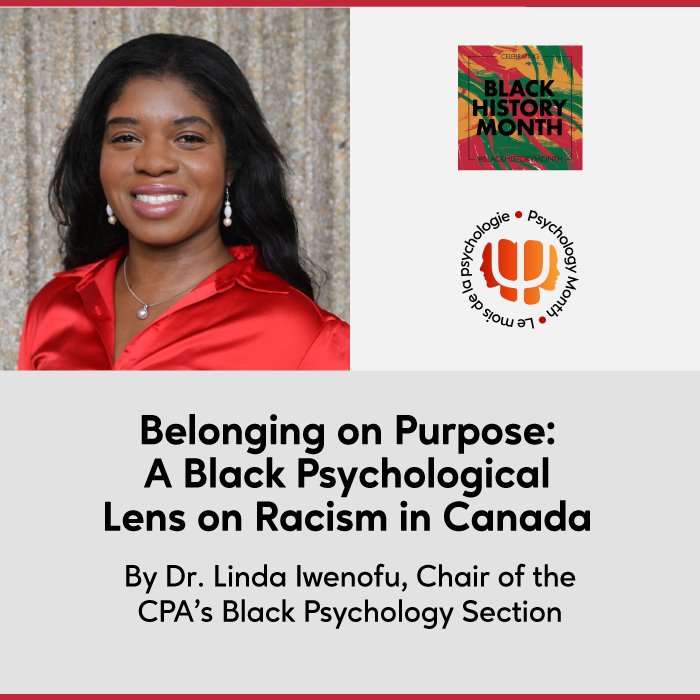
Systems have habits. Policies and practices have been built over the course of decades, usually without Black people in the room. Those habits then get passed down, defended as “the way we’ve always done it,” and applied as if they are neutral, even when they are not. Dr. Linda Iwenofu, the Chair of the CPA’s Black Psychology Section, writes about psychology’s role in addressing racism and about Black brilliance shining in environments that send mixed messages about whether that brilliance truly belongs.
Most of us want the same thing when we walk into a room.
We want to feel like we belong there. Like the space was made with us in mind. Like we don’t have to shrink ourselves, explain ourselves, or prove that we deserve to be there.
In Canada, we like to think of ourselves as welcoming. We point to our diversity, to our Charter, to the stories we tell about being kinder or more tolerant than other places. And in many ways, things have changed. The laws on the books are not what they once were. There are Black faces in places where, not so long ago, Black people were not allowed or expected to be.
And yet, for many Black people in Canada, the feeling of not quite belonging is still very familiar.
It shows up in the stare that lingers a bit too long in a store. In the teacher who is quick to see a “behaviour issue” in a Black child and “potential” in a White one. In the job interview where you’re never quite sure whether “not a good fit” means “not what we pictured when we imagined success.”
We see it in the numbers too: in who is more likely to be stopped by police, who ends up in front of a judge, who gets access to timely health care, who is believed when they say they’re in distress. The details change, the headlines change, but the pattern feels stubbornly familiar.
If things are supposedly “better now,” why does this keep happening?
That’s the question at the heart of this article. It’s a question echoed by Black children and youth, by parents, by elders who have seen many cycles of “progress” and disappointment.
On paper, we move forward. In practice, anti-Black racism has a way of reappearing in new forms, in new systems, in new language. A school desegregates, but Black students are still streamed away from advanced classes. A company launches a diversity initiative, but the culture quietly punishes people who speak up. A country celebrates Black History Month, but hesitates to talk honestly about its own role in anti-Black racism.
From a psychological point of view, what’s going on?
Psychology is supposed to be the science of how people think, feel, and behave. It has tools to help us understand why we cling to certain stories about ourselves, why we resist seeing unfairness, and why changing rules on paper is not the same as changing hearts, habits, and power. Psychology also has a growing body of work, much of it led by Black scholars and communities, that speaks directly to the mental health impacts of racism, and to the strength and creativity Black people draw on to survive and thrive.
At the same time, psychology has not been a neutral observer in all of this. It has been used to justify exclusion and inequality, and it has often centered White experiences as the norm. Black people in Canada have, for much of their history, been studied far more than they have been listened to.
Rather than retelling Black history only through stories of pain, we will start from Black brilliance and Black persistence in Canada. We will look underneath those stories at the unwritten rules that told them they didn’t belong, and at the communities that insisted otherwise.
Then, we will use a psychological lens - in particular, a lens on how those in power see themselves and protect their comfort - to help explain why, even when the surface changes, those unwritten rules keep popping back up. Why we can have new laws and still feel old patterns. Why some people feel personally attacked by the very idea of talking about racism. Why “we’re all equal now” can be such a comforting story, even when the evidence says otherwise.
Finally, we will highlight Black psychology in Canada: Black psychologists, researchers, and communities who are naming these patterns, caring for those who are hurt by them, and imagining something better. And we want to ask what it would take, not just in words, but in practice, for Black people to truly belong in Canadian psychology and in Canadian life.
This is not a story about individual villains and heroes. It’s a story about how systems teach us what is “normal,” whose feelings matter, and whose experiences are dismissed. It’s about how those lessons get cemented into our minds and our institutions. And it’s about how, together, we can unlearn them.
If we are serious about honouring Black history in Canada and about building a different future, we have to be willing to look closely at why racism keeps coming back, and to listen carefully to the people who have been living with its consequences the longest.
Psychology has a role to play in that work. So does Black psychology. The question is whether we are ready to use what we know.
Black brilliance has always been here
When we talk about anti-Black racism, it can be easy for the story to collapse into only pain, only barriers, only harm. But that has never been the whole story.
From the very beginning, Black people in what is now Canada have been building, teaching, organizing, running businesses, raising families, and imagining better futures, even when the rules of the day were written to keep them out.
Take Mary Bibb.
Mary was a teacher, a journalist, and an abolitionist. She and her husband Henry settled in what is now Windsor, Ontario, in the 1850s, as thousands of Black refugees were fleeing enslavement in the United States and making their way to Canada. They arrived in a place where Black children were often turned away from local schools or shunted into inferior options. The message was clear: your children do not belong in the same classrooms, with the same resources, as White children.
Mary’s response was a refusal to accept that message. She decided instead to help build something different.
She helped found schools for Black children and adults in the community, and she used her skills as a writer and editor to co-create The Voice of the Fugitive, a newspaper that shared news, offered advice, and helped new arrivals find their footing. Her work was part education, part community-building, part therapy session in print: a way of telling people who had lost so much that they were not alone, and that their lives and stories mattered.
Psychologically, those choices matter. When a system tells children, “You are an afterthought,” opening a school that says, “You are worth investing in” is not just a logistical fix, but also a deep act of repair. It sends a different message about who is worthy of care, of learning, of a future.
Almost a century later, on the other side of the country, another Black woman was sending a similar message in a very different way.
Viola Desmond was a successful business owner and beautician in Nova Scotia. She ran a beauty school that trained and mentored young Black women, preparing them to start businesses of their own at a time when very few doors were open to them. Her daily work was about dignity: helping Black women see themselves as worthy of attention, skill, and investment.
In 1946, when her car broke down in the town of New Glasgow, Viola decided to pass the time by seeing a movie at the local theatre. She bought a ticket and sat on the main floor, close to the screen. What she soon discovered was that the theatre had an unwritten rule: Black patrons were expected to sit in the balcony.
When she refused to move, she was dragged out of the theatre, arrested, and charged - not with breaking a segregation law (there wasn’t one on the books), but with a minor tax offence. The state found a technical excuse to punish her for sitting where she wasn’t “supposed” to sit.
Again, the message was clear: you may run a business, you may train others, you may pay for your ticket, but you still do not belong in certain spaces. No matter what the law says, we can still find ways to exclude you.
And again, the response was a refusal to accept that message. Viola and her supporters chose to fight the charge, to talk publicly about what had happened, and to challenge the quiet, “unofficial” segregation that many people preferred not to see. Her act of refusal, and the legal cases that followed, would later be recognized as a key moment in Canada’s civil rights history.
Mary Bibb and Viola Desmond lived in different centuries, in different parts of the country, under different sets of laws. But their stories rhyme.
In both cases, Black women were already doing the work of building community, education, beauty, and possibility. In both cases, they ran up against rules, formal and informal, that tried to push them, their students, and their communities back to the margins. And in both cases, they pushed back.
If we look at these stories only as tales of individual courage, we miss something important.
We miss how deeply questions of belonging are woven into our systems:
- - Who is a “proper” student, client, customer, or citizen?
- - Who is allowed to take up space in a classroom, a business, or a theatre?
- - Whose comfort is protected, and whose discomfort is ignored?
Mary Bibb’s schools and newspaper were answers to a world that said Black children’s minds did not matter as much. Viola Desmond’s business and her decision to stay in her seat were answers to a world that said Black women could do the work but still had to know “their place.”
From a psychological perspective, these are not just historic anecdotes. They are early case studies in something we still see today: Black brilliance shining in environments that send mixed messages about whether that brilliance truly belongs.
We’ll keep these stories in mind as we turn to the “underneath”: the beliefs, habits, and unwritten rules that allow racism to survive even after the laws change, and to the ways Black psychology in Canada is helping us name those patterns and imagine something better.
What’s happening underneath?
When we look at stories like Mary Bibb’s and Viola Desmond’s, it’s tempting to file them away under “bad things that happened a long time ago.”
The laws have changed. The signs are gone. We don’t have “Whites Only” on theatre seats or “Coloured” entrances on school doors. So why do the patterns feel so familiar?
From a psychological point of view, there are some common threads running underneath these moments that are still with us today.
Who counts as “normal”
In both Mary’s time and Viola’s, there was an unspoken assumption about who Canada was “for.”
The default image of a “normal” citizen, student, customer, or professional was White. Black people could be present, but we were often treated as exceptions, as visitors, or as problems to be managed.
That kind of assumption doesn’t always show up in official rules. It shows up in:
- - who people imagine when they say “Canadian”
- - whose names are on the buildings
- - whose faces we see in positions of leadership,
- - who teachers subconsciously expect to excel
When you’re part of the group that’s seen as “normal,” you don’t usually have to think about it. The world quietly fits you. Your accent, your hair, your diet, your holidays, your family story all feel unremarkable.
When you’re not part of that group, you’re constantly reminded, sometimes loudly, sometimes in tiny ways, that you’re being measured against someone else’s idea of what “fits.”
Those unwritten rules about who is “normal” are powerful. They shape how policies are written, how decisions are made, and how people are treated, often without anyone saying a word.
Fear of losing something
Any time people who have been pushed to the margins start to step forward - demanding equal access to schools, jobs, housing, public spaces - those in the “normal” group can feel like something is being taken away from them.
Even if nothing concrete is lost, the feeling of being challenged can be uncomfortable. Questions like:
- - “If they move in here, will our neighbourhood change?”
- - “If they get this job, what does that mean for me?”
- - “If we talk about racism, does that mean I’m being called a racist?”
However, pushing for equality isn’t the same as seeking revenge. Welcoming more people in doesn’t mean less value for those who were here before.
But our minds are very quick to turn discomfort into stories. And those stories can sound like:
- - “We’re going too far.”
- - “People are too sensitive now.”
- - “Everything is about race these days.”
Over time, those stories can justify rolling back programs, ignoring concerns, or doubling down on old habits, while insisting that “this isn’t about race.”
The stories we tell about fairness
Most of us like to see ourselves as fair, decent people living in a fair, decent country. That’s part of our national story.
So when evidence of racism appears, when we see disproportionate stops by police, or school discipline that falls harder on Black kids, or stories of discrimination in hiring, it creates a kind of tension inside.
Two things can’t both be true at once:
- - “We are fair and racism is mostly over,” and
- - “Black people are still being treated unfairly because of race.”
To ease that tension, it’s often easier to question the evidence than to question the story. So we hear:
- - “Are you sure that was about race?”
- - “Maybe they just misunderstood.”
- - “That was a different time.”
- - “We’re better than other countries, aren’t we?”
These aren’t just individual excuses. They’re psychological shields. They protect our view of ourselves and our institutions - but at a cost. They make it harder to see patterns, to listen fully to Black experiences, and to make changes that go beyond surface fixes.
Old rules in new clothing
Even when we change the written rules, the old unwritten ones have a way of slipping through.
We see it when:
- - schools that no longer segregate by race still stream Black students out of advanced courses
- - workplaces that publicly celebrate diversity still reward those who “don’t rock the boat”
- - health systems that promise equal access still end up doubting Black patients’ pain or dismissing their concerns
No one is hanging new “Whites Only” signs. But the effect can feel hauntingly familiar.
Part of the reason is that systems have habits. Policies and practices get built over decades, usually without Black people in the room. Those habits then get passed down, defended as “the way we’ve always done it,” and applied as if they are neutral, even when they aren’t.
Psychology helps us see that this isn’t just about individual “bad apples.” It’s about:
- - the comfort of being seen as “normal”
- - the fear of losing status
- - the stories we cling to about being fair
- - and the institutional habits that keep running in the background.
All these things can keep unfair rules going long after the original justifications have been discredited or forgotten.
For Black people in Canada, this doesn’t show up as an abstract theory. It shows up as daily life. In school meetings, in job interviews, in health appointments, in neighbourhoods, in the quiet calculations about when to speak and when to stay silent.
This is the landscape Black communities have had to navigate for generations.
Let us now turn more directly to Black psychology in Canada - to the people who are studying these patterns, holding space for those affected by them, and helping us imagine what it would look like to finally build systems where Black people don’t just appear in the room, but truly belong there.
Black psychology in Canada: making sense, making change
If all we had were these patterns and problems, it would be a pretty bleak story.
But that’s not the whole picture.
Alongside the systems that have tried to limit Black people’s lives, there has always been another current running: Black people making sense of what’s happening to them, caring for each other, raising children to survive and thrive, and building spaces where they can breathe.
Long before anyone called it “psychology,” Black parents, grandparents, aunties, uncles, teachers, pastors, and neighbours have been doing psychological work every day:
- - helping children understand why they’re treated differently without putting the blame on them
- - offering language for feelings that don’t yet have names
- - warning loved ones about real dangers while still protecting their hope
- - creating rituals, humour, music, and faith practices that make life bearable and beautiful
In other words, Black communities have never been passive in the face of racism. They have always been studying it, interpreting it, and responding to it in ways that are deeply psychological, even when their names were not on journal articles or clinic doors.
Over time, more of that work has started to show up inside the field of psychology in Canada.
Black psychologists, researchers, and students have been asking different questions, designing different kinds of studies, and insisting that Black people are not just “subjects” but experts in their own lives. They have been working in clinics, schools, universities, and community settings, trying to close the gap between what the research says, what communities say, and what actually happens in psychological services and broader mental health care.
In 2021, a group of Black psychologists and professionals within the Canadian Psychological Association came together to create something that had never existed before - the CPA Section on Black Psychology. Their goal was simple but powerful: to build a home for Black psychological work in Canada, and to make sure that the issues affecting Black people are not just add-ons, but central to how the profession thinks about mental health and wellbeing.
The Section focuses on things like:
- - supporting Black psychologists, trainees, and researchers, who are still very few in number across the country
- - creating spaces where Black members can share experiences, resources, and strategies without having to explain the basics of racism first
- - highlighting research and practice that speaks directly to Black communities’ needs, strengths, and realities
- - and pushing the broader discipline to take anti-Black racism seriously, in training, ethics, and everyday practice
Outside of formal psychology, Black-led organizations and community groups have also been stepping in where systems fall short, offering counselling, support groups, workshops, and advocacy that are grounded in Black experiences and priorities. Many of these initiatives blend Western psychological tools with Afrocentric, faith-based, or community-based approaches that feel more natural and trustworthy to the people they serve.
When we talk about “Black psychology” in this way, we mean all of this:
- - the everyday wisdom and care that has kept Black people going
- - the growing body of Canadian research and clinical work that puts Black experiences at the centre
- - and the organized efforts, like the CPA Section on Black Psychology and Black-led mental health initiatives, that are trying to shift the field from the inside out.
Black psychology doesn’t deny the harm that racism causes. It names it clearly - sometimes in the language of trauma, stress, depression, or anxiety, and sometimes in the language of exhaustion, anger, numbness, or “just trying to get through the week.”
But it doesn’t stop there.
It also pays attention to:
- - Black joy: the moments of laughter, play, and celebration that are not naive, but defiant
- - Black connection: the friendships, kinship networks, and chosen families that catch them when systems fail
- - Black creativity and spirituality: the art, music, style, and faith that allow people to express pain and hope at the same time
- - Black possibility: the determination to imagine better futures, not just for individuals, but for whole communities
Seen through this lens, Black people are not just people to be helped. They are also people who are constantly helping each other, and who have a great deal to teach psychology about resilience, community care, and what healing can look like.
Next, we’ll look more closely at psychology’s part in the problem and the solution: how the field has sometimes reinforced the very systems that harm Black people, how it has sometimes helped to challenge them, and what needs to change now if Black people are truly going to belong in Canadian psychology and in Canadian life.
Psychology’s part in the problem - and in the solution
If psychology is going to help us understand why racism keeps coming back, we also have to be honest about psychology’s own history.
Our field is not standing outside the story, looking in. It has always been part of the story.
When psychology has done harm
For a long time, most of the people designing psychological tests, doing research, and writing textbooks were White men. They often took their own experiences as normal, and measured everyone else against that yardstick.
That showed up in harmful ways.
Intelligence tests, for example, were developed and used in school systems and workplaces with the assumption that they were neutral and objective. In reality, they were built around the language, culture, and life experiences of White, middle-class children. When Black children scored lower - not because they were less intelligent, but because the tests weren’t built for them - those scores were used as proof that they didn’t belong in advanced classes or academic tracks.
Similar patterns surfaced in research on behaviour and mental health:
- - Black anger at racism could be labeled as “aggression”.
- - Black distrust of systems that had repeatedly failed them could be labeled as “paranoia”.
- - The strain of surviving constant discrimination could be overlooked, while any sign of distress was quickly pathologized.
In each case, the lens was tilted. Instead of asking, “What is this person responding to?” the question became, “What is wrong with this person?”
The result was that psychology sometimes helped justify unequal treatment, instead of questioning the conditions that made people suffer in the first place.
Even when psychologists weren’t actively pushing racist ideas, many were silent. Silence can be comfortable for those who benefit from the status quo. But for those on the receiving end of racism, silence feels like agreement.
That’s not the whole story either.
When psychology has helped
There have been moments when psychological research has helped bring the realities of racism into focus in ways that were hard to ignore.
Studies have given language and evidence to experiences Black communities have talked about for generations.
- - internalized racism - how growing up in a world that devalues Blackness can affect how Black children see themselves
- - stereotype threat - how the fear of confirming negative stereotypes can affect performance at school or work
- - microaggressions - the everyday slights and comments that send the message “you don’t belong here”
- - racial trauma – the deep, ongoing impact of racism on mental and physical health
Black psychologists and allies have used these tools to challenge policies, to change how services are delivered, and to argue for approaches that take racism seriously, rather than treating it as background noise.
In other words, the same field that once helped prop up racist ideas has also been used to expose them and to push for change.
What needs to change now
In Canada today, psychology sits at a crossroads.
We know more than ever about how racism harms mental health. We know that colorblind approaches don’t work. We know that ignoring race doesn’t make inequality disappear, it just makes it harder to address.
The question is: what do we do with that knowledge?
Some of the changes needed are big and structural; others are small and everyday. All of them matter.
- - Training and education
If you are training to be a psychologist in Canada, learning about Black mental health and anti-Black racism should not be an optional add-on. It should be woven throughout your courses, your readings, your case discussions, and your supervision. Students need support to reflect on their own identities and biases, and to learn how to talk about racism with clients in ways that are honest, respectful, and helpful. - - Services and settings
When Black children, youth, adults, or elders walk into a clinic, a school counselling office, or a hospital, they should not have to spend time explaining the basics of racism. Services should be designed with Black communities in mind, from who is on staff, to how intake questions are asked, to what “normal” is assumed to look like. That includes taking seriously the ways racism shows up in people’s lives, without reducing Black people to their trauma. - - Research and knowledge
Black researchers and communities should be leading work on Black mental health in Canada, not just participating in studies designed by others. Research questions should be grounded in what Black communities say they need, not just in academic trends. Methods should include community voices at every step, and the results should be shared back in ways that are actually useful to those communities. There should be continuous, dedicated national funding to support research dedicated to advancing the well-being of Black Canadians. - - Organizations and leadership
Professional bodies like the Canadian Psychological Association have a role to play too. It’s not enough to make one-time statements about diversity or put up a Black History Month post. Supporting sections like Black psychology, taking seriously concerns raised about equity and inclusion, examining who sits at decision-making tables, and being willing to change policies and priorities - all of that is part of the work.
None of this will be easy. It asks people and institutions to move beyond comfort, to sit with the fact that good intentions are not enough, and to let go of the idea that being “nice” or “polite” is the same as being just.
But if psychology is truly about understanding people and helping them live fuller lives, then facing these questions is not an extra. It is central to the job.
Belonging, on purpose
We started this article by talking about walking into a room and wanting to feel like we belong there.
For Black people in Canada, too many rooms have sent the opposite message, in ways big and small. Sometimes it has been obvious: doors literally closed, seats taken away, services denied. Sometimes it has been quiet: being overlooked, second-guessed, or treated as an exception rather than as part of the story.
Psychology gives us language for some of this. It helps us see the habits, fears, and stories that keep unfair systems going. Black psychology goes further, naming the toll this takes on Black minds and bodies, and also highlighting the strength and creativity Black communities bring to the work of surviving and changing those systems.
But naming things is only the first step.
If we want something different for the future - for Black children sitting in classrooms, for Black parents navigating health and school systems, for Black elders carrying long memories - we cannot just hope that time will fix it. The past few decades have shown us that time alone does not undo racism. It simply gives it new shapes.
Belonging will not happen by accident. It has to be built on purpose.
For psychology, that means asking some hard questions:
- - Who are we picturing when we imagine “the client,” “the student,” “the researcher,” or “the psychologist”?
- - Whose comfort are we protecting when we avoid talking about race?
- - Whose knowledge are we treating as expertise, and whose are we treating as anecdote?
- - When Black people tell us what they are experiencing, are we listening as carefully as we should?
It also means making different choices:
- - choosing to see patterns instead of treating each incident as an isolated misunderstanding
- - choosing to stay in difficult conversations a little longer, rather than shutting down
- - choosing to design training, services, and research with Black communities in mind from the beginning, not as an afterthought
For those of us who are Black and working in or with psychology, this work can be both heavy and hopeful. Heavy, because we are often carrying our own experiences and those of our families and communities while also trying to shift systems that did not expect us to be there. Hopeful, because we know what it would mean for our children and our students if things were different, and because we see examples, every day, of Black brilliance breaking through.
For those who are not Black, there is an invitation here too.
It is an invitation to move beyond guilt or defensiveness into responsibility; to use your roles, as clinicians, supervisors, faculty members, leaders, students, policy-makers, to make room for truths that may be uncomfortable, but necessary. It is an invitation to see anti-Black racism not as a side issue, but as something that goes to the heart of whether psychology is living up to its promise.
We cannot rewrite Mary Bibb’s classrooms or Viola Desmond’s night at the theatre. We can, however, decide what comes next.
We can decide that Black children will not have to leave pieces of themselves at the school door in order to be seen as “good students.”
We can decide that Black clients will not have to weigh the cost of naming racism in therapy against the risk of being misunderstood.
We can decide that Black psychologists, trainees, and researchers will not be rare exceptions, but part of a profession that truly reflects the communities it serves.
Honouring Black history in Canada means more than looking back at moments of courage once a year. It means letting those stories change how we see ourselves, our institutions, and our responsibilities right now. Psychology has tools that can help us do that. Black psychology is already pointing the way.
The question, for all of us, is whether we are willing to use what we know: to notice when the old rules are creeping back in, to choose different responses, and to help build a future where Black people don’t just appear in the room, but can finally trust that the room was made with them in mind.
This is how we will help to build a future where Black people don’t just appear in the room, but can finally trust that the room was made with them in mind.
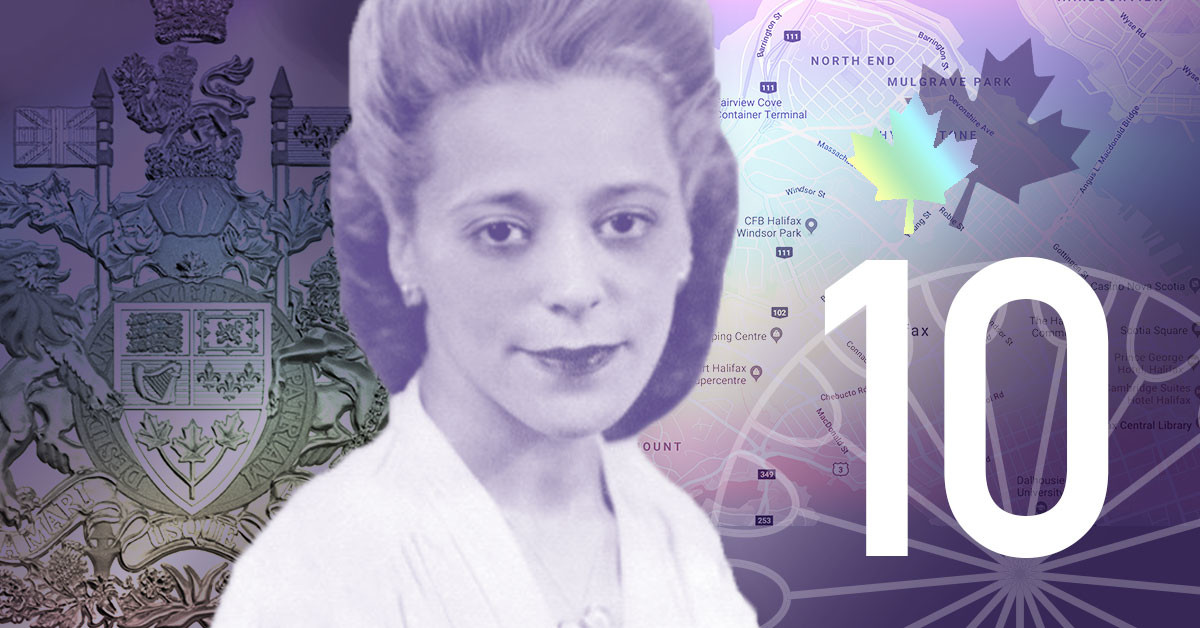
Viola Desmond
Viola Desmond founded a beauty school in Nova Scotia so Black women didn’t have to travel so far to train as beauticians. Her students went on to establish their own businesses, serving an important need in their communities and creating employment opportunities where there had previously been none.
Growing up in Halifax, Viola Desmond realized there was nowhere for Black women to go for hair and skin care. Barred from training as a beautician in Halifax because of her skin colour, she traveled around North America, training in Montreal, New York, and Atlantic City. She returned to Halifax to open Vi's Studio of Beauty Culture. Soon after, she opened the Desmond School of Beauty Culture so Black women could train as beauticians without having to travel so far.
Her clients included Gwen Davis, who would go on to become the first Black nurse in Nova Scotia, and Portia May White, a contralto singer who was Canada’s first internationally renowned Black concert singer. Each year, Desmond’s school graduated about 15 students, all of whom were encouraged to go on to open their own businesses. This led to increased employment opportunities for Black women in dozens of East Coast communities.
In 1946, Desmond was arrested for sitting in the floor section, rather than the balcony that was reserved for Black patrons, at a New Glasgow theatre. The leaders of her community church encouraged her to fight the charges. The Clarion, the first Black-owned newspaper in Nova Scotia, had journalist Carrie Best reporting on every aspect of the story and the subsequent trial. The charges were eventually dismissed.
Baptist minister William Pearley Oliver, the church leader who had originally convinced Desmond to fight, later said of the case, “this meant something to our people. Neither before or since has there been such an aggressive effort to obtain rights. The people arose as one and with one voice. This positive stand enhanced the prestige of the Negro community throughout the Province. It is my conviction that much of the positive action that has since taken place stemmed from this.”
It takes support from family, friends, neighbours, and community to take a stand against injustice. In turn, taking that stand engenders support from those around you. Support follows resistance, and also makes future resistance possible. When one person stands, the psychological impact ripples outward. Dignity and courage are shared pursuits. Attaining them, and maintaining them, is almost always a group effort.
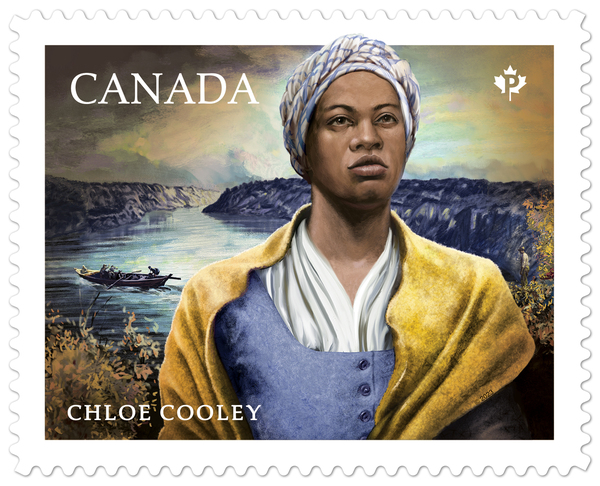
Chloe Cooley
Chloe Cooley was a Canadian slave whose resistance to being sold across the river to the United States led to some important changes, and eventually abolition, in Canada’s approach to slavery.
In the late 1700s, there were rumblings in the Canadian colonies that slavery might soon be abolished. The British crown had allowed loyalists escaping the United States, after the Revolutionary War, to bring their slaves with them, and thousands of enslaved people came across the border in the years immediately following the war.
Fearing that slaves might be granted freedom by the government, slave owner Adam Vrooman decided he would try to sell the people he had enslaved so as not to lose his property rights. One of those people was a young woman named Chloe Cooley, who resisted being put in a boat and shipped across the Niagara River to be sold in America. Enraged by her resistance, Vrooman beat her, tied her up, and forced her into the boat. Chloe screamed during the entire trip across the river.
While Vrooman was briefly charged with disturbing the peace, the charges were soon dropped as Chloe was still considered property. But the brutality of the scene shocked the conscience of observers, so much so that dozens of them petitioned the Executive Council of Upper Canada, leading to the passage of the 1793 Act Against Slavery, which prohibited the importation of slaves into the province. It was the first small step toward the eventual abolition of slavery in Upper Canada by 1824.
Emotional contagion theory suggests that people converge emotionally with those around them. When one person expresses outrage, those around them are more likely to feel that same outrage. Like outrage or revulsion, courage can also be contagious. It’s one of the reasons resistance works. Sadly, Chloe Cooley was a martyr in this respect. Nobody knows what happened to her once she was delivered across the Niagara River. But her resistance put the evils of slavery in plain view, forcing people around to confront their feelings about it. Those feelings of horror, or at least profound discomfort, were enough to spark, and accelerate, an important change.
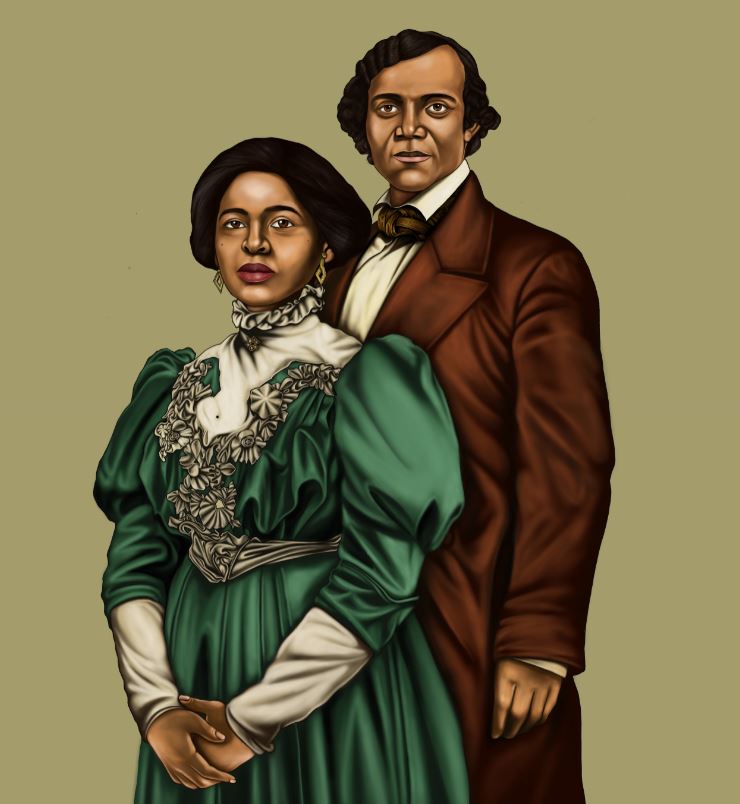
Mary and Henry Bibb
In 1851, Mary and Henry Bibb founded a newspaper. Voice of the Fugitive told the stories of the Underground Railroad, and reported on developments both in the American South and in the Bibbs’ new home country of Canada.
In 1851, Mary and Henry Bibb founded a newspaper. Voice of the Fugitive told the stories of the Underground Railroad, and reported on developments both in the American South and in the Bibbs’ new home country of Canada.
Refugees from enslavement in the U.S., the Bibbs settled in Windsor, Ontario where they soon realized there were few opportunities for Black Canadians. Their newspaper brought a sense of solidarity and community to their compatriots, keeping them informed and engaged in the struggle to end slavery.
The Bibbs went on to establish their own school, where Mary taught children who faced unrelenting discrimination in the public school system of the time. Henry became the founding director of the Refugee Home Society, a group that worked to meet the needs of formerly enslaved people who had made their way to Canada.
We know that today, immigrants and refugees from conflict zones often face compounded trauma. It’s possible they’re unable to return home for significant life events, and their ability to support the family members who remain behind is severely limited. Discrimination, trauma fatigue, and political divisions can put pressure on those affected to remain silent, which can deepen feelings of isolation and distress. Psychologists say that feeling overwhelmed and helpless is very common in these cases, but that social connection and small meaningful actions can go a long way toward regaining a sense of control.
In this regard, Henry and Mary Bibb were two of Canada’s important pioneers and were honoured as such by Canada who designated them National Historic Persons in 2002.
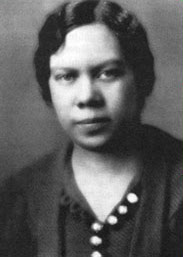
Dr. Ruth Winifred Howard
One of the first Black women to earn a Ph.D. in psychology, Ruth Winifred Howard trained Black nurses and worked with children and youth during her long and exemplary career.
There is some debate as to who was the first Black woman to obtain a Ph.D. in psychology. Some say it was Inez Beverly Prosser, who received her Ph.D. in 1933 from the University of Cincinnati. Others think it was Ruth Winifred Howard, since they consider a psychology Ph.D. to count only if it comes from a psychology program – she graduated in 1934 with a doctorate in psychology and child development from the University of Minnesota. There is no record of whether either woman cared at all about the distinction.
Ruth Winifred Howard was born in 1900 in Washington D.C. Her father was the minister at the Zion Baptist Church and was heavily involved in many community initiatives. Ruth would later say this example was what led her to desire a career helping others, and led her on the path to becoming a psychologist. That path began at Simmons College in Boston, where she majored in social work and earned a Bachelor’s Degree in 1921. It ended at the University of Minnesota, where she obtained her psychology Ph.D. 13 years later.
For her doctoral research, Dr. Howard studied triplets. Specifically, she launched the most comprehensive study ever done on triplets, studying more than 200 sets ranging in age from birth to their 70s. For reasons yet unknown, it took more than a decade for that research to be published, in 1946 in the Journal of Psychology and in 1947 in the Journal of Genetic Psychology. By then, she had married fellow psychologist Albert Sidney Beckham and moved to Chicago.
With her husband, Dr. Howard opened a private practice where she worked with children and youth, while working as a psychologist at the dated and terribly-named McKinley Center for Retarded Children. She was also the staff psychologist at the Provident Hospital School of Nursing, training Black nurses, and was a psychologist for the Chicago Board of Health until 1972.
In 1964, Ruth’s husband Albert died. She kept working for a few more years, both in private practice and with the Chicago Board of Health. Dr. Ruth Winifred Howard died in 1997, just a few days shy of her 97th birthday, having left an important legacy. More than just a pioneer, paving the way for others to follow in her footsteps, Dr. Howard’s work made a marked difference in the lives of hundreds of children in Chicago and around the world.
As this year’s Black History Month closes, CPA President Dr. Eleanor Gittens shares her reflections on Black History Month.
Produced by Kate Eggins
CPA President, Dr. Eleanor Gittens, discusses how to be an ally to individuals and groups experiencing marginalizations.
Produced by Kate Eggins

An Alberta psychologist’s tribute to Nelson Mandela
Alberta psychologist Zuraida Dada grew up in Apartheid South Africa, and was a part of the fight against oppression that finally succeeded with the formation of a democratic government in 1994. In this article, she pays tribute to the leader and face of the anti-Apartheid movement, the late icon Nelson Mandela. This article was first published in the College of Alberta Psychologists CAP Monitor Spring 2023 edition, and was re-published in the CPA’s counselling section’s Kaleidoscope newsletter in December 2023.
An Alberta psychologist’s tribute to Nelson Mandela
by Zuraida Dada, R. Psych., C.Psych., CPHR (Ret.)
Apartheid
The term Apartheid is an Afrikaner word which means “separateness.” Apartheid was in place in South Africa from 1948 to 1994. Apartheid was malevolent in its intent, with its goal being the annihilation of the BIPOC (Black, Indigenous and People of Colour) communities. Apartheid was legalised oppression and was socio-economic and political in nature. The Apartheid government used every legal means in pursuit of this goal, including but not limited to:
- Population registration and segregation
- Job reservation and economic apartheid
- Segregation in education
- Land tenure and geographic segregation
- Sexual apartheid
- Pass laws and influx control
- Political representation
- Separate development and Bantustans
- Banning, detention without trial and state security
Apartheid was pervasive and governed every aspect of our lives, from cradle to grave. For BIPOC people living under apartheid, it meant living without freedom and in perpetual fear. Nelson Mandela successfully led the country to freedom peacefully (without a war/formal bloodshed) and was the first Black President of post apartheid, democratic South Africa.
How do I begin to pay tribute to a father figure and someone who has left an indelible mark on me and every aspect of my life? There can never be sufficient words to convey the depth of the impact that Nelson Mandela (or Tata Madiba as he is fondly known), had on me. I will try my best to share a few ideas that Tata Madiba taught me through his words and actions, and that I strive to apply in my personal and professional life.
Lessons from Nelson Mandela (Tata Madiba)
Tata Madiba taught me:
- About “Amandla” meaning power—more specifically, the power of freedom—that freedom is like oxygen; you realize only in its absence how precious it is. Under apartheid, we did not have access to psychologists. This idea underpinned the reason I became a psychologist. It has imbued my life. It is the premise of my advocacy work. It is what I strive for: freedom from oppression, racism, violence, bias, prejudice and discrimination. The idea that striving for freedom from racism and discrimination is as vital as breathing has enabled me to understand my client’s reactions to racism, allowed me to be more empathetic and taught me that freedom from racism is necessary and vital for the survival and thriving of BIPOC people.
- That power comes in many forms, and that with power comes significant responsibility to act with discipline and to accept the consequences of one’s actions. As psychologists, it is critical that we understand the power dynamics in our relationships with our clients. Our clients generally seek therapy when they are at their most vulnerable, and often share aspects of their lives they have never shared before. As psychologists, we need to hold that space sacred and be aware/mindful of the power we have and the role we play vis-a-vis our clients. It is the bedrock of clinical practice to be mindful of the power dynamic and to do all we can to recalibrate it and not abuse that power.
- About the nature of oppression and racism—that racism is a pervasive ideology premised on power, privilege and fear. It is a form of violence. It thrives in silence. It is traumatic to experience. Racism denialism is trauma inducing and to recognise, acknowledge and accept that racism exists is the first step toward healing. This has informed the approach I use when working with clients who have experienced racism/discrimination. I use a compassion-focused, trauma-informed approach and provide psychoeducation regarding racism, power and privilege, along with strategies for managing this. Unfortunately, I have had first-hand professional encounters of racism denialism by fellow psychologists, which, as a BIPOC individual, is trauma-inducing. As psychologists, it is our ethical obligation and professional duty to be objective and to provide professional services free of bias. Given the trauma that racism denial causes, it is my fervent belief that racism denial should be treated in a manner analogous to sexual harassment, and should be grounds for ethical misconduct as well as professional incompetence.
- About the importance of values and the role they play in our lives. Tata Madiba famously said at his Rivonia trial on 20 April 1964: “I have fought against white domination, and I have fought against black domination. I have cherished the ideal of a democratic and free society in which all persons live together in harmony and with equal opportunities. It is an ideal which I hope to live for and to achieve. But if needs be, it is an ideal for which I am prepared to die.” I believe that racism (and the fight against oppression) is premised on personal values which then are enshrined in our daily lives, resulting in systemic and internalised racism. It is incumbent on us as psychologists to constantly engage in self-reflection; to be aware of the dynamics of the society in which we live; to understand the nature of racism so we can support, in healthy and meaningful ways, our clients who experience it; to accept and be aware of our limitations; to engage in appropriate activities, such as referring clients to others more competent than ourselves when the situation warrants; to obtain training when necessary; and to engage in client and social justice advocacy.
- About the power of one—how one person's actions can impact millions. As a psychologist I am constantly reminded of the impactful and meaningful work we do. The work we do matters, and is often the turning point in people’s lives that has a ripple effect on communities and societies at large. The key building block of every healthy society is a healthy person. As psychologists, our role is to build healthy communities and societies, one person at a time.
- To choose the pen over the sword. As a psychologist, I am constantly reminded of the power my words have on my clients as well as the power of each person’s own words on their sense of self, their identity and their own life.
- Deeds count over words. As psychologists it is incumbent on us to “be the change we want to see in this world” and to engage in social advocacy and social justice initiatives, not just limiting our advocacy to words alone.
- About the generosity of the human spirit/love over evil/hatred. Tata Madiba famously said, “No one is born hating another person because of the colour of his skin, or his background or his religion. People must learn to hate, and if they can learn to hate, they can be taught to love, for love comes more naturally to the human heart than its opposite.” This is the basis of the work I do as a psychologist. As psychologists in the context of client advocacy and social justice, it is incumbent upon us to acknowledge this truth and to base our work on this truth if we are to build an equal and just society.
- About the importance of truth and owning your own truth. As psychologists it is critical that we speak and own our own truth, as well as create a safe, judgment-free space in which clients can express and own their own truths.
- The importance of forgiveness over resentment. Forgiveness is a key principle in my work as a psychologist when supporting clients who have experienced racism and discrimination; this is especially so in my social justice work. I believe forgiveness is the antidote to resentment; it is self care; it is self compassion; it is the building block of resiliency and is a necessary first step in healing from trauma.
- The importance of understanding over ignorance. “Seek to understand, rather than to be understood.” This allows for empathy and for the building of a healthy therapeutic alliance. Understanding that racism denialism is a form of ignorance and is trauma inducing is vital to any work we do with clients who experience racism/discrimination.
- The importance of humility over arrogance. Recognising our limitations as psychologists is a form of humility. Racism denial is a form of arrogance. It is critical for us to understand the importance of engaging with clients in humility and renouncing arrogance, to create healthy therapeutic alliances in effective support of our clients.
- The importance of flexibility over rigidity. As a psychologist, the importance of being able to adopt a flexible approach is a key aspect in the provision of effective therapy.
- The importance of action over apathy. As psychologists we need to recognise the important active role we play in the creation of healthy societies—especially in relation to client advocacy and advocacy in society in general. Apathy can be equated to incompetence and unethical conduct.
- The importance of resilience over surrender. Resilience is the key building block of healthy and thriving individuals and healthy societies. It is the cornerstone of the work I do with my clients.
- The importance of courage over cowardice. As psychologists, it is incumbent upon us to have the courage to change things over which we have control, to advocate for our clients, to fight against injustice, to lobby for changes and to do research that allows the science to move forward.
- The importance of fairness over injustice. As psychologists have a vital role in social justice. All social justice is built on the premise of fairness and the creation of fairness in society.
- The importance of kindness over cruelty. Unconditional positive regard is the basis of our work as psychologists. Recognising that racism and racism denial are trauma is a form of kindness. Racism denial is cruelty and traumatic.
- About “Ubuntu”—which means humanness or human kindness, the ties that bind the human spirit. Ubuntu asserts that society, not a transcendent being, gives human beings their humanity. It is the recognition that we are all bound in ways that are invisible to the human eye. Michael Eze said, "We are because you are, and since you are, definitely I am. Humanity is a quality we owe each other. We create each other and need to sustain this otherness creation.” Barack Obama said, “There is a oneness to humanity that we achieve ourselves by sharing ourselves with others and by caring for those around us.." Ubuntu imbues the work I do, recognising we all need one another and that the sum is greater than the parts. We all have a role to play in eradicating injustice, be it as advocate or ally.
- To challenge myself to find this truth within myself—to identify my values, my beliefs and my identity within the context of the greater brotherhood and sisterhood of humanity. To:
- always remember the generosity of the human spirit;
- engage with people at a human level—as human beings first;
- understand my brother and my sister first, before judging them;
- approach life with empathy;
- find opportunities to nurture and care for others; and,
- take accountability for my life and my actions.
Tata Madiba often quoted the poem Invictus: "It matters not how straight the gate, how charged the punishment, the scroll, I am the master of my fate, the captain of my soul."
As Barack Obama said: “Tata Madiba makes me want to be a better human being and speaks to what is best inside all of us. The challenge for all of us is to search for that within ourselves and to make his life's work our own.” Challenge accepted, Tata Madiba, challenge accepted.
Hamba kahle Tata Madiba, Hamba kahle (Go well Tata Madiba, go well).
Ndiyakukhumbula (I will miss you).
Enkosi, Ngiyabonga, (Thank you).

V-TRaC Lab
The Vulnerability, Trauma, Resilience and Culture Research Laboratory (V-TRaC) is based at the University of Ottawa. It studies the connection between vulnerability and trauma and the coping strategies that might be employed to deal with either – or both. Their research is wide-ranging and covers many topics, from child welfare in Ontario to psychosocial interventions related to Ebola Virus Disease in the Democratic Republic of Congo.
The Vulnerability, Trauma, Resilience and Culture Research Laboratory (V-TRaC) is based at the University of Ottawa. It studies the connection between vulnerability and trauma and the coping strategies that might be employed to deal with either - or both. Their research is wide-ranging and covers many topics, from child welfare in Ontario to psychosocial interventions related to Ebola Virus Disease in the Democratic Republic of Congo.
The V-TRaC lab has authored recommendations to reduce racial disparities in Ontario Child Protective Services, has created the course ‘How To Provide Antiracist Mental Health Care’ (approved for continuing education credits by the CPA) and is currently evaluating mental health problems among immigrant populations.
Their work over the past several years has produced many publications and fact sheets, but their greatest impact might be in advancing the conversation when it comes to the social determinants of mental health. In 2022, the V-TRaC lab organized a conference, the first of its kind geared toward addressing barriers to Black mental health care in Canada. V-TRaC’s founder, Dr. Jude Mary Cénat, has also created the Interdisciplinary Centre for Black Mental Health, the first Canadian research centre entirely dedicated to the study of the biological, social and cultural determinants of health of Black people in Canada.
The resources created by the V-TRaC lab are helping many people right now, and the research they are conducting is filling a void in psychological and mental health research that will help many more people in the years to come.
Read more about the V-TRaC lab’s director, Jude Mary Cénat, in this 2022 Black History Month profile.

Canada Confesses
Canada Confesses started in 2020 as a youth-led platform for Canadians to anonymously share their experiences with racial and social injustice. Since that time, it has expanded a great deal, with more than 40 volunteers working together across Canada, and has become a resource to connect people across the country interested in making changes to the structures and systems that have led to inequality and marginalization.
Canada Confesses started in 2020 as a youth-led platform for Canadians to anonymously share their experiences with racial and social injustice. Since that time, it has expanded a great deal, with more than 40 volunteers working together across Canada. It has become a resource to connect people across the country interested in making changes to the structures and systems that have led to inequality and marginalization. It has built an enormous library of free essential support resources for Canadians. And they have engaged with policy-makers, community leaders, and mental health professionals at dozens of organizations to further their message and advocacy.
The Canada Confesses resource database is remarkable, having collected thousands of resources on a myriad of topics, including – Immigrants and Refugees, Black communities, anti-bullying and anti-racism, sexual and domestic violence – the list goes on. Their activism glossary is almost as extensive, and a significant resource for people who want to understand terms like “white-centering”, “microaggressions”, and “intersectionality”. And their original platform of “confessions” continues to grow as more and more Canadians share their experiences of discrimination – like misogynoir, ableism, and racial profiling.
While these testimonials are labeled as ‘confessions’, it is not really the person writing who is ‘confessing’ – it is Canada. Hence the name Canada Confesses. Many of us like to think of our country as one where racism exists in the margins, and where discrimination has largely been eradicated in our hiring practices, societal structures, and daily lives. It’s important to have a reminder, every now and then, that racism and discriminatory practices remain prevalent in Canada. If we are aware of this, and we want to do something about it, Canada Confesses is a good place to start.
Listen to the Mind Full podcast episode with the Canada Confesses co-founders “Canada Confesses creators Nancy Tangon and Priscilla Ojomu”

Black Mental Health Canada
This week’s Black History Month spotlight is on Black Mental Health Canada. They are an organization that educates Canada’s Black community about mental health, and advocates for culturally-affirming care through training and workshops.
The primary goal of Black Mental Health Canada (BMHC) is to educate Canada’s Black community about mental health - that it’s a real issue, that people struggle with mental health problems, and that supports are available. There have been years of stigma that have prevented many Black Canadians from engaging with mental health professionals. BMHC maintains a list of mental health providers that work with the Black community. Practitioners can register their practice and people seeking help can find a culturally competent professional to provide that help.
BMHC is also committed to being an advocate for culturally-affirming care. Because of the history within Canada, and North America as a whole, the needs of Black people are unique. Past abuses and the way the Black community has been approached by the mental health establishment have eroded the trust between the community and the system. To educate the Black community on mental health, there also have to be specific supports tailored to the specific needs of that community. BMHC provides EDI training and consulting as well as public and custom-built workshops for both mental health professionals and the public.
BMHC is dedicated to education and training, which is currently geared toward clinicians, so they are able to provide racially equitable and culturally affirming care. They also engage in advocacy, where BMHC representatives engage with governments and leaders about dismantling the stigma surrounding Black mental health. This advocacy extends to overall mental health, specifically what that looks like and what that means for the Black community in Canada.
Listen to the Mind Full podcast episode with BMHC Research Lead Shanique Victoria ‘Making connections: Shanique Victoria and Black Mental Health Canada’
Dr. Herman George Canady
Herman George Canady has had a lasting influence on psychology, influencing theories like intergroup anxiety and stereotype threat. He was also one of the very early leaders in organizing a group of Black psychologists.
The current psychological theory of ‘intergroup anxiety’ describes a feeling of discomfort many people feel when interacting with people from groups that are not their own. A lot of that theory owes a great deal to Herman George Canady, whose work looked at Black students interacting with white examiners while taking IQ tests. If the examiner is white, and the Black child has experienced discrimination and prejudice from white people in the past, they are likely to be anxious and perform poorly on the test simply because it is administered by a person whose presence makes them nervous.
Dr. Canady’s study ‘The Effect of ‘Rapport’ on the I.Q.: A New Approach to the Problem of Racial Psychology’ was the first of its kind to look at intelligence tests through this lens and led to many further studies examining the effect of a distrust of White people on the test scores of Black children. In many ways, Canady was one of the first psychologists to focus research on the Black experience in the United States.
This lack of Black inclusion in research, and a lack of psychological knowledge for Black Americans in general, led Dr. Canady to lead a movement organizing Black psychologists. He wrote A Prospectus of an Organization of Negroes Interested in Psychology and Related Fields and sent it to fellow members of the American Teachers Association (formerly the National Association of Teachers in Colored Schools), proposing a psychology section within the ATA.
Canady presented his proposal at the ATA convention, held at the Tuskegee Institute, in 1938. It was unanimously approved – but then quickly derailed by the onset of World War II. In later years the cause would be taken up again when Black psychologists organized at an APA convention in 1968 to discuss their dissatisfaction with "psychology's exploitations and the white definitions for behavior that placed Blacks in a negative light."
Dr. Canady obtained his B.A., his Master’s, and his Ph.D. from Northwestern University. He later served 40 years as the chair of the psychology department at the West Virginia Collegiate Institute (now West Virginia State College) before his retirement in 1968. He died in 1970, but his influence is still felt in intergroup anxiety research, stereotype threat studies, and in the ongoing effort to move psychology out of a white-centric model.
Dr. Robert Lee Williams II
Famous for three important books, and for coining the word ‘Ebonics’, Dr. Robert Lee Williams II spent his long and influential career combatting the racist stereotype that Black people were less intelligent than White people.
“Cars is whips and sneakers is kicks
Money is chips, movies is flicks”
- Big L., ‘Ebonics’
The word ‘Ebonics’ didn’t exist before 1973, when Dr. Robert Lee Williams II took the word ‘ebony’ and the word ‘phonics’, combined the two, and coined a brand new term for “linguistic and paralinguistic features which on a concentric continuum represent the communicative competence of the West African, Caribbean, and United States slave descendants of African origin." His 1975 book Ebonics: The True Language of Black Folks, traced the roots of Ebonics to Africa, arguing against the prevailing prejudiced opinion that Ebonics was just slang, or bad English.
Dr. Williams was born in Arkansas in 1930, and enrolled in Dunbar Junior College at the age of 16. He dropped out after only one year, having become quickly disillusioned upon being asked to take an IQ test. The results of the test suggested he was more suited to manual labour than he was to more intellectual pursuits. While this test had a huge impact on his self-esteem, racial bias in standardized testing later became the driving force behind some of his most important work. In particular, the Black Intelligence Test of Cultural Homogeneity, or BITCH-100, which he created in 1972 to account for the cultural factors affecting Black Americans differently than White Americans.
Dr. Williams obtained his Ph.D in clinical psychology in 1961 from Washington University, and in 1968 was a co-founder of the Association of Black Psychologists, later serving as its second President. The ABP was created as an alternative to the American Psychological Association, which was criticized for intentional and unintentional support of a structurally racist American society. The ABP’s membership saw themselves as “Black people first, psychologists second”.
He went on to found the first department of Black Studies at Washington University, where he worked as a professor of psychology, African studies, and African-American studies from 1970-1992. He continued to maintain a high profile through media appearances supporting his books – 1981’s The Collective Mind: Toward an Afrocentric Theory of Black Personality, 2007’s “Racism Learned at an Early Age through Racial Scripting”, and 2008’s History of the Association of Black Psychologists: Profiles of Outstanding Black Psychologists.
Dr. Williams was married to his wife, Ava Kemp, for 70 years until she died in 2018. He passed away in 2020 at the age of 90. He had eight children, four of whom went on to become psychologists.
Dr. Ruth Winifred Howard
One of the first Black women to earn a Ph.D. in psychology, Ruth Winifred Howard trained Black nurses and worked with children and youth during her long and exemplary career.
There is some debate as to who was the first Black woman to obtain a Ph.D. in psychology. Some say it was Inez Beverly Prosser, who received her Ph.D. in 1933 from the University of Cincinnati. Others think it was Ruth Winifred Howard, since they consider a psychology Ph.D. to count only if it comes from a psychology program – she graduated in 1934 with a doctorate in psychology and child development from the University of Minnesota. There is no record of whether either woman cared at all about the distinction.
Ruth Winifred Howard was born in 1900 in Washington D.C. Her father was the minister at the Zion Baptist Church and was heavily involved in many community initiatives. Ruth would later say this example was what led her to desire a career helping others, and led her on the path to becoming a psychologist. That path began at Simmons College in Boston, where she majored in social work and earned a Bachelor’s Degree in 1921. It ended at the University of Minnesota, where she obtained her psychology Ph.D. 13 years later.
For her doctoral research, Dr. Howard studied triplets. Specifically, she launched the most comprehensive study ever done on triplets, studying more than 200 sets ranging in age from birth to their 70s. For reasons yet unknown, it took more than a decade for that research to be published, in 1946 in the Journal of Psychology and in 1947 in the Journal of Genetic Psychology. By then, she had married fellow psychologist Albert Sidney Beckham and moved to Chicago.
With her husband, Dr. Howard opened a private practice where she worked with children and youth, while working as a psychologist at the dated and terribly-named McKinley Center for Retarded Children. She was also the staff psychologist at the Provident Hospital School of Nursing, training Black nurses, and was a psychologist for the Chicago Board of Health until 1972.
In 1964, Ruth’s husband Albert died. She kept working for a few more years, both in private practice and with the Chicago Board of Health. Dr. Ruth Winifred Howard died in 1997, just a few days shy of her 97th birthday, having left an important legacy. More than just a pioneer, paving the way for others to follow in her footsteps, Dr. Howard’s work made a marked difference in the lives of hundreds of children in Chicago and around the world.
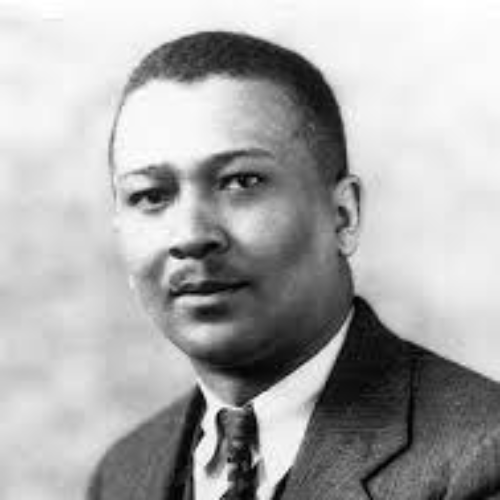
Dr. Francis Cecil Sumner
The first Black person to earn a Ph.D. in psychology, Francis Cecil Sumner spent his career working to elevate African-American education through more funding and more teaching of Black history.
The first Black person to receive a Ph.D in psychology, Francis Sumner was born in Arkansas in 1895. His parents worried about the quality of the education young Francis was receiving at his local elementary school, and so they taught him at home from what books they had available. When he applied to Lincoln College, a historically black university now known as Lincoln University, his application cited ‘private instruction in secondary subjects by father’ as he did not have a high school diploma.
Dr. Sumner passed the entrance exam and began his schooling at Lincoln at the age of 15. At 19, he graduated as valedictorian with a degree in philosophy. He moved on to Clark University for a second bachelor’s degree, where he became part of a mentor-mentee relationship with then-President of Clark, the pioneering psychologist G. Stanley Hall.
Sumner was drafted into the US military in 1918 and served in Germany in World War I before returning to Clark to complete his doctorate in 1920. Then, as now, psychological science was very Eurocentric, and Dr. Sumner focused on dismantling the racism and bias influenced by that Eurocentrism. Specifically, the studies at the time that purported to show intellectual inferiority in African-Americans. He tackled inequality in the judicial system and unequal outcomes in mental health between people of different races.
In 1939, his application for membership in the Southern Society for Philosophy and Psychology was rejected, after the SSPP changed its bylaws for the express purpose of excluding a Black member. Other members of the society threatened to resign if Dr. Sumner was not accepted, and his application was eventually improved, with the leadership of the society blaming a secretary.
From 1928 until his death, Dr. Sumner served as the chair of the psychology department at Howard University, a historically Black research university in Washington D.C. While there, he taught many Black psychology students including Kenneth Bancroft Clark, an influential leader in the civil rights movement and the first Black president of the American Psychological Association.
Dr. Sumner’s legacy endures to this day, as his lifelong efforts to elevate African-American education through more funding and more teaching of Black history and the Black experience have influenced modern education in many ways. Upon his death, he was memorialized with tributes of all kinds, including some that referred to him as ‘Howard’s most stimulating scholar’ and others that called him the ‘Father of Black Psychology’.
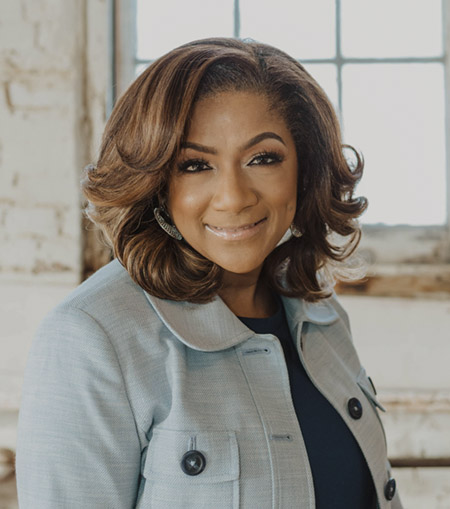
Photo: Enje Daniels Photography
Dr. Cranla Warren
Dr. Cranla Warren is the Vice-President of Leadership Development at the Institute for Health and Human Potential. Her professional work focuses on organizational systems, leadership development, and emotional intelligence, and her volunteer work focuses on mentorship for professional women and Black girls.
“You’ve been my therapist since we were 13 years old.”
Dr. Cranla Warren’s lifelong friend reached out to congratulate her on being named one of the Top 100 Accomplished Black Canadian Women for 2022. She said she wasn’t surprised that Dr. Warren was being so honoured, since she had been helping people as long as she could remember. Which included being a de-facto “therapist” for her friends from a very young age. "I never doubted you would be a therapist, as you were mine since I was 13! But now you have helped so many people over the years, whose lives were no doubt changed for having known you."
For Dr. Warren, that passion went beyond simply being a shoulder to cry on, or a sympathetic listening ear. She was the person to whom all her friends came to talk about their struggles or their issues, and she started to actively study what drove and motivated people. She started to read psychology books – there weren’t a lot of them in the 70s, but she read every one she could find. Like books by Dr. Joyce Brothers, one of the very few well-known female psychologists at the time.
“I became a student of human behaviour in my teens, reading everything I could, trying to understand everything that I could. I realized this was the path I wanted to take, but it was a very circuitous route.”
That route started out in social work, moved into psychotherapy, then into business. Through it all, Dr. Warren remained a student of human behaviour, figuring out how to connect with people at every step along the way. She obtained a Ph.D. in Organizational Psychology. She is currently the Vice-President of Leadership Development at the Institute for Health and Human Potential (IHHP), where Dr. Warren specializes in organizational culture and (as the title implies) leadership development.
Much of her success as a psychologist, a professional, and a person has come about as a result of her ability to understand others. But that success was not easy to attain, and got off to something of a rocky start.
“Don’t worry about becoming a psychologist, that it isn’t in the cards for you because you have too many strikes against you. Go for something that’s attainable, like becoming a secretary.”
This was the advice given to a young Cranla Warren by a guidance counselor before she applied to university, before she began to shape her career path, and before she had the “Dr.” in front of her name. The ‘strikes’ were that she was a Black girl – someone for whom academic success was unlikely, and for whom the path to that success was filled with dozens of barriers that did not exist for others. She overcame those barriers thanks, she says, to a very supportive family and series of great mentors. Not only through school, but through her professional life afterward.
“I’m very fortunate, I realize that every day. I’ve had incredible mentors through every step of my professional journey. I think, though, that I was vocal in seeking them out. Not everybody knows how to be proactive in doing this. When I was hired on at a pharmaceutical company I had worked in a hospital, I’d been a clinician, but I’d never worked in a business. I had done a talk, someone had seen it, and they loved what I presented, and they knew I was an advocate for mental health. They wanted someone like me to be in their medical education group. I got connected to the people who were in the seats of power, who said ‘I believe in what I see you doing and I’m going to help you rise in this organization’. Even though it may have been a potential career hazard for them. My advocates, mentors, and sponsors in the business world have always been white men, because that’s where the seat of power has traditionally been held.”
That proactive approach to seeking mentors and sponsors within an organization is one Dr. Warren imparts to many professional women, who seek her out for that very purpose. She mentors so that women and girls can see and work with someone who represents them, knows them, sees them and is also in a position of influence and power to a certain degree. The hope is that in these circumstances, and one day in all circumstances, these women and girls will no longer have to rely on white men to be their sole mentors as more and more women and people of colour assume leadership roles.
“I get sought out quite often by women, women of colour in particular, who say they want to learn how to crack the glass ceiling as it exists in their organization. They want to be leaders in their companies. But they keep bumping up against so many systemic barriers that they don’t quite know how to navigate. I’m trained as a coach, and I help coach them to create a development plan that’s separate from their organization to get them on a leadership path. A lot of it starts with self-awareness, emotional intelligence, how are you showing up? From there it broadens to the organization itself. Who can mentor them? Who might be a potential sponsor? Black women are often overlooked, and are invisible in many organizations.”
Dr. Warren has deconstructed her own path in order to see where the barriers lie, where the seats of power are concentrated, and what is required to break through in organizations for Black women in particular.
“Unless you have someone who has a seat at the table who’s advocating for you, who’s your champion and sponsor, who’s talking about you and your capabilities when you’re not in that room, it’s very, very hard to move forward.”
Having deconstructed her own path, and helped to create a path for many Black women to succeed in organizations across North America, Dr. Warren doesn’t stop there. The idea of mentorship, and the value that it imparts, is core to her philosophy in every way. She extends that idea to women and girls in her area as well.
“I’ve been a mentor for Black women and girls for probably 20 years. In the last decade, very formally, under the umbrella of a group called Trust 15, where I worked with their founder Marcia Brown to help provide very different experiences for the people in their programs Girls on the Rise and Ladies on the Rise. They hadn’t met anybody who had my level of education before, and I was driving into Toronto to be a role model, to be a mentor, to support them to effectively create their dreams and then to make a plan to achieve them.”
Dr. Warren created a program that brings young inner city Black youth she mentors to Stratford, where she lives, to take in the famous Stratford Festival. The young people get to tour the warehouse area and meet all kinds of people involved with the theatrical productions from actors to set designers. They come out of the experience with a newfound sense of what is possible. You can get work designing costumes, creating props, or making wigs? You mean those could be actual jobs?
“That advice I got [not to aim too high] from my guidance counselor was in the 70s, and here we are in the 2020s and young black girls are still receiving that same message. So, we bring them by bus to Stratford, partner with the festival, and provide a whole new lens for them to see the world through. It’s an incredible experience just to walk by the river and have lunch outside – things these girls don’t typically get to enjoy in their own neighbourhood.”
 Dr. Donna Ferguson
February is Black History Month, and the CPA is spotlighting contemporary Black psychologists throughout the month. Dr. Donna Ferguson is a clinical psychologist in CAMH’s Work Stress and Health Program and also runs a private practice where, among other things, she does refugee and humanitarian assessments.
“It’s nice when we hear back from some lawyers who say our report really made a difference in this case.”
It’s rare that a lawyer will reach out to Dr. Donna Ferguson to give her an update of any kind. But when they do it’s a great feeling because she knows she’s made a difference for a refugee seeking asylum in Canada. Dr. Ferguson is a clinical psychologist in CAMH's Work Stress and Health Program and also runs a private practice where, among other things, she does refugee and humanitarian assessments. She says,
“A lawyer may have a client who’s here from their country of origin, where they may have experienced trauma. Sometimes at the hands of a spouse or partner, or it could be bigger than that – it could be political violence. They might be fearful for their lives. Part of their refugee claim might be to have a psychological assessment to establish a diagnosis.”
The diagnosis from Dr. Ferguson and her team is not deciding whether or not a person stays in Canada, or whether their claim of refugee status is legitimate. They are not functioning as some kind of lie-detector test that one might see in the movies. Rather, they’re assessing a person and making recommendations based on what that person has been through, and what they might experience in the future.
“If there is a diagnosis of Post-Traumatic Stress Disorder (PTSD) for example, we would build a case to say how it happened and if possible, get them into treatment here. And we can say that if they were to be sent back to their country of origin, they would have an exacerbation of those symptoms, and we would make recommendations around that.”
During the pandemic, these assessments are happening more rarely – doing them over virtual platforms has proven to be difficult, especially when a translator has to be added to the mix. During this time, Dr. Ferguson has found herself focused more on her job at CAMH, where she has found herself moving away from her original speciality, gambling addiction, and more into the space of workplace mental health.
“I do a lot of panels for CAMH as the Workplace Mental Health Person, giving advice to business leaders. We do Workplace Safety and Insurance Board (WSIB) work, and those are the primary clients we see. Over the past 20 years I’ve got to know a lot about the workplace! The dos and the don’ts in terms of what business leaders should be doing for their employees, and how to keep people well at work.”
Again though, the pandemic has thrown a bit of a wrench into that. Years of learning the ins and outs of business culture, the best practices, and crunching the data from all kinds of studies has not prepared anyone for the sudden shift to a virtual business operation.
“A lot of this is a work in progress. People had to get creative really quick when it came to the pandemic, to build a virtual environment. CAMH has done it in a lot of ways – our program is fully virtually functional. We rebuilt our assessment tools to be virtual, our individual and group treatment programs, and all of our meetings became virtual. CAMH as a whole, and not just our program, has really done a lot virtually, and that knowledge has been instrumental in helping other organizations.”
Whether helping businesses with a longstanding culture adjust to pandemic life while looking after the mental health of their employees, or helping people from a vastly different culture find assistance here in Canada, Dr. Ferguson’s plate remains full. And the work, no matter what form it takes, remains rewarding!
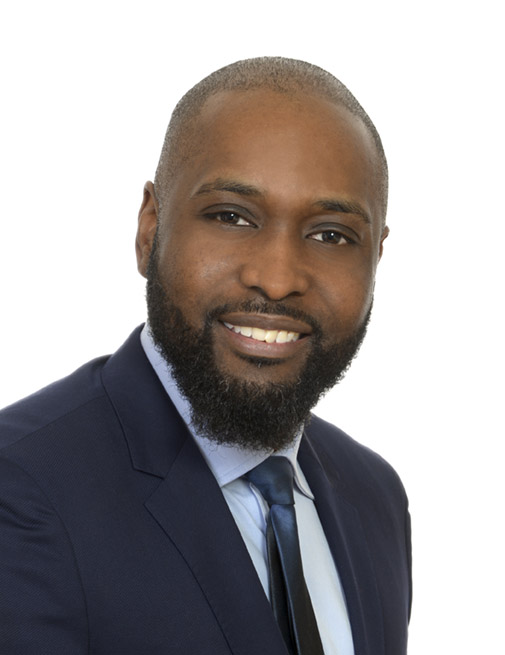 Dr. Kofi-Len Belfon
February is Black History Month, and the CPA is spotlighting contemporary Black psychologists throughout the month. Dr. Kofi-Len Belfon is a clinical psychologist who works with children, adolescents and families. He wears many hats, one of them being as the Associate Clinical Director at Kinark Child and Family Services.
“Are we actually thinking about programming itself in an anti-oppressive way? Are we considering the content?”
Dr. Kofi Belfon is a clinical psychologist who works with children, adolescents and families. He’s the Associate Clinical Director at Kinark Child and Family Services, has a private practice called Belfon Psychological Services, is a member of the board of trustees for Strong Minds Strong Kids (formerly the Psychology Foundation of Canada), and sits on the Equity, Diversity, and Inclusion (EDI) Committee at the College of Psychologists of Ontario. He is a measured speaker, and thinks carefully about his answers to every question. The theme of “thinking” comes up quite often in our conversation.
Born in St. Lucia, Dr. Belfon immigrated to Canada when he was about five years old. His family moved to live in the Caribbean when he was about 15, and he stayed with friends of the family to finish high school in Canada. His parents emphasized education, and encouraged him to go to university. His brother is a physician, and at first he went to McMaster for his undergrad intending to follow the same path and become a medical doctor. Soon though, he discovered that not only did he do extremely well in his psychology classes, he really enjoyed them. A new career path beckoned.
After his undergrad, Dr. Belfon went to work at a paint factory. While there, he wrote his GRE test (Graduate Records Examination – a general, standardized test to measure graduates’ academic abilities) and applied to grad school for psychology. What he didn’t do, which may have made a difference, was take the specific GRE exam for psychology. Every grad school rejected his application – every school but one.
“The only place I got in was Guelph. I had a really great supportive, nurturing supervisor in Dr. Michael Grand. But I always had this sort of impostor syndrome, doubting myself. ‘I didn’t get in anywhere else, why did I get in here, are they just trying to fill a quota? Am I getting in because I’m Black and male and they want to increase the diversity in their program?’ I had all these doubts about myself and they lingered for a long time. It was a fairly small cohort, maybe five or six of us, and I was the only one without a scholarship. I applied year after year, and never got a scholarship, and that fueled some of that imposter syndrome and the feeling I didn’t belong.
The silver lining for me was a couple of things – one, it forced me to work because I didn’t have a lot of money! I worked a ton in the field. I worked at the Toronto District School Board throughout my PhD and I got a lot of experience doing that. I worked at a private practice, I worked at Syl Apps Youth Centre, and I got lots of really neat clinical experience. I was also always really happy about my research. One of the things I appreciated about Dr. Grand was that he didn’t get in the way of me doing what I wanted to do.
My research was in chronic community violence in the Scarborough region, and then for my PhD it was about the mental health needs of kids in custody and detention. At the time at least 50% of those kids I was working with were BIPOC. Some of that research was because in university I had a close friend who died as a result of gun violence. That was the impetus for me starting that research, and even today I wish I had more time to do research and that sort of thing because it really means a lot to me.”
With all the different positions Dr. Belfon holds, and all the hats he wears, there is precious little time for research – or anything else for that matter. Especially now, when he says the pandemic has increased the workload significantly. Wait lists are getting longer and longer, and more and more children, youth, and families are reaching out for mental health help. He says this increase in demand predates the pandemic. Anecdotally, he says he’s seen more young people seeking help for depression, anxiety, and mental health disorders over the past five years. It’s not clear whether that is because more youth are suffering, or because work to destigmatize these conditions has made them more willing to reach out for help.
Those who reach out to Dr. Belfon are often Black families who are looking to connect with a psychologist who looks like them, and presumably shares many of their experiences. Often, they are willing to wait for a very long time, more than eight months on occasion, in order to see a Black psychologist. He thinks this is not ideal – it’s a really long time to wait when you’re having serious difficulties, and there’s no guarantee that you will connect with a professional. As Dr. Belfon says, “we confound race and culture all the time”.
The rarity of Black psychologists remains a difficulty in communities of colour, and is keenly felt in Southern Ontario. At one point, Dr. Belfon says, he thinks Belfon Psychological Services employed 60% of the Black psychologists in the region – there were three of them. Another reason EDI is so important going forward in the field of psychology.
He brings an EDI lens to all his ventures, working to make programming more inclusive at Strong Minds Strong Kids, at Kinark, and in his own practice. Dr. Belfon says that it’s good to make an effort to use more inclusive language, and to choose images and examples that feature a more diverse group of people. These things are helpful in terms of access, and get more people through the door. But doing those things are still ‘on the surface’. Once you get people through the door, is the programming itself delivering for their needs? Is the program they’re accessing as inclusive as the messaging that brought them there in the first place?
“I don’t necessarily know what the answers to that are going to be. These are still early days for psychology in thinking this way. But we need to evaluate these things while thinking about diversity, and how different families might think about these things differently. For example, a parenting program where we’re talking about parenting practices and what we view in North America as healthy practices. That might be totally different for a family whose parents didn’t grow up in North American society and maybe don’t hold the same types of values.”
This is when Dr. Belfon comes back to the theme of ‘thinking’ – what matters most in Equity, Diversity, and Inclusion efforts is that they are top of mind when a program is designed, a committee is set up, or a policy is implemented. If we all start to look at those things through an EDI lens, and start from that place, it is more likely that the end result will be truly inclusive and more than window-dressing.
“We think systematically in agencies, about all the inward-facing things. Executive structures, hiring practices, policies and procedures, thinking about how we treat one another. Maybe we’ve changed some language, and done a better job with basic stuff like not having binary language related to gender on our forms. Once we establish a framework with those sorts of things – and we’re doing some of that work at Kinark right now – the next step should be getting down to the actual clinical practice, and thinking about that more carefully. That will take some time, and maybe nothing changes! Maybe we look at a program and decide ‘the content is what the content is’. But did we think about it? Did we think about whether the content is relevant or not, instead of assuming that all these constructs are culture-neutral? I think that matters a lot.”
With the College of Psychologists of Ontario, the EDI committee is not on an island, but is rather a group of people who are there to influence all the other groups that can benefit from their input. Dr. Donna Ferguson is the Chair of the committee, and Dr. Belfon is working with her and the others to make EDI part of the overall culture at the College.
“We’ve done some work learning about the experiences our membership has had with EDI and the college, starting off with some questionnaires and collecting some data from the membership. We’ve done some training in EDI with the other committees – like discipline, quality assurance, my own committee which is Client Relations – so we have some language with which to think about EDI as a starting point. What we’ve asked is that following that training, members on those committees are challenged to think about how EDI might be related to their work.”
Dr. Belfon, Dr. Ferguson and the rest of the EDI committee are going to each other committee, one by one, to discuss how EDI is related to their work.
“For example, if the registration committee is responsible for our oral exams, in the oral exams are there things we have to be thinking about from an anti-oppression or inclusion perspective that might have to be rethought?”
Thinking. It is the central theme of everything Dr. Belfon does – and it is the key to moving organizations, companies, groups, and even psychology itself in a more inclusive direction. It’s all well and good to do something – but before you did, did you think about it? Did you consider it through the lens of inclusion? And how are you ensuring that your programming is inclusive, rather than just looking inclusive?
It’s something worth thinking about.
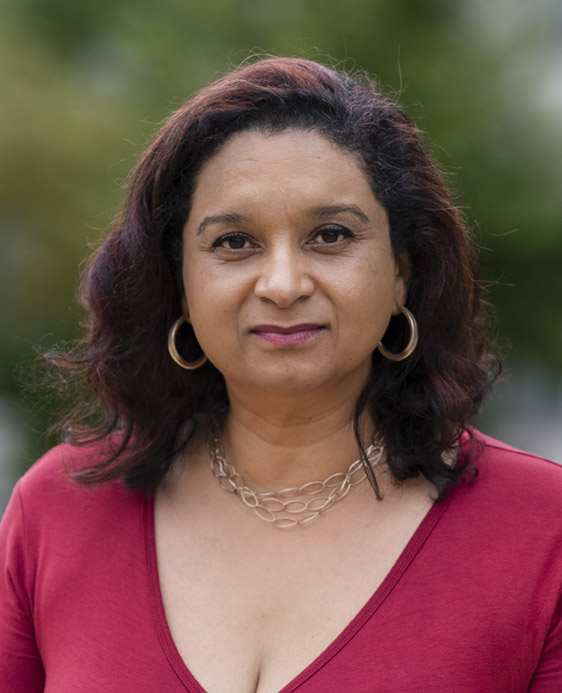 Dr. Monnica Williams
February is Black History Month, and the CPA is spotlighting contemporary Black psychologists throughout the month. Dr. Monnica Williams is a researcher at the University of Ottawa, dedicated to making research more inclusive for people of colour. In particular, at the moment, research into psychedelic medicine.
Dr. Monnica Williams is a therapist, author, and researcher at the University of Ottawa (among many others in a very long list of credentials). She has a long history of advocacy, activism, and social justice work, and has specialized in racial disparities in health, research, and elsewhere. An expert in anxiety disorders, she is currently one of very few researchers focused on the inclusion of people of color in psychedelic medicine.
“A lot of my research has been around the experience of trauma, and particularly trauma for racialized people – trauma that comes about from experiences of racism, and how we can best help people who are suffering. When it came to my attention 6 or 7 years ago that this research was going on into MDMA for the treatment of PTSD, I was really interested. Number one – does it work? Looking at the clinical trials and the research that was coming out it seemed to be very effective. And number two – will it work for people of colour? It was quite clear that while the research was promising, it was not inclusive.
Seeing millions and millions of dollars being poured into this novel treatment approach, which I think is really going to be a game-changer for mental health, and at the same time realizing that people a colour aren’t a part of it, that made me concerned – a little angry, actually. This is good enough for white people, why aren’t we getting any of it?
So I set out to research this so we could quantify the degree of exclusion we were experiencing. I was also hoping this could act as a call to action – to bring awareness to the fact that we need to be included and our voices need to be heard, and that treatment approaches have to be tailored to our communities. Not just what we might think of as a generic white middle class client, but there’s a whole spectrum of people who might benefit from these treatments.
It’s also important to note that not only have a lot of these psychedelic medicines been stolen from Indigenous cultures, and some of the methods have been stolen from Indigenous cultures as well. So we have to be cognizant of that when we approach this research.”
Dr. Williams has long been an advocate for inclusivity in research. For too long, people of colour have been excluded from research of all kinds, notably in a variety of psychological fields.
“So much of the research we see is exclusionary, and it not only perpetuates the problem but it’s also a symptom of the problem. Part of the issue is that we don’t have enough researchers of colour to do the research for people of colour. Certainly, there are a lot of white people who do research on these populations, but we have to be included too. As the saying goes, ‘nothing about us without us’. So the research community has to represent us, and we have to be included in it.
One of the big things that I’m advocating is more inclusion – opening the doors to our educational establishments to therapists of colour, and underscoring the need for us to be included. I also do a lot of research bringing these issues to light – how treatments might need to be adapted for people of colour, how therapists who are getting trained now can learn more about how to treat people with a more inclusive lens. Even the few therapists of colour who are coming through are being taught how to treat white people. So everybody needs to understand best practices when working with race, ethnicity, and across cultures.”
Dr. Williams says that through school and afterward she was unable to find a Black mentor in her institution, and for this reason it’s very important to her to mentor as many students as she can who find themselves in the same position as she was in school.
“I do a lot of mentoring of students of colour, because I have not had that kind of mentorship. When I was a junior psychologist, when I was first starting out, the person who was supposed to be mentoring me was actually quite abusive. So I went outside the institution and found my own mentors in the Delaware Valley Association of Black Psychologists. I worked with someone there, and it was good – it wasn’t exactly a fit in terms of the work that I did and the things they did – but I was just so happy to have Black people who were supporting me, encouraging me, and who believed in me. It was so different from my actual environment, and that made a big difference.”
Unfortunately, to this day not every institution has an environment that is inclusive of Black students or professionals. This is why Monnica turned elsewhere when she was a junior psychologist, and it’s why people of colour often look to turn elsewhere today. Creating those inclusive spaces is part of her life’s work, and something toward which the rest of Canada – in institutions and out – can strive.
 Dr. Jude Mary Cénat
February is Black History Month, and the CPA is spotlighting contemporary Black psychologists throughout the month. Dr. Jude Mary Cénat is the director of the Vulnerability, Trauma, Resilience and Culture Research Laboratory (V-TRaC Lab), and the director of the Interdisciplinary Centre for Black Health.
“What field can be more anti-racist than psychology? We are here to promote human beings, human development, and human well-being! There is no field that can address racial issues better than psychology.”
Dr. Jude Mary Cénat is passionate about making psychology anti-racist, and inviting his colleagues in the mental health field to join the movement. Dr. Cénat is an Associate Professor in the school of Psychology at the University of Ottawa, the director of the Vulnerability, Trauma, Resilience and Culture Research Laboratory (V-TRaC Lab), and the director of the Interdisciplinary Centre for Black Health.
The V-TRaC Lab has three axes. The first is working on family, social, and cultural aspects of trauma and resilience. The second axis is global mental health – the lab has a project on different countries in Africa to document mental health problems related to infectious diseases like the Ebola virus and COVID-19. This axis also looks at gender-based violence and mental health in the Caribbean. The third concerns racial disparities in health and social services.
“We have some projects on Black mental health, and we conducted the first survey on Black mental health in Canada, as part of a major project funded by the Public Health Agency of Canada to document Black mental health and to develop and implement programs related to that. We are looking at the over-representation of Black children in the child welfare system to try to understand all the factors that create that situation and propose solutions.” In December 2021, The V-TRaC Lab revealed 13 recommendations to reduce the over-representation of Black children in the Child welfare system.
Involvement with child welfare is the number one predictor of youth ending up homeless, as well as for a multitude of other problems later on such as poverty and poor education. The over-representation of Black youth in that system means that they experience those outcomes more often than other groups, leading to a perpetual cycle
“The first factor is that professionals in the child welfare system are not trained to take into account the cultural aspects of Black families. We gather a lot of focus groups with stakeholders, and one of the things they point out is that they’re not trained enough to address cultural issues. We conducted a study that showed that more than 48% of social work programs in Universities and colleges in Ontario did not have a mandatory culture related course in 2020. There are also systemic factors such as poverty related to Black communities, and racial discrimination experienced by many in the child welfare system.
But it’s not just the child welfare system itself, it’s also the larger society. In schools, for example, teachers are more likely to call childrens’ protection services for an issue with a Black kid than they are with a white one. In Canada we have a ‘colourblind’ society, where we say ‘I don’t see your skin colour, I see your problems and I try to address those’. When you have a child with a problem in school, you can call the parents to address that. But often for white kids, teachers will address a problem directly with the parents, whereas they might call child welfare directly for a Black child.”
The idea of a ‘colourblind’ society is akin to having a ‘non-racist’ society. It is a passive way to approach race, where just not laughing at the racist joke, or not participating in a discriminatory hiring practice, is enough. But this does not go far enough in terms of redressing the racial inequities that already exist. Dr. Cénat hopes we can move beyond ‘non-racist’ and ‘colourblind’ to becoming a truly anti-racist society in Canada.
“As Ibram Kendi said, there is no ‘racist’ and ‘non-racist’. There is ‘racist’ and ‘anti-racist’. Because if you are just ‘non-racist’, you can see someone be racist, and you can satisfy yourself by telling yourself you’re not a part of it. You haven’t taken an action that can push back against racism. And only by taking action against racism can we create an anti-racist society.”
It is with this ethos in mind that Dr. Cénat and his team have created the course ‘How To Provide Antiracist Mental Health Care’, approved for Continuing Education credits by the CPA. If mental health practitioners, academics in higher learning institutions, and leaders across the country can embrace the principals of anti-racism, then we can truly start to move toward an inclusive Canada where everyone feels welcome, discrimination and profiling are not tolerated, and all of us share in the same opportunities on a level playing field.
Dr. Cénat published an article in The Lancet where he explained that anti-racist mental health care is proactive – in the sense that it addresses racial issues without waiting for clients or patients to bring these issues forward. Anti-racist care goes beyond cross-cultural care. It incorporates both cultural aspects and elements that provide a way to account for the damage caused by racial discrimination, racial profiling, and racial microaggressions. It is a way to create spaces in a society free of racism.
“The problem with the ‘colourblind’ approach is this. You might have someone in your office who is Black, but you say ‘I don’t see his skin colour, I assess him and provide care without seeing his skin colour.’ But the fact is that his skin colour might be a part of his problem. You might have a Black man who’s depressed, and one of the factors which explains that depression is the racial discrimination he experiences at work. Or because his children are experiencing discrimination and he does not have enough power to stand up for his children and that reminds him of the fact that as a kid he experienced the same discrimination from other children and teachers. When you say you don’t see his skin colour, you are not addressing his problem, because the colour of his skin is very much part of his problem.”
This is not just a hypothetical situation that might confront a mental health professional, it is backed up by data. Dr. Cénat’s team published an article that shows Black Canadians between the ages of 15-40 who experience high levels of racial discrimination are thirty-six times more likely to present with severe symptoms of depression than those who experience lower levels of discrimination.
“If you receive someone from the Black communities with depressive symptoms, you have to ask them about their experience with racial discrimination and trauma. So that is what our training ‘how to provide anti-racist mental health care’ provides to clinicians. To know how they can first learn about themselves and their own biases, then also how they can assess racial issues and trauma in a clinical practice. And how they can provide anti-racist care to children, adolescents, and families.”
From October 26-28 this year, Dr. Cénat and his team will be organizing the first conference dedicated solely to Black mental health. It will be called “Black Mental Health in Canada: Overcoming Obstacles, Bridging the Gap”. As Dr. Cénat says, no profession has greater tools to address racism than does psychology. And he’s committed to putting as many tools in that toolbox as he can.
 Dr. Eleanor Gittens
Dr. Eleanor Gittens is a professor at Georgian College in the Police Studies degree program. She helps students confront their biases before they graduate and go on to become police officers – by taking them to Barbados!
The national dish of Barbados is fried flying fish (try saying that six times fast) and cou-cou (a cornmeal-okra concoction) with a spiced gravy. Barbadian cuisine is also known as “Bajan” cuisine, and the fish cakes and fried delights have influenced food all over the globe. As with food, Barbados itself has had an outsized cultural impact compared to its tiny size. Barbados has a population of fewer than 300,000 people.
The town of Barrie, Ontario is, on its own, half the size of Barbados. It counts a little over 150,000 inhabitants, one of whom is Dr. Eleanor Gittens. Dr. Gittens was born in Barbados, and is now a professor at Georgian College in the Police Studies degree program. The key courses she teaches at the moment are in research methods, cyber crime, mental health issues in policing, and contemporary social movements. She says,
“My passion is research. I love to do research with policing agencies – especially if they have a question or concern but are unsure how to go about getting the evidence or the data from what they have already. I can help them answer those questions.”
One of those questions was regarding calls from local long-term care facilities in Orillia. The OPP service in the area approached Dr. Gittens because they were concerned that they were getting too many calls for service from those facilities that didn’t require police presence. Because research opportunities are also teaching opportunities, Dr. Gittens and a few of her students created a research team to examine the issue. They looked at all the calls over a period of time to determine what the evidence showed.
They found that the OPP were correct – that 60-70% of the calls they were getting from long-term care facilities did not require police presence. In many of the cases it was residents calling 9-1-1 directly from their rooms for something trivial like having misplaced their remote. Dr. Gittens and her students presented their findings to both the police service and to the long-term care facilities (and at the CPA Convention that year).
Their recommendations led to changes at both the police service and the care homes themselves. The long-term care organizations made changes to how their residents accessed telephones, and the processes by which staff contacted emergency services. The police changed policies beyond just when to respond, but also altered the way they responded to calls at these facilities to ensure the response was appropriate for the situation.
Most of the students who go through Dr. Gittens classes go on to become police officers. In recent years, a much greater focus has been placed on implicit bias in policing, and the ramifications that result from that implicit bias – most particularly, for communities of colour. Says Dr. Gittens,
“Often, police officers have a view of who the criminals are, and where the criminal activity takes place, based on their own personal biases and the feelings you’ve developed over time from working in the field. One of the things we’re trying to do when it comes to human rights and social justice is to break down some of those biases so that people can start to see things for what they are rather than seeing them through the lens of their bias.”
So how, then, to deconstruct some of that bias before these students graduate and go on to become police officers throughout Canada, serving vastly different communities with very different needs and systemic issues? Dr. Gittens says that although it is impossible to get rid of bias entirely, she figured the best way to move future officers in that direction would be to take her students – who are predominantly white – to a place where they would be the minority, removed from their current social environment. The students are in Orillia, a city with very little diversity. Dr. Gittens is the only Black professor at Georgian College. So where to take those students?
Barbados. She takes them to Barbados.
“Barbados is 95% Black. They get to explore the food, and the culture, and also to tour police stations and the prison. [Yes, there is only one prison in Barbados.] We’ve done a Supreme Court tour, where they got to sit in on a case. They got a chance to see some of the intricacies of how culture plays into peoples’ behaviour, how people think, and also how they are percieved. It’s only one opportunity for them, but I think it’s better than no opportunity at all.”
It’s hard to understand the impact of culture and heritage until you’re smack in the middle of one that is not your own. The students, of course, love these trips.
“Not only does every student love it, it’s one of the things police services are looking for now. When I have to do a reference for students going into policing, one of the questions they ask is ‘what do you know about their views on diversity?’ For the students I take on trips, I can speak to how they behaved during their visit. What set them apart from some of the other students? How did they embrace, for example, the food? There are people who refuse to try new food, simply because they don’t know it or understand it! Fear is an emotion that can really debilitate people.”
Dr. Gittens loves helping her students reach a higher level of cultural competency in her professional life, and loves to travel in her personal life. Unfortunately, the student trips, and her travel, have had to be put on hold to a large degree during the pandemic. One day, these things will be possible again. When they are, Dr. Gittens looks forward to bringing more students to Barbados to experience the culture, the atmosphere, and – of course – the cuisine. One word of advice to anyone who goes.
“Try the fish.”
 Dr. Helen Ofosu
Dr. Helen Ofosu helps businesses move toward equity, diversity and inclusion as an Industrial/Organizational Psychologist. She says that employees of colour who are staying at home during the pandemic are realizing that their workplace may not have been a very welcoming one when they were there in person.
Dr. Helen Ofosu is an Industrial/Organizational psychologist, an Executive Coach and HR Consultant who founded I/O Advisory Services Inc. in Ottawa. She has extensive experience working with organizations and tackling structural racism at many levels.
“Generally speaking, I work with organizations – it could be government departments, private sector companies, or non-profits – often they bring me in to help with more inclusive hiring or to help improve their workplace culture. Over the past couple of years, I’ve done a lot more training in terms of equity, diversity, and inclusion with a splash of anti-racism and anti-oppression mixed in.
This winter what has me most excited is doing some work with a large government department on a mentorship program that’s quite different. We’re doing some training upfront with the mentors to make sure they understand some of the issues the racialized employees they’re trying to mentor have been experiencing. The idea is that with better awareness and understanding, mentors won’t be contributing to some of the issues with which racialized employees have been struggling. Equally important, with a more realistic perspective, the mentors can focus their interventions more effectively. It’s training for the mentors, but also offering some coaching for mentees above and beyond the support the mentors are providing.
Speaking more broadly, it’s all about supporting individuals and even organizations that are grappling with issues related to bullying, harassment, and of course various forms of discrimination.”
Dr. Ofosu has recently written and spoken about the “Great Resignation.” Over the past two years, during the pandemic, she has noticed a lot of racialized employees choosing to find work elsewhere, as they are realizing that while working from home, they are no longer subjected to the everyday indignities they experienced in the physical workplace.
“These things have been happening for years, but now people are removed from that environment, and they have the peace of mind that comes from doing their work without worrying about microaggressions, or getting the side-eye, or being excluded from coffees, lunches and conversations. When all of that is gone, people feel so much more relaxed because they can just focus on doing their work.
I think the real trigger was in the summer of 2022, when a lot of organizations were planning their return to work. It was only when people started to realize ‘oh my goodness – I might have to go back to the office’ that they started thinking ‘wait a second – I don’t think I can go back to the office. I don’t want to go back to the office! I don’t want to go back to the way things were.’
During all that reconsideration, a lot of people figured it was a smart time for them to find a different place to work, where there’s more representation, more inclusion, more diversity, and just a better workplace culture. From what I’ve seen, people are reflecting on a lot of things during the pandemic. So, they’re looking for a way to find employment where they can just be themselves, and focus on work instead of focusing on self-protection from all these emotional assaults.”
To some extent, Dr. Ofosu is shielded from this kind of thing, personally, by being self-employed. It is a good thing that she will be continuing to do her job, as she is one of very few Black psychologists doing this work in this space – work that is more top of mind than ever, and is more important and impactful now than it has ever been.
 Charles Henry Turner
Charles Henry Turner was a zoologist, one of the first 3 Black men to earn a PhD from Chicago University. Despite being denied access to laboratories, research libraries, and more, his extensive research was part of a movement that became the field of comparative psychology.
Dr. Turner was a civil rights advocate in St. Louis, publishing papers on the subject beginning in 1897. He suggested education as the best means of combatting racism, and believed in what would now be called a ‘comparative psychology’ approach.
Charles Henry Turner was a zoologist, one of the first 3 Black men to earn a PhD from Chicago University. He became the first person to determine insects can distinguish pitch. He also determined that social insects, like cockroaches, can learn by trial and error.
Despite an impressive academic record, Dr. Turner was unable to find work at major American universities. He published dozens of papers, including three in the journal 'Science', while working as a high school science teacher in St. Louis.
Despite being denied access to laboratories, research libraries, and more, his extensive research was part of a movement that became the field of comparative psychology.
Dr. Turner was a civil rights advocate in St. Louis, publishing papers on the subject beginning in 1897. He suggested education as the best means of combatting racism, and believed in what would now be called a 'comparative psychology' approach. He retired from teaching in 1922, and died at the age of 56 on Valentine's Day in 1923.
Photo: biography.com
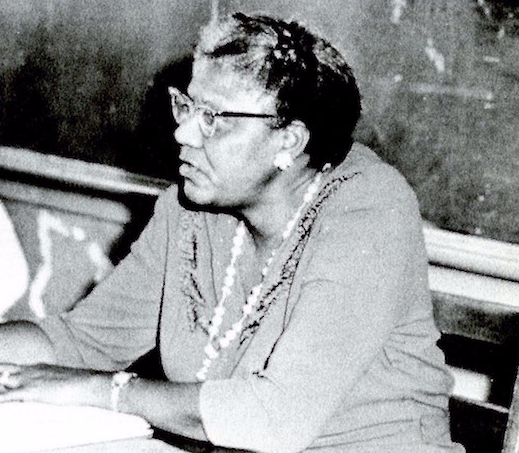 Keturah Whitehurst
A mentor to countless black psychologists, Keturah Whitehurst’s contributions to psychology extend beyond her own work to the work of her protégés that continues today.
Keturah Whitehurst was the first African-American woman to intern at the Harvard Psychological Clinic, and the first Black psychologist to be licensed in Virginia. She created the first counseling service at Virginia State College.
She received her Master's from the historically Black research university Howard in the 40s, and a PhD from Radcliffe in the 50s. She was a mentor to many future leaders in Black psychology - notably Aubrey Perry, who was the first Black person to graduate with a PhD in psychology from Florida State.
Dr. Whitehurst died in 2000, at the age of 88.
Photo from Kirsten's Psychology Blog
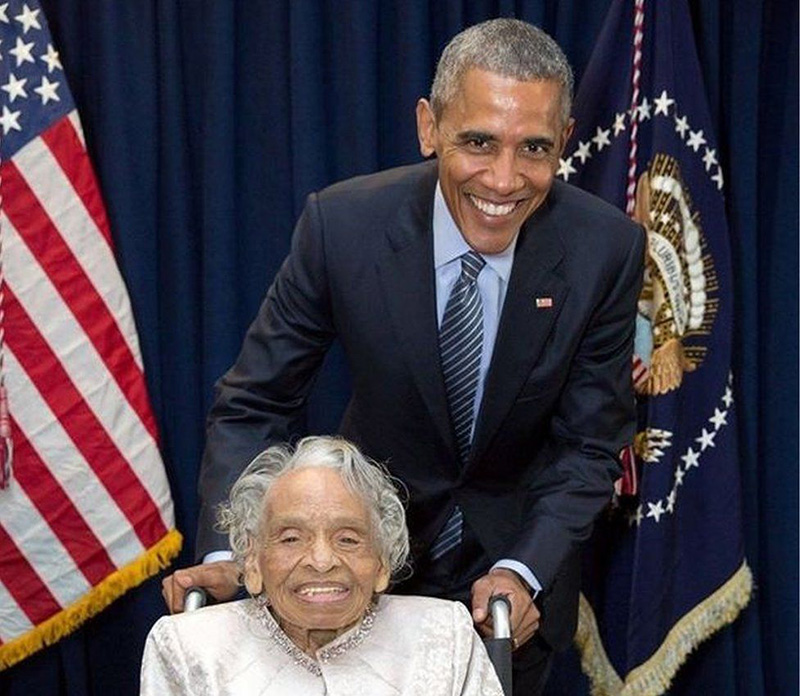 Dr. Olivia Hooker
As a psychologist, Dr. Olivia Hooker worked to change the unfair treatment inflicted upon inmates at a New York State women’s correctional facility. In 1963 she went to work at Fordham University as an APA Honours Psychology professor, and was an early director at the Kennedy Child Study Center in New York City.
Olivia Hooker was six years old when she lived through the 1921 Tulsa race massacre in the Greenwood District of Tulsa, Oklahoma. She went on to become the first Black woman in the US Coast Guard, joining during World War II in February of 1945. She later went back to the Coast Guard, joining the Auxiliary in Yonkers, NY at the age of 95 in 2010.
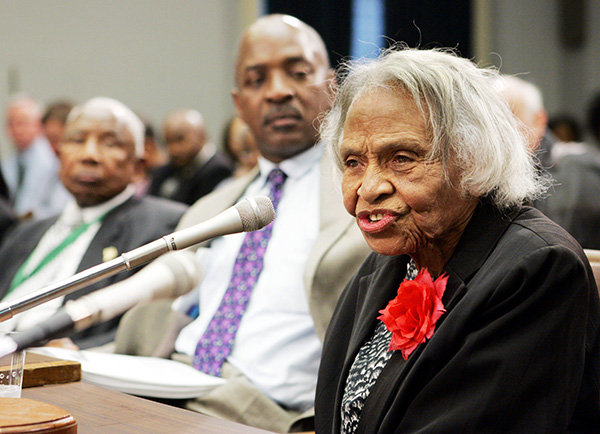
Her GI benefits allowed her to get a Masters from Columbia University, followed by a PhD in psychology at the University of Rochester.
As a psychologist, Hooker worked to change the unfair treatment inflicted upon inmates at a New York State women's correctional facility. In 1963 she went to work at Fordham University as an APA Honours Psychology professor, and was an early director at the Kennedy Child Study Center in New York City.
Honoured by the American Psychological Association, the Coast Guard, President Obama, and a Google Doodle, Olivia Hooker died in 2018 at the age of 103.
#BlackHistoryMonth
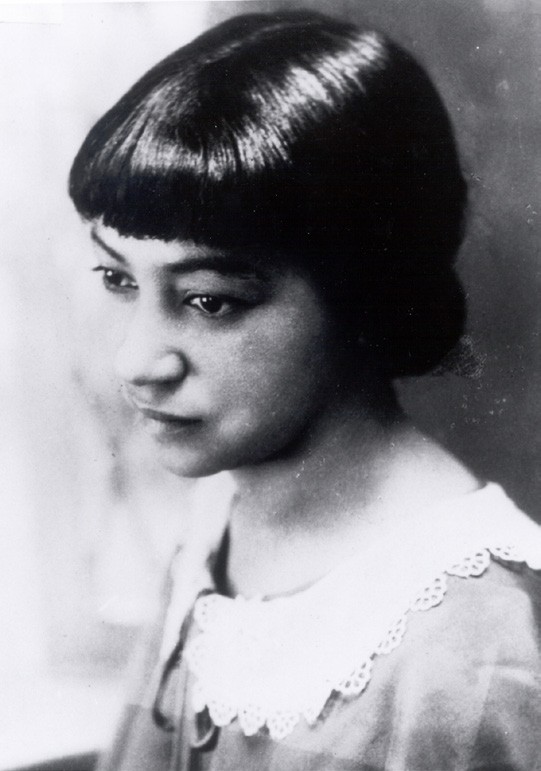 Inez Beverly Prosser
Inez Beverly Prosser was a Texas native who taught in segregated schools in the early 1900s. She travelled to the University of Cincinnati to obtain her doctorate in 1933, making her the first Black woman with a PhD in psychology.
Very little is known about Inez Beverly Prosser, a Texas native who taught in segregated schools in the early 1900s. Her state's universities were segregated, so she travelled to the University of Cincinnati to obtain her doctorate in 1933, making her the first Black woman with a PhD in psychology.
Sadly, Dr. Prosser was killed in a car accident a year after earning her PhD, but her dissertation was widely discussed for years afterward. She found that Black students in segregated schools had better mental health and social skills than those in integrated schools - in large part because of the prejudicial attitudes of the white teachers in those integrated schools. https://feministvoices.com/profiles/inez-beverly-prosser
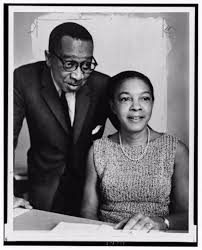 Kenneth & Mamie Phipps Clark
February is Black History Month and to celebrate and acknowledge the contributions that Black Psychologists have made to the discipline and the world, the CPA will be highlighting historically significant Black Psychologists throughout the month (#BlackHistoryMonth).
Kenneth & Mamie Phipps Clark were psychologists famous for their ‘doll experiment’. Their findings, that even black children showed preference for white dolls from as early as three years old, played a role in outlawing segregation.