
Given the growing importance placed on access to mental health care services and the role of psychology, the CPA has released a report that reviews the publicly available data collected by the Canadian Institute for Health Information from 2017 to 2023 on the number of psychologists in Canada. Moving forward, the policy primer identifies two related next steps that need to be considered.
Year: 2025
Mental health care and the federal budget with Glenn Brimacombe

The Canadian federal budget has been released, and some changes to Canada’s mental health landscape will happen as a result. Our resident economist, CPA Director of Policy and Public Affairs Glenn Brimacombe, joins Mind Full to look forward to what Canadians can expect over the year 2026.
Training standards for psychologists in Ontario with Dr. Lisa Votta-Bleeker
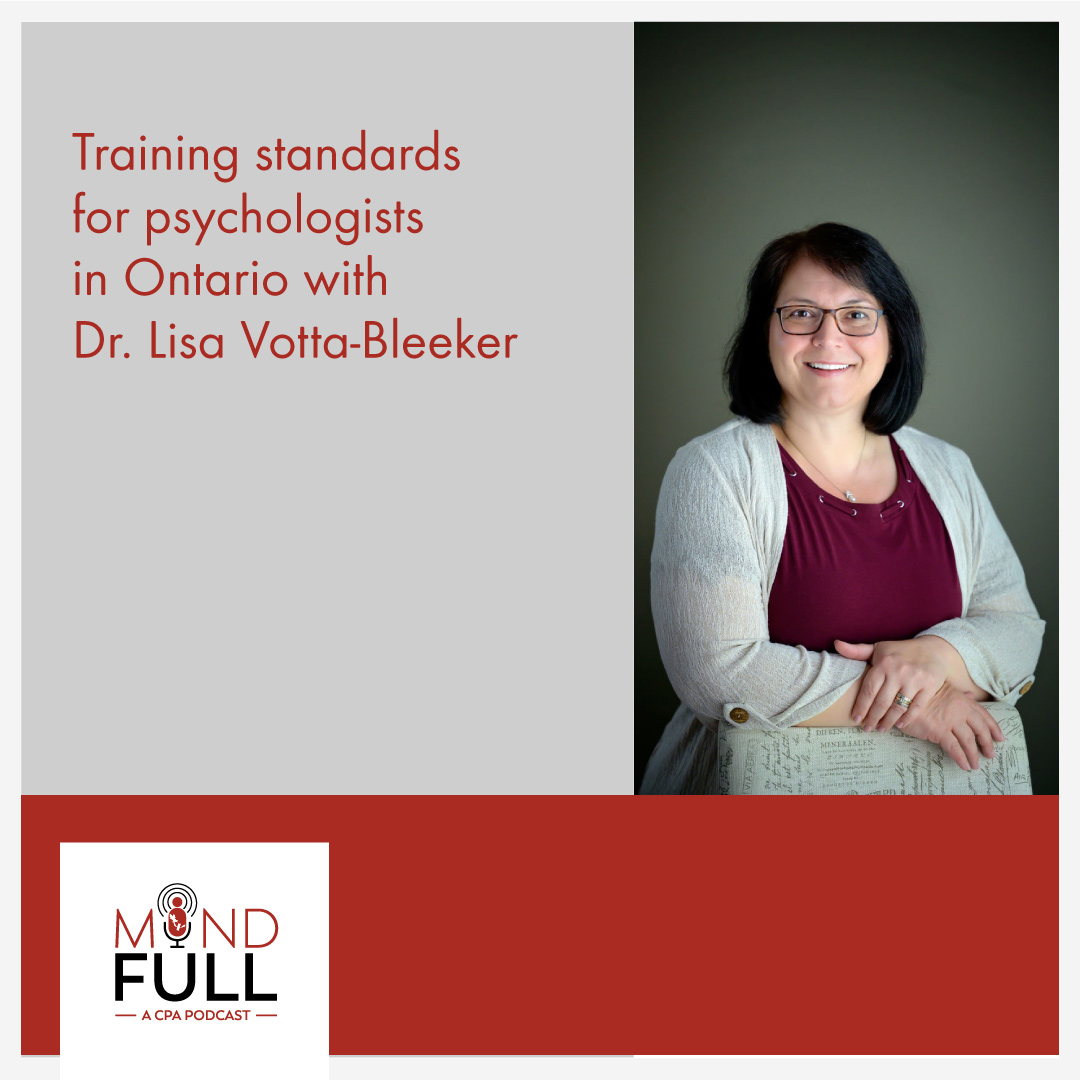
As the College of Psychologists and Behavioural Analysts of Ontario (CPBAO) has proposed a number of changes to their entry-to-practice standards for psychologists, the CPA and other psychology organizations around Canada are raising concerns about those changes. Dr. Lisa Votta-Bleeker, CPA CEO, joins Mind Full to lay out those concerns, and what she sees as the dangers inherent in reducing entry-to-practice standards.
“Psychology Works” Fact Sheet: Executive Functioning
What is Executive Functioning?
Executive functioning refers to mental skills that help you carry out day-to-day tasks. These skills include:
- Inhibition control: the ability to think before acting.
- Working memory: the ability to hold and juggle a small amount of information while performing another task.
- Cognitive flexibility: the ability to adjust your thinking or approach when situations change, so you can find new ways to solve problems or respond.
These executive functions work together to produce skills such as problem-solving, reasoning, planning, and self-control. Executive functioning also supports the ability to communicate and socialize, manage tasks, and engage in moral reasoning. Executive functions are developed throughout childhood into young adulthood. Family environment, stress, and social connections can shape the development of executive functions across stages of growth.
What Areas of My Brain Are Responsible for Executive Functioning?
Research suggests that executive functions are not localized to a single brain area. For example, executive functioning relies on several parts of the brain simultaneously to support decision-making processes. Several areas of the brain’s cortex—the outer layer involved in thinking and decision-making—support inhibition control. The prefrontal cortex, located just behind the forehead, is involved in thinking about and using information, working toward goals, and managing emotions. This brain area also plays an important role in switching between tasks and adjusting one’s thinking when a situation changes.
What Does Executive Functioning Look Like in My Daily Life?
Typical executive functioning in adults can look like:
- Being able to plan and organize tasks at work and in your personal life
- Being able to meet important deadlines
- Making decisions based on reasoning and anticipated outcomes
- Regulating emotions
- Adapting to new situations or unexpected challenges
- Managing time effectively to fulfill daily responsibilities
- Being able to balance multiple tasks or priorities
What Does Executive Functioning Look Like in My Child’s Daily Life?
Typical executive functioning in children can look like:
- Being able to focus on tasks appropriate for their age
- Being able to follow multi-step instructions
- Being able to plan and execute simple tasks, like getting ready for school
- Controlling impulses, like being able to wait for their turn in a game
- Shifting from one activity to another without extreme difficulty
- Remembering rules or routines
What Can Executive Functioning Difficulties Look Like in My Everyday Life?
Common difficulties with executive functioning in adulthood can look like:
- Inhibition Control Difficulties, for example:
- Interrupting others in conversation
- Struggling with impulsive behaviours, like overspending or overeating
- Finding it challenging to focus on a task when distractors are present
- Feeling overwhelmed by strong emotions
- Acting or speaking before thinking, then regretting it
- Working Memory Difficulties, for example:
- Forgetting instructions that you just read
- Losing track of steps when following instructions, like when following a recipe
- Struggling to plan ahead or keep appointments straight
- Relying heavily on reminders, lists, or other people to stay organized
- Experiencing the recurring sense that you are forgetting something important
- Cognitive Flexibility Difficulties, for example:
- Finding it hard to adapt when routines change
- Getting stuck on one way of doing something, even if it is not working
- Having difficulty switching between tasks at work or home
- Feeling overwhelmed by unexpected problems
What Can Executive Functioning Difficulties Look Like for My Child?
Common difficulties with executive functioning in children can look like:
- Inhibition Control Difficulties, for example:
- Fidgeting excessively in class
- Being easily distracted or being disruptive in class
- Finding it challenging to focus on one task
- Feeling overwhelmed by strong emotions
- Not thinking through actions before taking them
- Working Memory Difficulties, for example:
- Difficulty with following multi-step instructions independently
- Losing track of belongings easily
- Difficulty understanding complex texts/reading comprehension texts
- Cognitive Flexibility Difficulties, for example:
- Difficulty connecting different ideas when learning a new topic in school
- Difficulty switching between tasks
- Difficulty solving problems creatively
- Unwillingness to try new ways of completing a task
When Should I Be Concerned?
In both children and adults, some difficulties may be developmentally appropriate and not cause for concern. Consistent struggles that significantly interfere with daily life, learning, or work may indicate abnormal executive functioning.
What Causes Executive Functioning Difficulties?
Executive functioning can be affected by a combination of neurodevelopmental disorders (e.g., ADHD, autism, learning disabilities), genetic factors, and environmental factors. Various factors can affect executive functioning because it involves the coordinated development of multiple vulnerable brain areas and depends partly on how long a particular region of the brain takes to develop. For example, injury to some brain areas can affect planning and goal-directed behaviours, whereas damage to other brain areas might affect impulse control.
Genetic predispositions, such as Down syndrome, can contribute to difficulties with executive functioning. Developmental sensitivity and the timing of exposure to environmental factors—such as traumatic brain injuries, infections, or co-occurring conditions (e.g., ADHD, learning disabilities)—can also significantly affect executive functioning. The brain regions responsible for executive functions are still developing during childhood, so exposure to brain injury or infections may be especially impactful during this period. Chronic cannabis use in adolescence is also associated with poorer executive functioning in adulthood.
In adults, executive functioning can be substantially affected by traumatic brain injury, stroke, and dementia. Psychiatric disorders like ADHD, OCD, anxiety, schizophrenia, and PTSD, all affect different aspects of executive functioning. For example, individuals with OCD typically experience cognitive inflexibility, and individuals with PTSD may experience difficulties with inhibitory control and working memory. Small declines in executive functioning are typical in seniors, and hormonal changes during menopause have been linked to disruptions in executive functioning as well.
How Can Executive Functioning Difficulties Be Treated?
There is not one stand-alone option for treating difficulties with executive functioning. Instead, research shows a multifaceted approach to addressing cognitive, behavioural, and emotional regulation challenges is most effective. Key strategies and interventions for both children and adults include:
- Therapeutic approaches: Structured interventions such as working memory training, and cognitive behavioural therapy (CBT) focusing on improving executive functioning processes like planning, organization, and problem-solving.
- Behavioural interventions: Programs focused on managing specific behaviours (e.g., impulsivity or inattention), using reinforcement strategies to develop self-regulation and adaptive functioning.
- Technology and tools: Utilizing tools like task organizers, time management apps, and visual reminders to support planning and time management.
- Environment modifications: Structuring physical and social environments to reduce distractions and improve focus and organization.
How Can I Help My Child with Executive Functioning Difficulties?
It is important to share your concerns with your child’s teachers and school. Teachers can often provide insight, suggest resources, and work with you on strategies to support your child’s learning needs. You may also want to consult with the school psychologist, who can offer behavioural observations, collaborate with parents and teachers, and conduct assessments that provide deeper insight into your child’s strengths and challenges. They may also be able to recommend local services in your area.
Together, these professionals can recommend strategies and interventions tailored to your child.
Parents and teachers can help by creating consistent routines at home or in the classroom, which give children a sense of predictability. Break tasks into smaller steps and encourage children to focus on one step at a time before moving on. Visual supports, such as checklists and calendars, can also help children stay organized with homework and chores. Finally, playful activities like Freeze Dance or Simon Says give kids a fun way to practice self-control. If challenges persist, consider a formal assessment from a licensed psychologist/therapist in your area. Identifying needs early can lead to more effective support and better outcomes.
Where Can I Go for More Information?
For more information about executive functioning and useful resources, visit:
- Learning Disabilities Association of Ontario: https://www.ldao.ca/faq-items/improving-executive-function-skills/
- Centre for ADHD Awareness, Canada: https://caddac.ca/
- Brain Injury Association of Canada: https://braininjurycanada.ca/en/
You can consult with a registered psychologist to find out if psychological interventions might be of help to you. Provincial, territorial, and some municipal associations of psychology may make available a referral list of practicing psychologists that can be searched for appropriate services. For the names and coordinates of provincial and territorial associations of psychology, go to https://cpa.ca/public/whatisapsychologist/PTassociations/.
This fact sheet has been prepared for the Canadian Psychological Association by Michaela Ritchie, MA, PhD Candidate, University of New Brunswick Saint John and Veronica Wood, University of Guelph-Humber.
Created: October 2025
Your opinion matters! Please contact us with any questions or comments about any of the PSYCHOLOGY WORKS Fact Sheets: factsheets@cpa.ca
Bursary for Equity Deserving Graduate Psychology Students
The Canadian Psychological Association (CPA) is committed to fostering equity, diversity, inclusion, and accessibility in psychology education and strives to support the CPA’s Student Affiliates in different ways, including but not limited to specific benefits, discounted convention rates, research grants, and bursaries for Indigenous psychology student affiliates. This year, the CPA is pleased to provide an additional form of support:
- four grants valued at $2500.00 each for equity deserving psychology student affiliates, and
- two grants valued at $2500.00 each for black psychology student affiliates.
To qualify for this bursary, students must be enrolled in, or have been accepted into, a psychology graduate program at a provincially or territorially chartered Canadian University as a full-time student and be student affiliates of the CPA in good standing, at the time of application and if successful, for the duration of the bursary. The purpose of this bursary is to off-set personal living expenses and/or tuition fees.
Note: Applicant’s can only be funded once from one type of grant from the CPA.
Deadline for applications is January 19, 2026.
Click here to apply: https://cpa.ca/machform/view.php?id=147147
Click here for full instructions: https://cpa.ca/docs/File/Funding/EDIA.Bursary_ApplicationInformation.pdf
Make the Sensory Connection: A Human Approach to Self-Regulation
Ongoing – On Demand
Location: Online
Contact Phone Number: (514) 436-0672
Contact E-Mail: michael@thesensoryconnection.com
Event Link: https://cynthiamillerlautman.com/psychology
Contact Phone Number: (514) 436-0672
Contact E-Mail: michael@thesensoryconnection.com
Event Link: https://cynthiamillerlautman.com/psychology
Do you have clients who struggle with sensory regulation? Many psychologists know that sensory body-based work is important, but struggle to recognize exactly where their clients need support and how to help. Learn how to think about and analyze the senses in a simple, and concrete way that is easily implemented in your practice and explained to clients and their families.
Learning Objectives:
– Understand the 8 sensory systems and how they influence behaviour, learning and emotional regulation in daily life
– Recognize the signs of sensory dysregulation and identify how it may present in children and adults
– Analyze case examples to determine which sensory systems may be under- or over-responsive
– Discover how to use a sensory regulation approach to help reveal the causes of problem behaviours like inattention, aggression, withdrawal, and meltdowns
– Promote a sensory-friendly clinical environment for your clients.
What’s Included:
4 hours of on-demand video
Downloadable handouts
6 months of access to the course
Certificate of completion provided for CE purposes.
This course is recognized by the OPQ (Ordre des Psychologues du Quebec) RA07281-25.
Why we need to stop gambling ads in Canada: Bruce Kidd and Dr. Steve Joordens

In the wake of the NBA gambling scandal, and with Canadians watching televised sports more often, how is the time to curtail the ads that normalize gambling – especially for children. Bruce Kidd and Dr. Steve Joordens from the University of Toronto return to Mind Full to reiterate their warnings about the harms inherent in advertising gambling. Bruce is a Canadian Olympian and a recipient of the Lou Marsh award as Canada’s top athlete. Steve is a psychologist and professor who has written about the “weaponization of psychology” in encouraging addictive gambling behaviour.
Resilience, culture, and living with war – Tomas Vanderkam and Ukraine

The world is paying attention to the current war between Russia and Ukraine. While it is devastating and horrific for the Ukrainian people, it is just the latest in more than a century of war, occupation, oppression, and resilience. What makes a person resilient? What makes a people resilient? And how does that come through in a country where violence and threats from all sides have been ongoing for lifetimes? Tomas Vanderkam joins the CPA’s Mind Full podcast to explore both his Ukrainian heritage and his research into resilience.
Psychologist Social Meetup – ONGOING
ONGOING – dates TBD

Event Link: https://ocdontario.com
Connect, Collaborate & Celebrate: Bi-Monthly Psychology Professionals Social Meetup
Hosted by:
Counselling Services for York Region
7845 Kipling Ave,
Vaughan, ON
L4L 1Z4
csyorkregion.com
and
The OCD and Anxiety Clinic of Ontario
205-4000 Steeles Ave W
Vaughan, ON
L4L 4V9
ocdontario.com
Join fellow psychology professionals from across Ontario for an engaging and dynamic social meetup that happens every other month! Whether you’re looking to expand your professional network, share insights with colleagues, or simply unwind with like-minded professionals, this event offers the perfect blend of meaningful connection and genuine fun.
What to Expect:
- Networking opportunities with psychologists from diverse specialties and practice settings
- Interactive activities designed to spark conversation and collaboration
- Professional development through informal knowledge sharing and peer discussions
- Relaxed atmosphere where you can step away from the clinical setting and connect on a personal level
- Rotating themes and activities to keep each meetup fresh and engaging
Who Should Attend:
Registered psychologists, psychology residents, and mental health professionals practicing in Ontario who are looking to build community, share experiences, and enjoy quality time with colleagues who understand the unique rewards and challenges of our field.
Event Details:
Frequency: Every other month (bi-monthly)
Location: [Venue details to be announced with each event]
Duration: [Time details to be announced]
Cost: $0
Come ready to laugh, learn, and leave feeling energized by the amazing community of psychology professionals in Ontario! Light refreshments and good company guaranteed.
Registration required. Space is limited to ensure intimate, meaningful connections.
Questions? Contact: Robert Roopa at (just broke it up to prevent spam) info @ csyorkregion.com
This is an event hosted by a Clinical Psychologist, located in Vaughan, Ontario. Most of the meetups occur in Vaughan, Ontario.
A division of ‘psychologist near me’ affiliated companies.
Addiction, Substance Abuse and Mental Health
Ongoing from 01 July 2025

Location: Online 24/7
Contact Phone Number: (140) 833-2765
Contact E-Mail: george@dualdiagnosistraining.com.au
Event Link: https://www.dualdiagnosistraining.com.au/contact-us/
Contact Phone Number: (140) 833-2765
Contact E-Mail: george@dualdiagnosistraining.com.au
Event Link: https://www.dualdiagnosistraining.com.au/contact-us/
George Patriki provides both LIVE and ONLINE training & professional development for General Practitioners as well as the health care, welfare and social service industries on the Gold Coast, throughout Australia and to 124 countries in the world. Cost of Dual Diagnosis Training in Addiction, Substance Abuse and Mental Health is reduced from $390 (ex GST) to $195 (ex GST) at 50% off = $214.50 (with GST).
Live webinars are also available for organisations for up to 25 people. Email us for enquires.
To obtain a certificate of attendance and also qualify for 15 hours (ONLINE) or up to 15 hours (Live) of CPD (Continuing Professional Development) for their professional peak body (APS, ACA, AASW, CPA, PACFA, ACWA etc), you must complete the full training, either LIVE or ONLINE.
When you have completed the course, please email me the statement from the learning platform along with the worksheet emailed to you with the login link so I can send you an official certificate from us for your professional development hours.
This advanced training covers all of the current evidence based, best practice in in Addiction, Substance Abuse and Mental Health from an integrated, holistic framework.
Correspondence with killers – in conversation with Jeffrey Smalldon
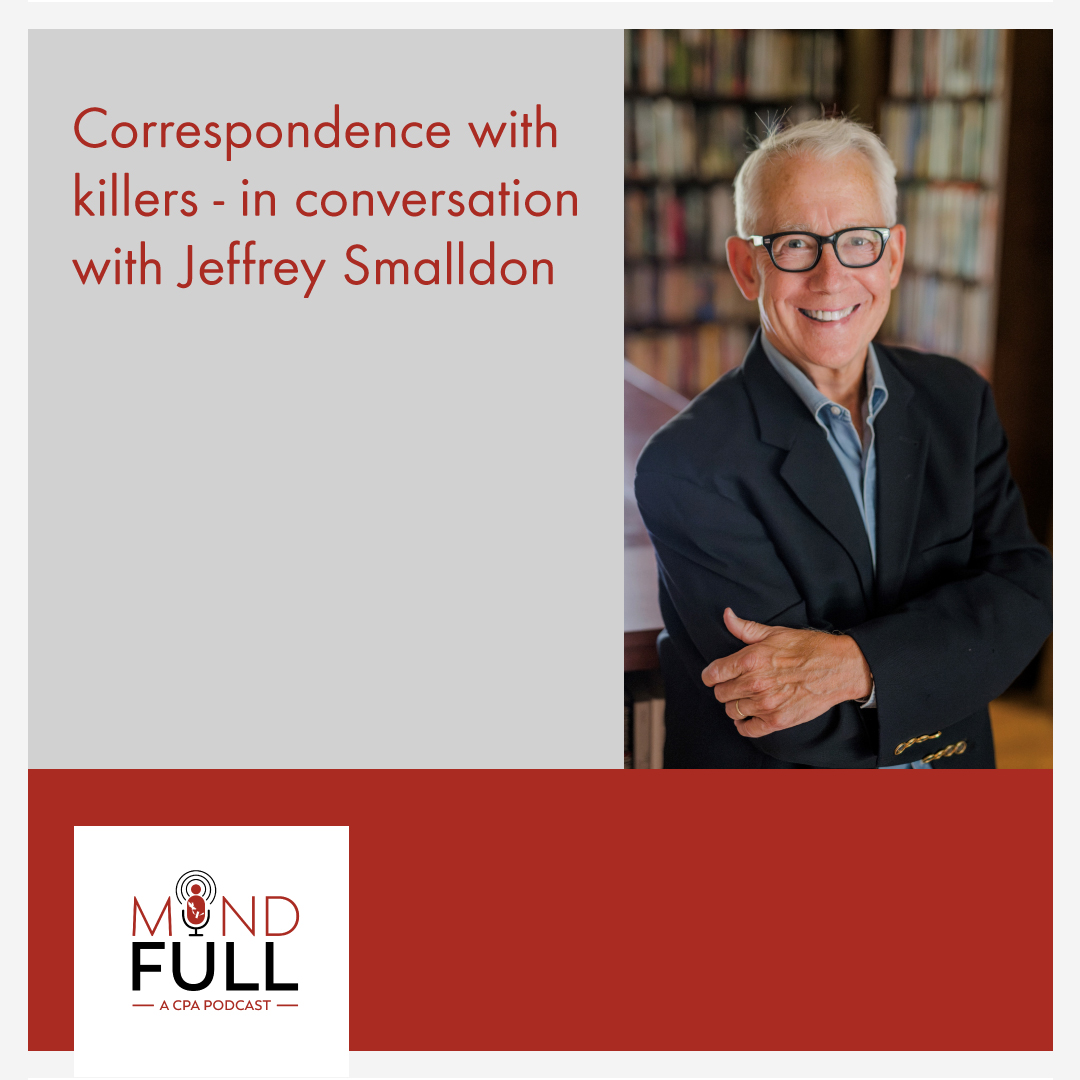
Forensic psychologist Jeffrey Smalldon spent decades corresponding, conversing, and probing the minds of some of America’s most notorious killers, from John Wayne Gacy to the Manson family. Why are we, as a society, so fascinated with history’s most violent and depraved acts and events? Are Canadians different from Americans in our fascination with such horror?
Before the budget: Federal considerations with Glenn Brimacombe

The 2025 federal budget will be delivered November 4th. Glenn Brimacombe, Director of Policy and Public Affairs at the CPA, joins Mind Full to discuss the advocacy approach to the budget process. We know many things that Canadians and mental health professionals want – parity between healthcare and mental health care, for example. How are we doing in advancing those priorities, and what can the rest of us do?
CPA/OPA joint letter to Ontario College of Psychologists and Behavioural Analysts re: proposed regulatory changes in Ontario
Indigenous culture and community in St. John’s – First Light with Stacey Howse

Every year at the CPA convention, we sell orange T-shirts designed by Betty Albert to raise money for an Indigenous-led charity. In 2025 the convention was held in St. John’s, Newfoundland, and the recipient of the T-shirt proceeds is First Light, an organization that works with urban Indigenous and non-Indigenous people in the city.
Stacey Howse is the Executive Director of First Light, and she joins Mind Full to tell us about the organization, their wraparound services, and the unique challenges facing urban Indigenous people in St. John’s today.
September 30th Rally for Reconciliation in St. John’s: firstlightnl.ca/community-events/orange-shirt-day/
New Booklets Released – Phonological Awareness Activities for the Kindergarten-Age Child
The CPA is pleased to announce the release of two research-based booklets designed to help kindergarten children with phonological awareness.
These booklets were created in response to recent endorsements of kindergarten reading programs that emphasize the phonics approach over the whole-language approach. The first booklet, titled, Promoting Reading Success: A Teacher’s Guide to Phonological Awareness Activities for the Kindergarten Child, is intended for use by teachers and can be purchased on the Publications page of the CPA website. The booklet is available in both English and French. To learn more about this booklet, you can read the Preface here. The second booklet, titled, Promoting Reading Readiness: A Parent/Caregiver’s Guide to Phonological Awareness Activities for the Kindergarten-Age Child, is intended for use by parents and caregivers, and can be downloaded for free by clicking here – you also can find the link to this booklet on the Publications page of the CPA website.
If you know of any teachers, parents, or caregivers who may benefit from these booklets, please share this information with them.
The Path to Graduate School In Psychology In Canada
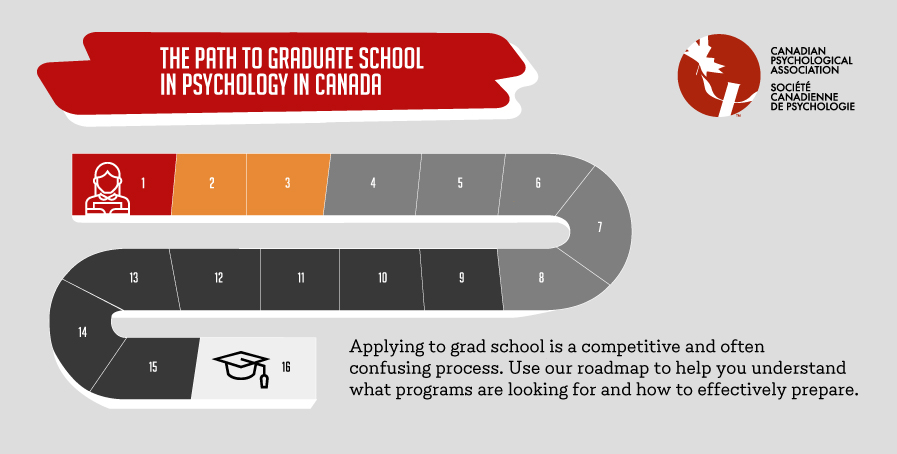
Applying to grad school is a competitive and often confusing process. Use our roadmap to help you understand what programs are looking for and how to effectively prepare.
Student Research Grants
The CPA, along with the Canadian Society for Brain, Behaviour and Cognitive Science (CSBBCS), and the Council of Professional Associations of Psychologists (CPAP; funding provided by BMS Canada) wish to support student research in all areas of psychology through annual funding.
Please direct any questions to science@cpa.ca.
Call for applications is now CLOSED.
Please see below for a description and eligibility criteria for the four research grants currently offered. You only need to fill in one application form to apply for the four grants.
Click here to read about the application requirements and detailed eligibility criteria for the research grants. You should read this document thoroughly before you apply for the grants.
Research grants application form: https://cpa.ca/machform/view.php?id=61626
Research grants application deadline: Monday, February 2, 2026.
| Grant Name and Amount | Description | Eligibility Criteria |
| CPA’s Scientific Affairs Committee Student Research Grant
Up to $1,500 |
Grant sponsored by the CPA, and administered by the CPA’s Scientific Affairs Committee, to support graduate student research in all areas of psychology (conference registration/attendance fees excluded) |
|
| CPA Student Section Research Grant
Up to $500 |
Grant to support graduate student research in all areas of psychology (conference registration/attendance fees excluded) |
|
| CPA-CSBBCS Research Grant
Up to $1,500 |
Grant co-sponsored by the CPA and the CSBBCS to support graduate student research in the brain and cognitive sciences (conference registration/attendance excluded) |
*between you and your supervisor, there must be a member in good standing in both organizations |
| BMS Student Research Grant
Up to $2,500 |
Grant sponsored by BMS to support student research in all areas of psychology (conference registration/attendance excluded) |
*between you and your supervisor, there must be a member in good standing in both organizations |
To read about how the research grant applications are evaluated, rules governing the release of funds, what constitutes eligible and not eligible expenses, and the responsibilities of grant holders, please click here
CPA Provides input into 2025 Federal Budget (August 2025)
Now that the federal government has committed to a Fall budget, the CPA provide its views via a Brief to the House of Commons Standing Committee on Finance. As part of its strategic alliances, the CPA has also contributed and shaped the Briefs of the Canadian Alliance on Mental Illness and Mental Health (CAMIMH), the Canadian Consortium for Research (CCR), and the Extended Healthcare Professionals Coalition (EHPC) that were also submitted. The CPA has also requested to appear as a witness to the Committee hearings.
Criminal profiling on TV and in real life with Dr. Alexandra Zidenberg

Criminal profiling, in the sense that we see it on TV, has less than a 50% success rate. As a tool of law enforcement, it is the equivalent of a coin flip. But seeing law enforcement use it successfully on television gives us, the viewers, a sense that these methods yield tremendous results in real life. And, maybe, makes us believe that we would be successful should we be given a similar task. Dr. Alexandra Zidenberg from the University of Montreal joins Mind Full to talk about a recent study she did with grad student Vivian Mullins in RMC’s Department of Military Psychology and Leadership. How much does binge-watching Criminal Minds enhance our ability to profile a suspect? Do true-crime podcasts (which usually deal with crimes that have been solved) skew our beliefs about the effectiveness of law enforcement?
Thinking beyond academic achievement with Dr. Linda Iwenofu

A lot of the time, awards given out in school reflect academic achievement – marks and grades are quantifiable, and it’s easy to determine which students are the top academic performers. But does this create too much pressure on those students who compete for those accolades? And where does it leave the students who excel in other, less quantifiable areas? Today’s guest, Dr. Linda Iwenofu, suggests a restructuring of our reward systems, from primary school to post-secondary institutions.
CPA Congratulates the Federal Government Post-Election (May 2025)
Now that the federal election has come and gone, the CPA congratulated Prime Minister Carney and select number of Ministers, reminding them of the importance of investing in the mental and behavioral of Canadians, which can pay many health, social and economic dividends to this great country. See letters to Prime Minister Carney, Minister Michel, Minister Joly, and Minister Valdez.
CPA Announces recipients of the Bursary for Equity Deserving Graduate Psychology Students
The Canadian Psychological Association (CPA) is committed to fostering equity, diversity, inclusion, and accessibility in psychology education and strives to support the CPA’s Student Affiliates in different ways, including but not limited to specific benefits, discounted convention rates, research grants, and bursaries for Indigenous psychology student affiliates. This year, the CPA is provided an additional form of support:
- four grants valued at $2500.00 for equity deserving psychology student affiliates, and
- two grants valued at $2500.00 each for black psychology student affiliates.
To qualify for this bursary, students must be enrolled in, or have been accepted into, a psychology graduate program at a provincially or territorially chartered Canadian University as a full-time student and be student affiliates of the CPA in good standing, at the time of application and if successful, for the duration of the bursary. The purpose of this bursary is to off-set personal living expenses and/or tuition fees.
Vanessa Currado
Marisa Nelson
Noor Hadad
Harshita Pancholi
Kevin Prada
Adnan Zoubi
Contingent work in Canada with Dr. Catherine Connelly
Contingent workers, a group which includes gig workers, contract workers, and temporary foreign workers, are a growing segment of Canada’s workforce. This trend shows no signs of slowing, and as a result there is an increasing need to protect those workers, who are vulnerable to abuse and exploitation. Today’s guest, Dr. Catherine Connelly, tells us about the current state of contingent work in Canada, and suggests some ways we can ensure the safety and security of Canadian contingent workers going forward.
Music and Memories with Dr. Myra Fernandes

Popular music, and the music we heard often in our formative years, can hold memories for us, and hearing a certain tune can unlock memories we might not otherwise access on a regular basis. Today’s guest, Dr. Myra Fernandes, recently published a study with Pelin Tanberg and Ryan Yeung at the University of Waterloo that tells us even more about music and memory, and the specific relationship between the two.
Satanic Panic Revisited: 35 Years of Learning With Dr. Randy Paterson
It has been more than 30 years since the Satanic Panic gripped popular culture. Millions were convinced there was an epidemic of child abuse stemming from satanic beliefs and rituals. There was no evidence to support these claims. There were TV specials, arrests, prosecutions, and even convictions – all based on something that never happened. Dr Randy Paterson joins Eric to look back at this phenomenon. He draws a parallel to today’s QAnon beliefs, and points out psychology’s role not only in explaining the panic in retrospect, but in fueling the flames in the first place.
Is my dog angry or scared? Psychology and animal behaviour with Hannah Burrows
In this week’s episode of the Mind Full podcast we talk to Hannah Burrows, a Master’s psychology student specializing in animal behaviour. Specifically, the relationship between dogs and people. We talk about dogs, research, and the incredible things we have learned about animals over the years – crows, cuttlefish, and of course our own furry companions
CPAP Group Benefits Survey
The Council of Professional Associations of Psychology (CPAP), in collaboration with the Canadian Psychological Association (CPA), is seeking input on a potential group benefits plan for psychologists.
We ask that you please complete the brief survey below which asks whether you’re interested in a group benefits plan and if so, the coverage and features you would like offered/implemented.
English – https://web2.cpa.ca/membersurveys/index.php/415456?lang=en
French – https://web2.cpa.ca/membersurveys/index.php/415456?lang=fr
Thank you for taking the time to complete this survey.
“Psychology Works” Fact Sheet: Teens and Screens
Effects of Screen Use
It is well-known that screen use, and social media, are particularly interwoven into the lives of adolescents in modern society. Due to early access to smartphones, design features meant to keep youth on games and sites, and adolescents’ affinity for feedback from their peers, it is difficult to monitor their screen use and the impact on their mental health. Like younger children, teens who spend a great deal of time on screens tend to spend less time doing healthy activities that promote their development, such as socializing in-person, exercising, and reaching their academic potential. While technology provides access to helpful information, tools to get things done, and entertainment, it can also have a negative impact on teens. Here is a sample of some of the most common effects we have discovered so far:
- Social media can support connection and sense of community, particularly for youth who feel marginalized.
- Video game use can provide positive socialization and improve some cognitive skills.
- Excessive, problematic, or passive viewing such as scrolling, is associated with:
- symptoms of depression and/or anxiety
- reduced self-esteem
- sedentary lifestyle and possible weight gain
- distraction from school
- addictive use leading to increased interference with daily functioning such as getting enough sleep, eating well, and getting to school on-time
Recommendations for Use
Here are some recommendations to help reduce the likelihood of the negative effects of screen use. Remember, screen and social media use are developmental skills, like many other tasks of adolescence, your teen will make mistakes and need support to learn and grow in this area.
- First, watch for signs of problematic or excessive use. Examples of signs include:
- inability to put devices away or unplug
- not engaging with others in-person and/or social isolation
- not engaging in physical activities
- grades dropping or other signs of academic difficulties
- lying to get more access
- difficulty sleeping or reduced sleep
- Because of the serious effects of social media on many young adolescents’ mental health, it is critical to monitor their use of social media – protect from harmful and hateful behaviour.
- Due to positive social support and sense of connection, do not completely remove access to devices. Instead work towards setting age-appropriate limits both to content and amount of time on screens.
- As most adolescents are students, it is important to support them in their study habits. For example, teaching them to avoid “digital multi-tasking,” such as surfing while studying by placing their phone away from their study area.
Caregiver Strategies
It can be challenging to know how best to implement screen limits with teens. Here are some parenting strategies that can help:
- Role model healthy screen behaviour: Caregiver screen use is associated with child screen use and more negative effects.
- Have whole family, regular screen-free time: Everybody Unplug!
- Develop proactive structure and limits around screen use. Start when children are young.
- Teach adolescents social media literacy include who is safe to talk to and what is appropriate to post.
- Allow screen time only after completing other necessary tasks, for example, homework, physical activity, social activities.
- As teens display appropriate behaviour, provide intermittent periods of unsupervised access – with time limits and content monitored for young adolescents. Timing and tracking devices may be of use here.
- Do not extend the screen time in response to protests – validate their feelings of sadness and disappointment, coach them through regulating their emotions if upset and stick to the limit.
- Learn and practice emotion self-regulation strategies to cope with teen protests, for example, mindfulness, self-compassionate statements, and calm breathing.
- Teens may need to be reminded that screen and device access is a privilege, not a right and as the adult you are in charge and their well-being in your top priority.
- As older teens show ability to manage their screen use and literacy, more freedom is earned. Caregivers can gradually reduce content surveillance and screen time limit monitoring.
- Even with more freedom, check-in monthly to review the rules and how things are going. Praise youth for appropriate behaviour. If signs of problematic use emerge, time and content limits should be reinstated.
- Make sure to stay calm and approachable around discussing screen use so that teens feel comfortable to come to you if a mistake is made or a rule is broken. It is most helpful if teens come to you so you can problem-solve collaboratively how to move forward in a healthy way.
- Continue to monitor for signs of cyber-bullying as well as social exclusion. These may be similar to the signs of problematic or excessive screen use described above. Additional signs may include more serious mental health symptoms such as sudden changes to participation in activities, mood, and self-care. Similar to other times when your teen needs help, get involved in an active way, seek out mental health supports if needed, and work with your teen to set-up increased safety protocols using other strategies suggested here.
- Establish a safety and support protocol so that if they get into a risky situation or an incident occurs (much like “call home if you or your driver is unsafe to drive”) they will connect with you. This way your teen is able to get the timely support they need and problem-solve for the future, rather than hiding/making things worse due to fear of having phone/social media use removed.
- No screens in the bedroom/overnight (or ensure all notifications are turned off, and overnight usage monitored). Ideally all household electronics (parents too) go to a central location for charging overnight.
Additional Resources
We know that parenting around screen time and digital media use can be hard. Technology and programs are designed to be rewarding and make it hard to stop. Using these strategies will take time and practice but are worth the effort. Below are some additional resources to help. If you are concerned about the mental health and wellbeing of anyone in your family, please seek out additional professional support.
- Canadian Pediatric Society Digital Media Resources
- American Pediatric Society Family Media Plan
- Media Smarts: Canada’s Centre for Digital and Media Literacy
You can consult with a registered psychologist to find out if psychological interventions might be of help to you. Provincial, territorial, and some municipal associations of psychology may make available a referral list of practicing psychologists that can be searched for appropriate services. For the names and coordinates of provincial and territorial associations of psychology, go to https://cpa.ca/public/whatisapsychologist/PTassociations/.
This fact sheet has been prepared for the Canadian Psychological Association by Dr. Jo Ann Unger, C. Psych. and Dr. Michelle Warren, C. Psych., University of Manitoba.
Revised: May 2025
Your opinion matters! Please contact us with any questions or comments about any of the PSYCHOLOGY WORKS Fact Sheets: factsheets@cpa.ca
References
American Psychological Association. (2023). Health advisory on social media use in adolescence. https://www.apa.org/topics/social-media-internet/health-advisory-adolescent-social-media-use
Boak, A., Elton-Marshall, T., & Hamilton, H.A. (2022). The well-being of Ontario students: Findings from the 2021 Ontario Student Drug Use and Health Survey (OSDUHS). Centre for Addiction and Mental Health. https://www.camh.ca/-/media/files/pdf—osduhs/2021-osduhs-report-pdf.pdf
Boers, E., Afzali, M.H., Newton, N., & Conrod, P. (2019). Association of screen time and depression in adolescence. JAMA Pediatrics, 173(9), 853-859. https://doi.org/10.1001/jamapediatrics.2019.1759
Boer, M., Stevens, G. W.J.M., Finkenauer, C., de Looze, M. E., & van den Eijnden, R.J.J.M. (2021). Social media use intensity, social media use problems, and mental health among adolescents: Investigating directionality and mediating processes. Computers in Human Behaviour, 116, Article 106645. https://doi.org/10.1016/j.chb.2020.106645
Kim, S., Favotto, L., Halladay, J., Wang, L., Boyle, M.H., Georgiades, K. (2020). Differential associations between passive and active forms of screen time and adolescent mood and anxiety disorders. Social Psychiatry and Psychiatric Epidemiology, 55(11), 1469-1478. https://doi.org/10.1007/s00127-020-01833-9
Li, X., Vanderloo, L.M., Keown-Stoneman, C.D.G., Cost, K.T., Charach, A., Maguire, J.L., Monga, S., Crosbie, J., Burton, C., Anagnostou, E., Georgiades, S., Nicolson, R., Kelley, E., Ayub, M., Korczak, D.J., & Birken, C.S. (2021). Screen use and mental health symptoms in Canadian children and youth during the COVID-19 pandemic. JAMA Network Open, 4(12), Article e2140875. https://doi.org/10.1001/jamanetworkopen.2021.40875
Li, X., Vanderloo, L.M., Maguire, J.L., Keown-Stoneman, C.D.G., Aglipay, M., Andersons, L.N., Cost, K.T., Charach, A., Vanderhout, S.M., & Birken, C.S. (2021). Public health preventive measures and child health behaviours during COVID-19: A cohort study. Canadian Journal of Public Health, 112, 831-842. https://doi.org/10.17269/s41997-021-00549-w
MediaSmarts. (2022). Young Canadians in a wireless world, phase IV: Life online. https://mediasmarts.ca/sites/default/files/publication-report/full/life-online-report-en-final-11-22.pdf
Ponti, M. (2023). Screen time and preschool children: Promoting health and development in a digital world. Canadian Pediatric Society Digital Health Task Force. https://cps.ca/en/documents/position/screen-time-and-preschool-children#ref14
Toombs, E., Mushquash, C.J., Mah, L., Short, K., Young, H., Cheng, C., Zhu, L., Strudwick, G., Birken, C., Hopkins, J., Korczak, D.J., Perkhun, A., & Born, K.B. (2022). Increased screen time for children and youth during the COVID-19 pandemic. COVID-19 Science Advisory Table. https://doi.org/10.47326/ocsat.2022.03.59.1.0
“Psychology Works” Fact Sheet: Young Kids and Screens
Effects of Screen Use
Children have access to and use technology and electronic devices more than ever before. While technology provides access to helpful information, tools to get things done, and fun entertainment, it can also have negative impacts, particularly for children. This can include replacing other activities needed for healthy growth and development and negatively impacting emotional and social well-being. Here is a sample of some of the most commonly found effects we have discovered so far:
- While live, dynamic interactions with caring adults are best for children’s development, age-appropriate educational media can also support language, reading, cognitive and social development.
- Technologies can be used to encourage and compliment physical activity and motor milestones.
- Although specific uses of digital technology can support some developmental tasks, too much or excessive use is associated with:
- language delays, lower cognitive abilities, and delayed reading skills
- reduced emotional self-regulation ability and behaviour problems
- social skills deficits
- poorer motor development
- poor sleep when viewed before bed
Recommendations for Use
Here are some recommendations to make sure kids are not over-exposed to screens, particularly during the early years of brain development:
- Under 2 Years: No Screen Time.
- 2-5 Years: Less Than 1 Hour per Day.
- Currently there are no specific published guidelines for amount of screen use for children over 5 years of age. It is commonly recommended by clinicians that school-aged children not exceed 1 hour of recreational screen time per school day and not over 2-3 hours per weekend day, with flexibility for age and ability level.
- Some provinces have implemented a “no personal device policy” at school. While research is pending on its effectiveness, this appears to be a useful policy and likely helpful for elementary school-aged children’s overall development and well-being.
- Short periods of use broken up by whole body movement activities.
- Avoid screens after 7pm and at least 1 hour before bed.
- Prioritize educational, age-appropriate, and interactive material – no violent content for younger children. For older children, violent content should be monitored and debriefed with parents.
- Caregivers be present and engaged while young children are using digital media. This allows for active supervision as well as an opportunity to spend time with and get to know the interests of your children.
- Turn off screens when not in use. Passive screen use (e.g., TV’s on in the background) has been found to be associated with more negative effects of screen use as described above.
Caregiver Strategies
It can be challenging to know how best to implement screen limits with children. Here are some parenting strategies that can help:
- Role model healthy screen behaviour: Caregiver screen use is associated with child screen use and more negative effects for children.
- Have whole family, regular screen-free time: Everybody Unplug!
- Develop proactive structure and limits around screen use. Timing and tracking devices may be of use here. Start when children are young.
- Plan ahead for when children will get screen time, so you do not have to decide every time they ask.
- Understand your child’s screen activity so that you can support them in ending well. Can it be saved at certain points? Does a video length go beyond their time limit? Help them chose the screen activity and be specific around the type of media activity they will use, for example, “surfing” is harder to end and supervise.
- Prioritize screen activities that have positive benefits, such as educational apps and video connections with loved ones.
- Allow screen time only after completing other needed tasks, for example, homework, physical activity, social activities.
- Give a time warning before ending screen time so they can prepare to end or save their activity.
- Do not extend the screen time in response to protests – validate their feelings of sadness and disappointment, coach them through regulating their emotions if upset and stick to the limit.
- Learn and practice emotion self-regulation strategies to cope with child protests, for example, mindfulness, self-compassionate statements, and calm breathing.
- Have an activity or task ready to move to after the screen time has ended and gently guide them to it.
- Reward children with praise when they end screen time at the first request.
- If children act out when screen time ends, have a natural consequence prepared which the children know about ahead of time.
- For older children who have been allowed to engage with social media, require that they include you in their “friend” groups and allow you to follow them. This can be explained as part of your job in keeping them safe.
- For older children who have been allowed to participate in group chats, they need to allow random caregiver checks on content to ensure their safety and that they are learning to engage with friends online appropriately. While children may need more teaching, restrictions, and/or supervision if mistakes are made, make sure to stay calm and approachable around these discussions. It is most helpful if your older children come to you so you can problem-solve collaboratively how to move forward in a positive way.
- Additional strategies for monitoring and managing cyber-bulling risk factors for older children can be found on the Teens and Screens Fact Sheet.
Additional Resources
We know that parenting around screen time and digital media use can be hard. Technology and programs are designed to be rewarding and make it hard to stop. Using these strategies will take time and practice but are worth the effort. Below are some additional resources to help. If you are concerned about the mental health and wellbeing of anyone in your family, please seek out additional professional support.
- Canadian Pediatric Society Digital Media Resources
- American Pediatric Society Family Media Plan
- Age-Appropriate Viewing
- Guidelines on Physical Activity, Sedentary Behaviour and Sleep: For Children Under 5 Years of Age
- Media Smarts: Canada’s Centre for Digital and Media Literacy
You can consult with a registered psychologist to find out if psychological interventions might be of help to you. Provincial, territorial, and some municipal associations of psychology may make available a referral list of practicing psychologists that can be searched for appropriate services. For the names and coordinates of provincial and territorial associations of psychology, go to https://cpa.ca/public/whatisapsychologist/PTassociations/.
This fact sheet has been prepared for the Canadian Psychological Association by Dr. Jo Ann Unger, C. Psych. and Dr. Michelle Warren, C. Psych., University of Manitoba.
Revised: May 2025
Your opinion matters! Please contact us with any questions or comments about any of the PSYCHOLOGY WORKS Fact Sheets: factsheets@cpa.ca
References
Cost, K.T., Unternaehrer, E., Tsujimoto, K., Vanderloo, L.L., Birken, C.S., Maguire, J.L., Szatmari, P., Charach, A. (2023). Patterns of parent screen use, child screen time, and child socio-emotional problems at 5 years. Journal of Neuroendocrinology, 35(7), Article e13246. https://doi.org/10.1111/jne.13246
Farah, R., Zivan, M., Niv, L., Havron, N., Hutton, J., & Horowitz-Kraus, T. (2021). High screen use by children aged 12-36 months during the first COVID-19 lockdown was associated with parental stress and screen us. Acta Pediatrica, 110(10), 2808-2809. https://doi.org/10.1111/apa.15979
Mantilla A., & Edwards, S. (2019). Digital technology use by and with young children: A systematic review for the statement on young children and digital technologies. Australian Journal of Early Childhood, 44(2), 182-195. https://doi.org/10.1177/1836939119832744
Ponti, M. (2023). Screen time and preschool children: Promoting health and development in a digital world. Canadian Pediatric Society Digital Health Task Force. https://cps.ca/en/documents/position/screen-time-and-preschool-children#ref14
Wong, R.S., Tung, K.T.S., Rao, N., Leung, C., Hui, A.N.N., Tso, W.W.Y., Fu, K.-W.Y., Jiang, F., Zhao, J., & Ip. P. (2020). Parent technology use, parent-child interaction, child screen time, and child psychosocial problems among disadvantaged families. The Journal of Pediatrics, 226, 258-265. https://doi.org/10.1016/j.jpeds.2020.07.006
The CPA’s Scientific Affairs Committee is Seeking New Members!
The Canadian Psychological Association’s Scientific Affairs Committee (SAC) is currently recruiting new members. The SAC’s primary aim is to advance psychological science by working on matters of importance to the psychological research community, CPA members and affiliates, and groups of researchers. It is also responsible for the policies and practices of the CPA’s journals and other publications.
Yearly activities of SAC members include reviewing student research grant applications, providing input on CPA journal matters (e.g., publishing agreements, open-access wording, publishing standards), and reviewing special issue proposals for the journals. Additional activities will come up throughout the term. For more information on the SAC, or to read the SAC Terms of Reference, click here.
If you are interested in joining the important work of the SAC, please send a letter of intent and updated CV to Dr. Lauren Thompson, CPA’s Science Director at science@cpa.ca. In your letter of intent, please specify whether your research falls primarily within the mandate of SSHRC, NSERC, or CIHR.
Celebrate EVERYTHING with Dr. Rehman Abdulrehman

Every time we get to celebrate something, we’re a little happier as a result. A promotion, a birthday, an unusually warm and sunny day in January. The fact is, there are hundreds of reasons for a celebration, but for some reason we don’t lean into them all. Dr. Rehman Abdulrehman has a radical idea – let’s celebrate EVERYTHING!
A virtual reality tour of a residential school with Dr. Iloradanon Efimoff and Dr. Katherine Starzyk
Dr. Katherine Starzyk and Dr. Iloradanon Efimoff created a virtual reality tour of a residential school. They collaborated with Survivors and computer scientists to see if a tour in this manner could change attitudes toward residential schools and reconciliation. Did it work? Well…kind of. But that doesn’t mean the study wasn’t worth doing! On today’s episode of Mind Full we discuss what they learned and how even disappointing results move science and understanding forward.
CPA’s 2025-2030 Strategic Plan
It is with great pleasure that the CPA’s Board of Directors releases the CPA’s 2025-2030 Strategic Plan.
The CPA’s Board wishes to thank all members, affiliates, and associates who took the time, whether as individuals or as part of a collective, to provide input as part of our open consultation and call for feedback. With the new Strategic Plan, we have refreshed the CPA’s Vision, Mission, and Strategic Priorities. More…
2024 Best Article Award, Canadian Psychology / Psychologie canadienne.
Congratulations to Heather K. Gower and Graham Gaine for their article, Ethics of psychotherapy rationing: A review of ethical and regulatory documents in Canadian professional psychology (2024, Vol. 65, Issue 1, pp. 15-27) which was selected as the winner of the 2024 Best Article Award in Canadian Psychology / Psychologie canadienne.
The CP Editorial team nominates articles for this award, and the articles are adjudicated by the CPA Board of Directors representing Science, Practice, and Education.
This article is now Free to Read, to access it, click here.
2024 Best Article Award, Canadian Journal of Behavioural Science / Revue canadienne des sciences du comportement
Congratulations to Scott Davies and Angran Li for their article, Effects of summer numeracy interventions among French-language students in Ontario (2024, Vol. 56, Issue 3, pp. 195-204) which was selected as the winner of the 2024 Best Article Award in the Canadian Journal of Behavioural Science / Revue canadienne des sciences du comportement.
The CJBS Editorial team nominates and adjudicates articles for this award.
This article is now Free to Read, to access it, click here.
The psychology of anti-trans legislation with Dr. Alison Phillips and Julia Standefer
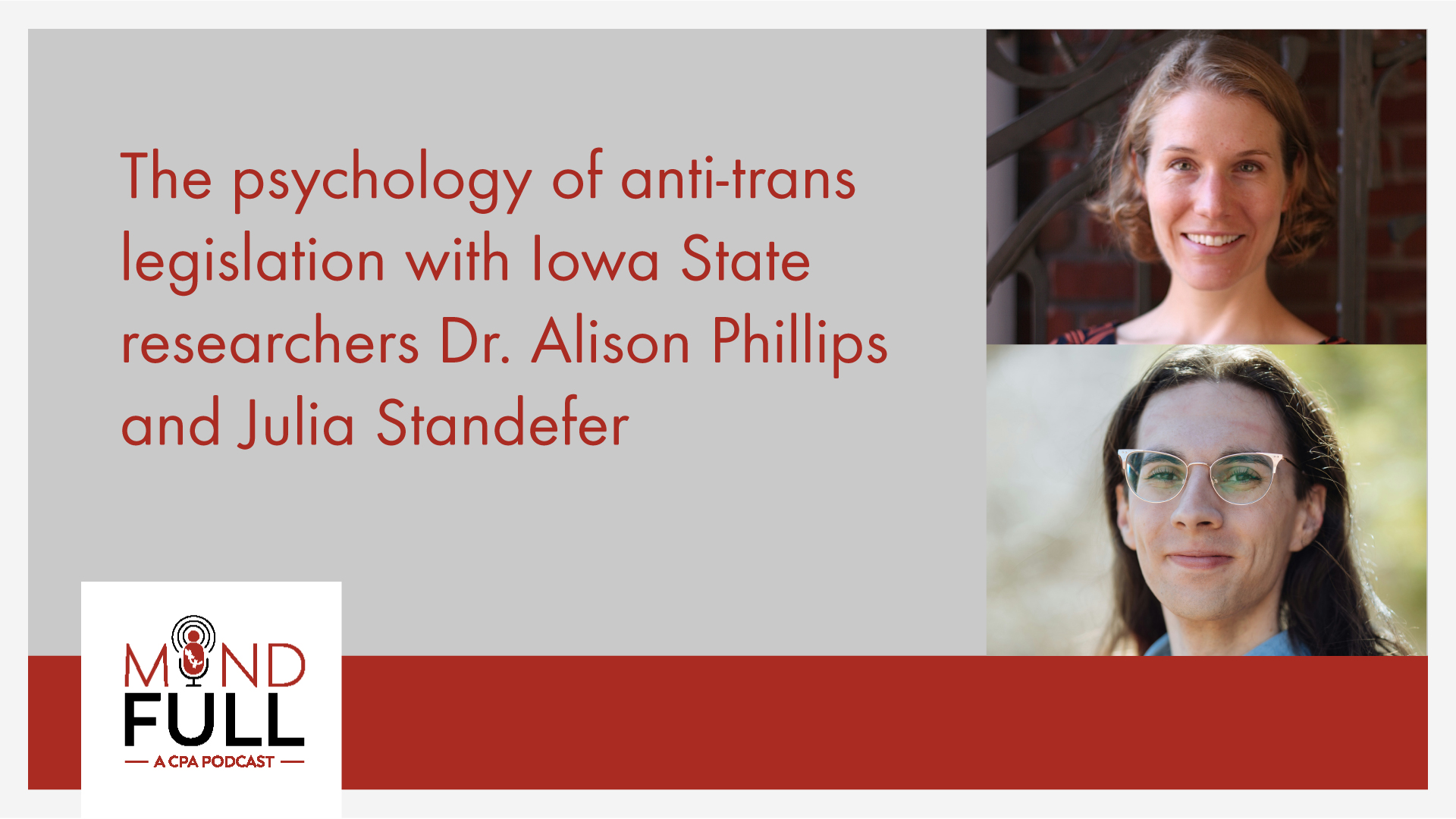
We’ve spoken on Mind Full before about anti-trans legislation, and the push to sideline the scientists doing work in the sex and gender space. But we’ve always done so from a Canadian perspective. We were curious to know how American psychologists are feeling at the moment. Dr. Alison Phillips and Julia Standefer, researchers at Iowa State University, tell us about their current situation and a recent article.
2024 Best Article Award, Canadian Journal of Experimental Psychology / Revue canadienne de psychologie expérimentale
Congratulations to Véronic Delage, Richard J. Daker, Geneviève Trudel, Ian M. Lyons, and Erin A. Maloney for their article, It is a “small world”: Relations between performance on five spatial tasks and five mathematical tasks in undergraduate students (2024, Vol. 78, Issue 4, pp. 256-274) which was selected as the winner of the 2024 Best Article Award in the Canadian Journal of Experimental Psychology / Revue canadienne de psychologie expérimentale.
The CJEP Best Article Award is co-sponsored by the CPA and the Canadian Society for Brain, Behaviour and Cognitive Science (CSBBCS). The CJEP Editorial team nominates articles for this award, and the articles are adjudicated by CPA and CSBBCS appointed members.
This article is now Free to Read, to access it, click here.
Psychological Tele-Assessment: Guidelines for Canadian Psychologists
On December 17th, 2024, the CPA’s Board of Directors approved the Psychological Tele-Assessment: Guidelines for Canadian Psychologists.
For more information, or to download a copy of the guidelines, click here. (PDF)
CPA’s Indigenous Student Award: Scholarship in Psychology
The purpose of this program is to encourage and support Indigenous (Inuit, First Nations, or Métis) students in psychology in Canadian universities. This is an academic merit-based award that also takes into consideration life factors such as motivation to excel in the field of psychology and level of need in overcoming barriers to attending university.
Application requirements include official transcript, CV or resume, personal statement, and one letter of support.
This year, the CPA welcome applications for one (1) graduate scholarship. Eligible students must be:
- Indigenous;
- a CPA student affiliate in good standing at time of application, and if successful for the duration of the scholarship length; and
- entering graduate studies or be a current graduate student at a Canadian university.
Value of the scholarship is $4000.00 per year, renewable for up to five additional years.
CLOSED for 2025 – Deadline for applications is May 10th, 2025.
Psychology, mental health, and the federal election with Glenn Brimacombe
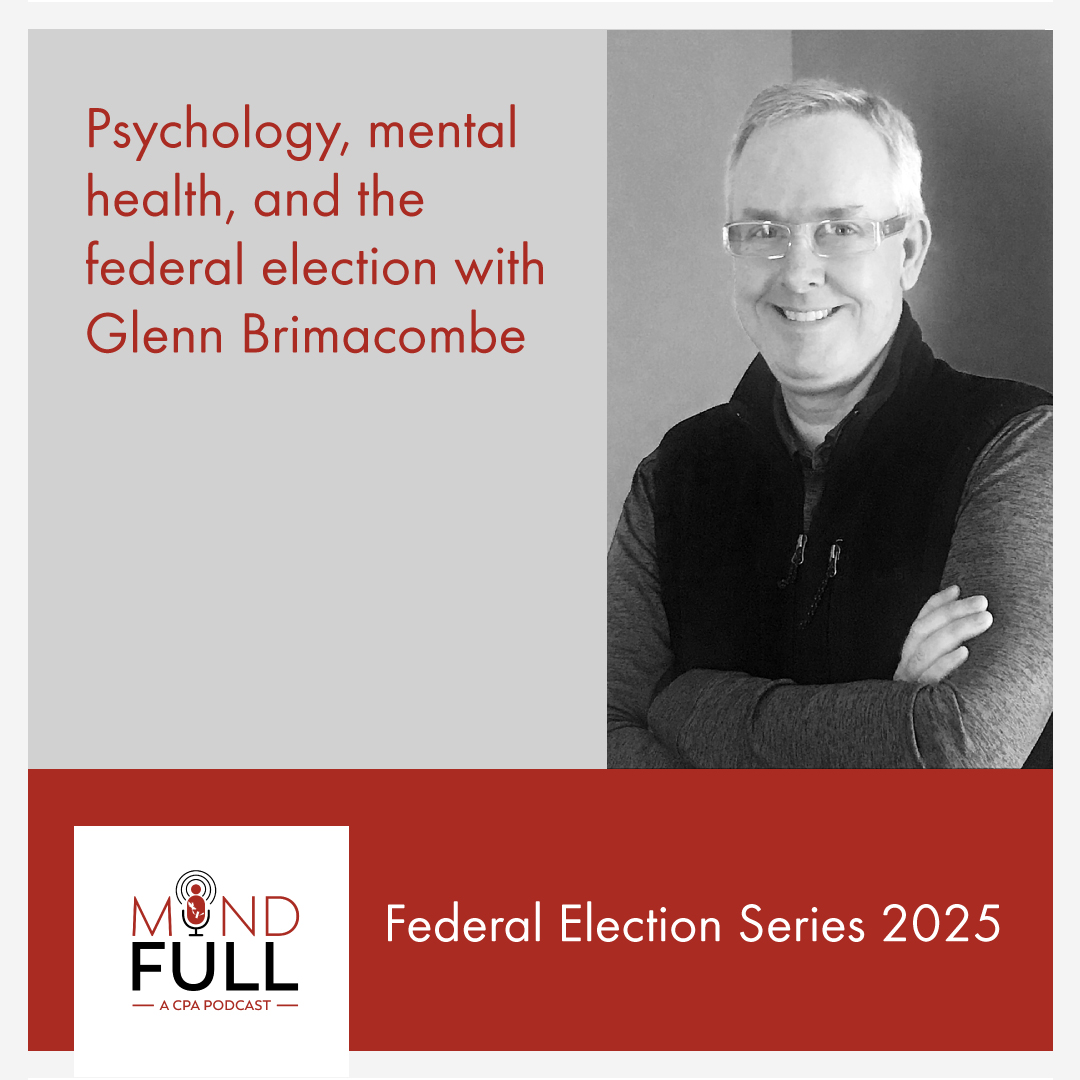
Glenn Brimacombe is the CPA’s Director of Policy and Public Affairs, and a registered lobbyist. Glenn advocates for mental health funding and parity (to get mental health coverage on par with physical health coverage), and has some ideas about how to keep mental health at the forefront of the issues as an election looms.
CPA Responds to Canada Health Act Letter of Interpretation (March 2025)
In January 2025, the Federal Minister of Health issued a letter of interpretation on the Canada Health Act that identified certain regulated professions (nurse practitioners, midwives and pharmacists) as providing “physician equivalent services” and should be publicly insured by the provinces and territories. However, psychology was specifically not recognized, see CPA’s response.
The Friendship Guide with Dr. Jillian Roberts

Dr. Jillian Roberts is a Professor at the University of Victoria, a registered psychologist in B.C., and an author who has written a string of successful children’s books in the Just Enough and The World Around Us series. Her latest book, The Friendship Guide, is a book that helps kids learn how to make friends and how to be a good friend.
Release of CPA Policy Primers (February 2025)
Knowing that a federal election is around the corner, the CPA recognizes the importance and need to continue to invest in our collective mental health; which brings with it a number of health, social and economic dividends that benefit individuals, families, communities and the country as a whole. With the objective of contributing to the country’s public policy-making when it comes to mental health, the CPA has developed a policy primer entitled The Federal Government & Mental Health Policy…Preparing for the Next Federal Election. The CPA has focused on a select number of policy issues where the federal government can play a strong leadership role: (1) improving and expanding publicly funded access to psychological services; (2) improving employer-based coverage for psychological services; (3) increasing the number of practicing clinical psychologists, and (4) increasing investment in psychological research.
CAMIMH Releases 3rd Annual Mental Health-Substance Use Health Report Card (January 2025)
The Canadian Alliance on Mental Illness and Mental Health (CAMIMH) released it 3rd annual mental health-substance use health report card. It is clear that there remains a gap between what the people of Canada expect from their governments and what they are delivering. More must be done to ensure people in need of support for their mental health and substance use health get the care they need, when they need it. See news release and survey.
Psychology Month Profile: Liisa Galea

Liisa Galea
Dr. Liisa Galea is a scientific lead for the CAMH (the Centre for Addiction and Mental Health) program womenmind™. It’s a community of philanthropists, thought leaders and scientists dedicated to tackling gender disparities in science, and to put the unique needs and experiences of women at the forefront of mental health research.
Psychology Month 2025: Knowledge mobilization and video interviews with Madeline Springle
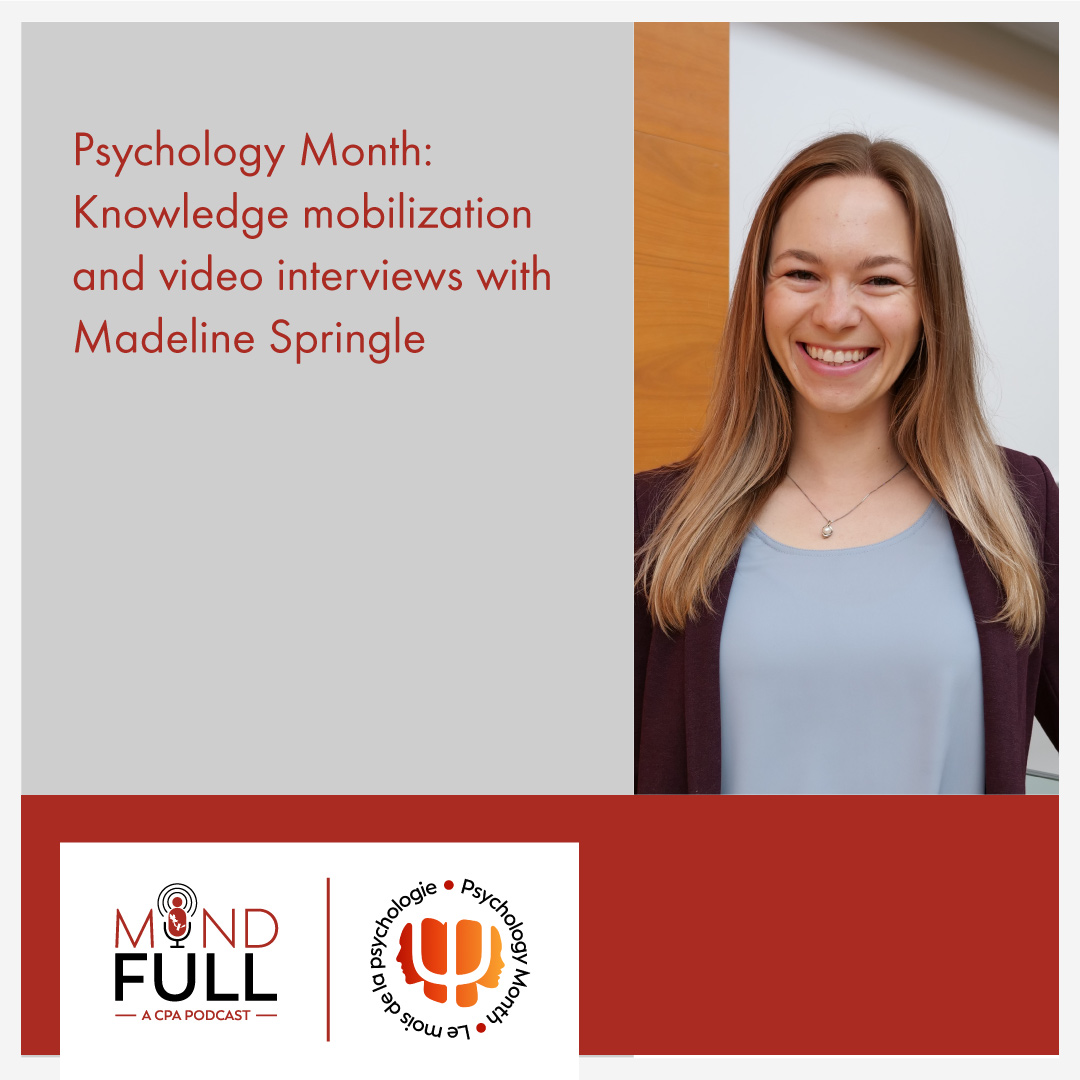
Madeline Springle is a second-year Ph.D. student at the University of Calgary, who is winning awards for her ability to mobilize knowledge. Specifically, she is taking the research she has done into one-way video interviews, and using it to help people who might use this knowledge to better prepare for their own job search.
As we close out Psychology Month, we wanted to highlight knowledge translation (explaining the science for a more general audience) and knowledge mobilization (putting new findings into practice such that they help those they were designed to help) because without those, science exists in a vacuum!
CPA signs Global Psychology Alliance (GPA) Democratic Systems and Psychological Science Statement and Call to Action
The CPA has signed a statement published by the GPA, Democratic Systems and Psychological Science: A Collective Statement and Call to Action. The members of the GPA have recognized the profound impact of social and political determinants on mental health and call upon psychologists worldwide to advocate for the protection and promotion of democratic systems as a means to enhance health globally.
“Psychology Works” Fact Sheet: Narcissism
What is Narcissism?
Narcissism is part of an individual’s personality organization and is the way people maintain a positive self-image, regulate their self-esteem, and manage their needs for affirmation and validation from others. It is normal for people to possess a healthy amount of self-esteem where they are accepting of their strengths and limitations while maintaining a positive self-image. It is normal and healthy for individuals to seek adaptive and realistic ways to improve their self-concept and feel good about who they are.
Clinical narcissism, on the other hand, reflects unhealthy strategies to cope with disappointments and threats to positive self-image. Persistent difficulty in this area is what typically constitutes a clinical diagnosis of narcissistic personality disorder (NPD). Clinicians diagnose NPD when a person meets 5 or more of the following DSM-5 criteria:
- A grandiose sense of self-importance
- Preoccupation with fantasies of unlimited success, power, brilliance, beauty, or ideal love
- Beliefs of being special and unique
- A need for excessive admiration
- A sense of entitlement
- Taking advantage of others for personal gain
- A lack of empathy
- Arrogant and haughty behaviours or attitudes
How is Clinical Narcissism Expressed?
When we think of narcissism, we usually picture someone who displays narcissistic grandiosity, or a pattern of entitled, domineering, and attention-seeking behaviour. These traits align with certain aspects of NPD, including excessive self-enhancement strategies, diminished empathy, and a disagreeable demeanor. However, impairment in the ability to regulate the emotions and behaviours associated with one’s needs for self-enhancement is at the root of pathological narcissism – understood as narcissistic vulnerability. Narcissistic vulnerability is characterized by a fragile self-image and low self-esteem reliant on external validation. It involves heightened sensitivity to threats to self-concept, leading to anxiety, helplessness, persistent negative emotions, distrust of others, and social withdrawal. Clinical narcissists oscillate between states of grandiosity and vulnerability. As the two occur in tandem, there are no officially recognized subtypes of clinical narcissism or NPD.
The representation of narcissism in the DSM-5 has received scrutiny for describing primarily grandiose and overt manifestations while overlooking the important and inevitable vulnerable aspects. Recent research suggests that vulnerability can be conceptualized as “primary narcissism”, as internalised feelings of shame, low self-worth, and difficulty processing criticism or failure are at the core of all narcissistic behaviours. Genuine grandiosity that is not an attempt to conceal feelings of low self-worth may be better understood as a manifestation of psychopathy.[1]
Moreover, narcissism can be expressed overtly (i.e., behaviours, attitudes, and emotions) or covertly (i.e., internal cognitions, motives, needs, and feelings). People often incorrectly associate overt expressions with grandiosity and covert expressions with vulnerability. However, individuals with NPD tend to exhibit both overt and covert grandiose and vulnerable traits at different times or even simultaneously. For example, overtly arrogant behaviour can mask underlying feelings of inadequacy and vulnerability.
How Can We Identify Narcissism?
Recognizing the signs that someone may have narcissistic tendencies, regardless of severity, can help us understand and address them with empathy and accuracy.
Key characteristics of narcissism include:
- Self-perception and Emotional Regulation Challenges
- An exaggerated sense of self-importance, often coupled with feelings of insecurity, shame, or fear of being exposed as a failure.
- A relentless drive for perfection and external validation to uphold a fragile self-image.
- Extreme sensitivity to criticism or rejection, leading to defensive behaviours like withdrawal, aggression, or projection of blame.
- Interpersonal Challenges
- Decreased social inhibitions, allowing for displays of entitlement and unreasonable expectations for favourable treatment or recognition.
- Difficulty with empathy and valuing the needs and emotions of others, which may manifest as controlling, manipulative, or dismissive behaviours.
- Trouble maintaining friendships and relationships, leading to increased isolation over time.
- Emotional and Behavioural Dysregulation
- Persistent negative affectivity, such as depression, anxiety, or anhedonia, while often denying any feelings of depression or weakness.
- High emotional reactivity, including intense anger, embarrassment, jealousy, or mood instability, especially when self-enhancement and reassurance needs are unmet.
- Poor impulse control and increased thrill-seeking behaviour.
There are some complications that may arise with an NPD diagnosis that are important to be aware of:
- NPD can occur along with other conditions such as substance use disorders, mood and anxiety disorders, and other personality disorders. This can make it difficult to accurately diagnose NPD.
- A higher risk of death by suicide.
- A greater presence of hostility and aggression, increasing interpersonal difficulties and creating challenges with treatment.
What Are the Risk Factors for Developing NPD?
- Early childhood experiences including parental overvaluation, excessive admiration, praise, and beliefs that the child has exceptional abilities have been associated with narcissism in adulthood. Conversely, adverse experiences in early childhood including parental coldness, parental abuse, feeling rejected, and a fragile ego during childhood may also predict narcissism in adulthood.
- Narcissistic individuals may be genetically predisposed to developing the disorder.
- NPD is more likely to occur among individuals experiencing other personality disorders including antisocial personality disorder, histrionic personality disorder, borderline personality disorder, and schizotypal personality disorder.
- Research demonstrates that the prevalence of narcissism tends to be higher among young adults relative to older adults.
- NPD is typically more common among men than women, with research finding a lifetime prevalence of 7.7% in men and 4.8% in women.[2]
How Can You Support a Loved One with NPD?
Supporting a loved one with narcissism is a compassionate goal, but it can also be emotionally challenging. Here are some ways to provide support while prioritizing your own well-being:
- Educate yourself about NPD to understand the nuances of the disorder and possible treatment or symptom management options.
- Communicate to your loved one with NPD that you accept them. Remind yourself that their behaviours are a result of the pain they are experiencing due to their mental illness. Making them feel loved and supported can help guide them towards the proper treatment.
- Encourage your loved one to seek treatment but recognize that you cannot force change. While it can be frustrating if they are resistant to help, remember that their behaviour is their responsibility, not yours.
- Try to set and maintain healthy boundaries. Individuals with NPD may rely on others to meet their needs or expectations in ways that can feel overwhelming. Clearly express what you are willing and able to do and stay consistent in respecting your own limits.
- Make sure to take care of your own needs and mental health. Avoid letting your loved one’s disorder take over your life. Try your best to maintain other social connections and support systems. Consider attending therapy or joining a support group.
- People with NPD have an increased risk of suicide. If you notice signs of withdrawal or suspect your loved one is considering self-harm, address your concerns directly and compassionately. If they are in immediate danger, contact emergency services right away.
How Can Psychology Help?
There is no standardized treatment that exists for narcissism, but psychologists can help individuals with narcissism manage their symptoms with psychotherapy. Psychotherapy, or talk therapy, is a long-term approach to treatment focused on building a strong patient-therapist relationship.
- Transference-focused therapy (TFT) is a twice-weekly approach that focuses on the patient’s feelings towards the therapist. This method proposes that people with narcissism separate positive and negative self-perceptions as a defence mechanism. The goal is to help them understand their emotions and integrate these self-perceptions in a healthy way.
- Schema-focused therapy aims to help patients identify and adjust cognitive and behavioural patterns (i.e., schemas) that drive narcissistic traits. Narcissistic schemas, such as an inflated sense of self-importance, are enduring beliefs that develop early in life. This approach is especially useful for those who do not respond well to standard cognitive therapies.[3]
There are no medications currently available to treat personality disorders like NPD. However, many NPD patients benefit from the use of medications (e.g., antidepressants) to manage symptoms such as anxiety and depression.
In addition to treating those with NPD, psychologists play a critical role in supporting individuals affected by narcissistic behaviours, such as family members or friends. Psychoeducation can help these individuals understand the complexities of narcissism, set healthy boundaries, and develop effective coping strategies.
Psychologists can also continue to conduct research on narcissism to further our understanding and improve treatment approaches. By studying the underlying mechanisms and various expressions of narcissism, psychologists can refine existing therapeutic methods and develop new, evidence-based interventions tailored to individuals’ needs.
You can consult with a registered psychologist to find out if psychological interventions might be of help to you. Provincial, territorial, and some municipal associations of psychology may make available a referral list of practicing psychologists that can be searched for appropriate services. For the names and coordinates of provincial and territorial associations of psychology, go to https://cpa.ca/public/whatisapsychologist/PTassociations/.
This fact sheet has been prepared for the Canadian Psychological Association by Erin Vine, MA.
Revised: January 2025
Your opinion matters! Please contact us with any questions or comments about any of the PSYCHOLOGY WORKS Fact Sheets: factsheets@cpa.ca
[1] Kowalchyk, M., Palmieri, H., Conte, E., & Wallisch, P. (2021). Narcissism through the lens of performative self-elevation. Personality and Individual Differences, 177, Article 110780. https://doi.org/10.1016/j.paid.2021.110780
[2] Stinson, F. S., Dawson, D. A., Goldstein, R. B., Chou, S. P., Huang, B., Smith, S. M., Ruan, W. J., Pulay, A. J., Saha, T. D., Pickering, R. P., & Grant, B. F. (2008). Prevalence, correlates, disability, and comorbidity of DSM-IV narcissistic personality disorder: Results from the wave 2 national epidemiologic survey on alcohol and related conditions. Journal of Clinical Psychiatry, 69(7), 1033-1045. https://doi.org/10.4088/jcp.v69n0701
[3] Bernstein, D. P. (2005). Schema therapy for personality disorders. In S. Strack (Ed.), Handbook of personology and psychopathology (pp. 462-477). John Wiley & Sons, Inc. https://citeseerx.ist.psu.edu/document?repid=rep1&type=pdf&doi=cdde7fb2a0b22decd35971ef82fd4473b1eb8837
Le Mois de la psychologie : la santé sexuelle avec Sophie Bergeron, Ph. D.
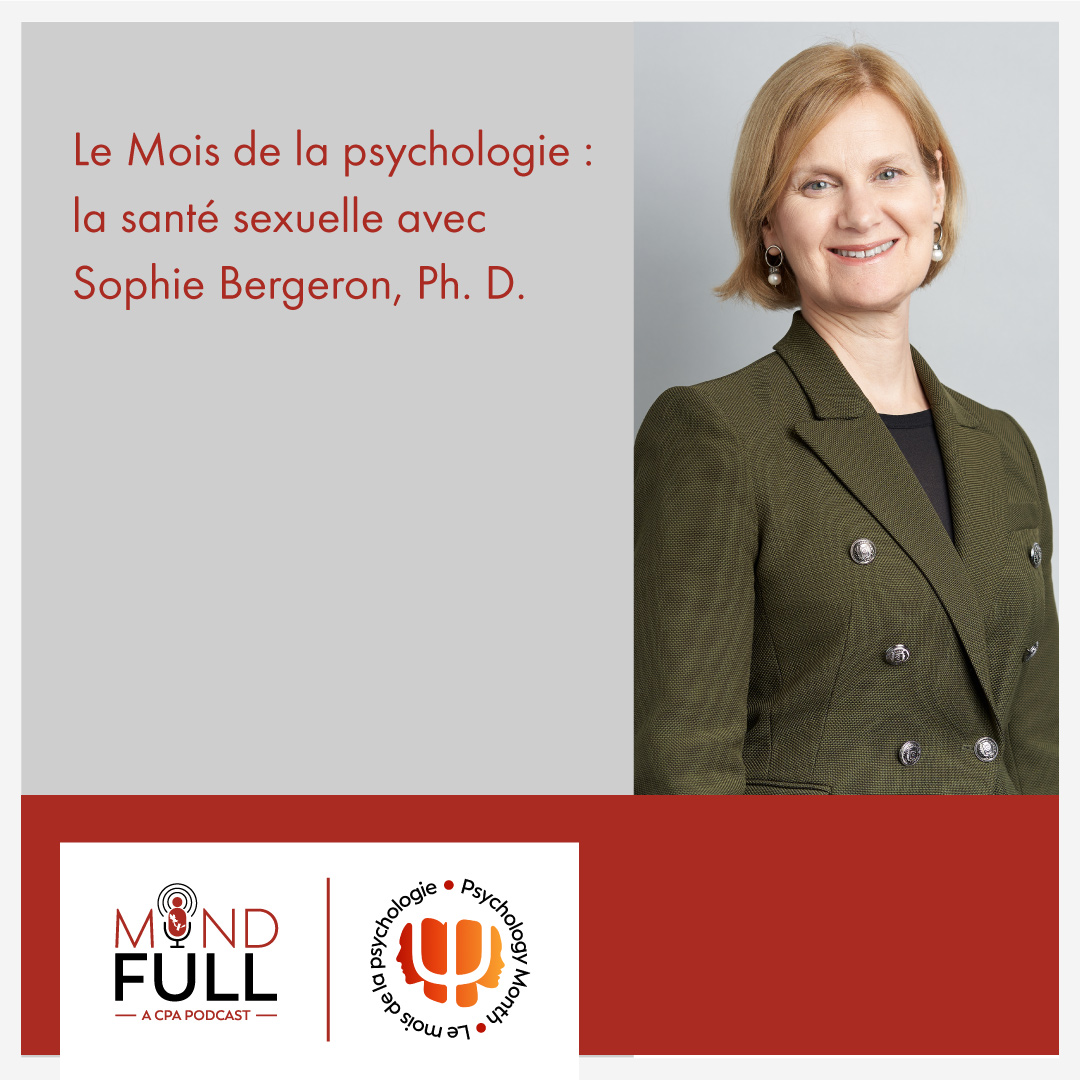
Cette semaine, dans le cadre du Mois de la psychologie dont le thème, cette année, est « Les femmes et la science », nous présentons Sophie Bergeron, Ph. D., qui détient une Chaire de recherche du Canada sur les relations intimes et le bien-être sexuel au Département de psychologie de l’Université de Montréal, où elle dirige également le Centre de recherche interdisciplinaire sur les problèmes conjugaux et les agressions sexuelles (CRIPCAS), l’Équipe SCOUP Sexualité et Couple, et le Laboratoire d’étude de la santé sexuelle. Ses travaux portent sur les déterminants psychosociaux de la santé sexuelle des individus et des couples ainsi que sur le traitement des dysfonctions sexuelles.
“Psychology Works” Fact Sheet: Family Building for Gender Diverse Individuals
Gender diverse individuals are those whose gender identity, expression, or experiences differ from traditional societal norms and expectations associated with the sex medical professionals assigned to them at birth (e.g., trans, nonbinary people). Family building for gender diverse individuals can be a complex and empowering journey, often enriched by diverse pathways and thoughtful considerations. Extending beyond traditional understandings of reproductive health, family building in this context encompasses a wide range of options such as biological conception, adoption, surrogacy, and fertility preservation. Gender diverse individuals seeking to build their families may face medical, legal, and social barriers, including access to inclusive healthcare, legal recognition of their gender and parental rights, and societal acceptance. Moreover, the intersection of trans, nonbinary, and gender expansive identities with other identities and societal power structures, such as race and racism, socioeconomic status and poverty, as well as disability and ableism, can further influence family building choices and experiences. It is important that healthcare providers, including psychologists, approach family building for anyone with sensitivity, inclusivity, and an understanding of the specific needs and challenges they may encounter. Approaching this work with humility by listening to the unique experiences and challenges of each person is essential. This approach ensures that gender diverse individuals are supported to make informed decisions about family building and their reproductive health.
What Factors Influence Family Building?
- Desire for Genetic Offspring: This desire varies among individuals. For some, the desire to have children who share their genetic makeup is very important. Having genetic offspring may not always be feasible due to various medical or biological constraints. Discussing these factors with health care providers is often important. Understanding these limitations is a part of the family building process and may involve experiences of loss and grief.
- Partner Factors: The dynamics of family building can vary significantly depending on whether one is planning to conceive alone or with a partner(s). In cases involving a partner(s), their age and reproductive capabilities are important considerations. For instance, a trans man or trans masc person wishing to conceive must consider whether their partner can biologically contribute viable sperm.
- Gender Dysphoria: The process of conceiving, including Assisted Reproductive Technologies (ART), can exacerbate feelings of gender dysphoria (if present) for some individuals. Those undergoing Hormone Replacement Therapy (HRT) may need to temporarily discontinue their hormones for fertility preservation or conception purposes, potentially intensifying feelings of gender dysphoria. Seeking psychological support and engaging in self-reflection can help individuals make informed decisions and navigate complex emotions that may arise.
- Transitioning: Navigating transition may influence family building decisions. For example, if someone undergoes an orchiectomy (i.e., surgery to remove one or both testicles) without prior sperm preservation, their options for having genetically related children may become limited. Understanding and planning for their reproductive options if desired is essential early in someone’s transition.
- Financial Factors: The costs associated with fertility treatments, adoption, and fertility preservation are often substantial and not typically covered by provincial or private healthcare plans. However, some provinces (Quebec, Ontario, Manitoba, and British Columbia) offer some government-funded options. Prospective parents are encouraged to research funding that may be available to them in their province. The financial burden can be a significant barrier to family building, necessitating careful planning and exploration of available financial support options.
- Cultural Factors: Cultural beliefs about family, reproduction, and gender roles can influence how individuals approach family-building, including the types of options they pursue or consider. For example, biological parenthood may be valued in a person’s culture, which may create additional pressure to preserve fertility or pursue options like surrogacy. Conversely, cultural norms that stigmatize gender diversity may result in limited family-building support within a person’s community or family of origin. Religious perspectives on reproduction, adoption, and assisted reproductive technologies (ART) can further intersect with gender identity, shaping both opportunities and challenges.
What Are Some Options for Family Building?
- Adoption: All people have the option to adopt, either within Canada or internationally. There can be complex legal and social landscapes to navigate, particularly in international adoption. Prospective parents are encouraged to seek supportive legal and psychological guidance, as well as community support, throughout the adoption process.
- Surrogacy: Surrogacy is an option for those desiring genetically related children who either have viable or preserved sperm or eggs. In surrogacy, an individual with a uterus carries the pregnancy for the intended parent(s). Canadian law permits gestational surrogacy as long as surrogates are reimbursed only for reasonable expenses. This arrangement requires careful legal and ethical considerations to ensure the rights and wellbeing of all parties involved are protected.
- Fertility Preservation: This is an option for those who wish to retain the possibility of having genetically related children in the future. Private fertility clinics typically perform this procedure. Options include:
- Sperm Cryopreservation: Involves collecting and freezing semen samples for future use. Some fertility clinics offer the option for surgical retrieval of sperm.
- Oocyte Cryopreservation: Involves stimulating the ovaries to produce multiple eggs, retrieving these eggs, and freezing them for future use.
- Ovarian Tissue Freezing: A newer technique where medical professionals remove and freeze ovarian tissue for later use. This tissue can potentially be transplanted back into the body to restore fertility, though it is a relatively novel and evolving method.
- Assisted Reproductive Technologies (ART): These technologies assist individuals in conceiving a child using their own, their partner’s, or a donor’s reproductive material:
- Intrauterine Insemination (IUI): This procedure involves placing sperm directly into the uterus (of the intended parent or a surrogate) using a catheter, a less invasive and often less expensive option than In Vitro Fertilization (IVF).
- In Vitro Fertilization (IVF): IVF is a more complex set of procedures involving the retrieval of eggs (or using previously frozen eggs), fertilizing them with sperm in a laboratory setting, and then transferring the embryo(s) into a uterus (either of the intended parent or a surrogate). This method is often used when other fertility treatments have not been successful.
How Can Psychologists Help?
- Provide support and resources: Psychologists can provide emotional support and resources to their clients throughout the process of starting or expanding a family and help provide information on appropriate medical, legal, and community resources as needed.
- Address reproductive goals and concerns: Psychologists can work with clients to discuss their reproductive goals and concerns, providing support and guidance as they navigate the decision-making process around starting or expanding a family.
- Collaborate with allied professionals: Psychologists can work alongside allied health professionals, such as social workers, to ensure clients receive comprehensive, coordinated care that aligns with their family-building choices.
- Advocate for inclusive reproductive healthcare: Psychologists can advocate for clients’ rights to inclusive and affirming reproductive healthcare, and help clients navigate any discrimination or barriers they may face when accessing reproductive healthcare.
You can consult with a registered psychologist to find out if psychological interventions might be of help to you. Provincial, territorial, and some municipal associations of psychology may make available a referral list of practicing psychologists that can be searched for appropriate services. For the names and coordinates of provincial and territorial associations of psychology, go to https://cpa.ca/public/whatisapsychologist/PTassociations/.
This fact sheet has been prepared for the Canadian Psychological Association by Olivia Fischer, Lynn Corbett, Jesse Bosse, Keira Stockdale, Anita Shaw, and Jelena King.
Revised: December 2024
Your opinion matters! Please contact us with any questions or comments about any of the PSYCHOLOGY WORKS Fact Sheets: factsheets@cpa.ca